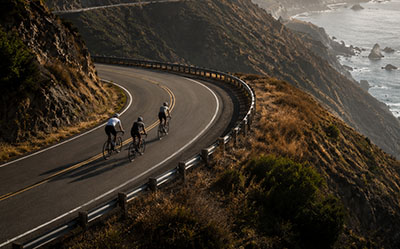

You’re not just buying wheels. You’re buying speed, confidence, control, and sometimes, peace of mind on a sketchy descent. Carbon wheels have moved from “race-day only” to “everyday performance” — but that doesn’t mean every set is right for you.
This guide cuts through the marketing fluff and gives you the real-world, engineering-backed, rider-tested framework to pick the perfect carbon wheelset for your riding style, terrain, budget, and goals.
Let’s get into it.
Why Carbon? (And Why It’s Not Just About Weight Anymore)
Ten years ago, the pitch was simple: carbon = lighter = faster up hills. True then. Oversimplified now.
Modern carbon wheels aren’t just about shedding grams. They’re about aerodynamics, stiffness, ride quality, durability, and system-wide integration — tire width, rim shape, hub engagement, braking surface, even how they handle crosswinds at 25 mph on an exposed coastal road.
Yes, weight still matters — especially if you’re climbing 8%+ grades or accelerating out of corners repeatedly. But here’s the twist: aerodynamic savings often outweigh rotational weight savings on anything but the steepest, slowest climbs. A 400g heavier wheelset that saves you 15 watts at 20 mph will beat a featherweight climber on most real-world routes.
Carbon also lets engineers sculpt rim profiles that manage airflow intelligently — not just slice through it. That means better stability in crosswinds, less drag at yaw angles you actually encounter (not lab conditions), and sometimes, even a “sailing effect” where the wind pushes you forward instead of holding you back.
Plus: stiffness. Carbon fiber’s tensile modulus beats steel spokes hands-down. Under sprint loads (>800W), carbon-spoked wheels deflect laterally only 45–55% as much as steel-spoked ones. That translates to sharper acceleration, more direct power transfer, and less energy wasted flexing the wheel.
Rim Depth: The Single Biggest Decision You’ll Make
Rim depth isn’t just aesthetics. It’s the lever that moves four critical properties at once: aero gain, weight, crosswind handling, and stiffness.
30–38mm: Pure Climbing
Technical descents, high-crosswind zones. Lightest, most stable, least aero. Ideal for mountain stages, hilly gran fondos, or if you ride where the wind never shuts up.
40–50mm: The Sweet Spot
All-round performance. Enough aero to matter on flats and rollers, light enough to climb comfortably, stable enough for most crosswinds. If you do one wheelset for everything, this is it.
55–65mm+: Flat-Out Speed
Time trials, triathlons, pancake-flat criteriums. Maximum aero, minimum forgiveness in wind. Don’t touch these unless you know your routes — and your limits.
Pro tip: If you’re unsure, go 45mm. It’s the “Goldilocks” depth — fast enough to feel the difference, stable enough not to scare you on a gusty descent.
Real-world yaw angles (the angle between your direction and apparent wind) spend 95% of time between 0–20 degrees, with 5–15 being most common. Modern mid-depth rims are optimized for that range — not zero-yaw wind tunnel perfection.
Internal Width: Where Tire Choice Meets Real-World Performance
This is where a lot of buyers get tripped up. Rim internal width dictates tire shape, volume, comfort, grip, and even safety.
21–23mm Internal
The current road standard. Pairs perfectly with 25–30mm tires. Gives a slightly squarer profile, better stability, improved cornering grip.
25mm+ Internal
Cutting edge for endurance/gravel crossover. Lets you run 30–50mm tires safely. More volume = more comfort, lower rolling resistance, better traction.
Forget what the tire sidewall says. A “28mm” tire on a 23mm internal rim might measure 30–31mm actual width. On a 17mm rim? It’ll balloon weirdly and feel mushy.
Rule of thumb:
Minimum tire width = internal rim width × 1.4
Maximum tire width = internal rim width × 2.0
Example: 23mm internal → best with 32–46mm tires. Yep, even on road bikes now.
Also: wider rims improve tubeless performance. More bead support, lower pinch-flat risk, better sealant distribution.
Hooked vs. Hookless Rims: Safety, Pressure, and Compatibility
Hookless rims are everywhere now. Lighter, simpler to manufacture, often cheaper. But they come with hard limits.
ETRTO standard caps hookless rims at 73 psi (5 bar). Exceed that, and blow-off risk spikes exponentially. At 80 psi, safety factor drops to 0.7 — meaning you’re flirting with disaster.
Hooked rims? They laugh at 110 psi. Safety factor stays above 6.8 even under extreme pressure.
If you go hookless:
- Use only tires labeled “hookless approved.”
- Never exceed 73 psi — ever.
- Check manufacturer compatibility charts religiously.
For heavy riders, rough roads, or high-pressure preferences (e.g., racing on smooth pavement), hooked rims offer more margin for error.
Tubeless-ready? Non-negotiable in 2026. Better ride quality, fewer flats, lower pressures possible, improved traction. Just make sure your rim, tire, tape, and sealant are all compatible — and installed correctly. One user’s “wheel exploded” story? Likely overpressurized hookless + wrong tire combo.
Hubs: The Unsung Hero of Feel, Durability, and Engagement
You can have the lightest, deepest, most aero rim in the world — if the hubs suck, the wheel feels dead.
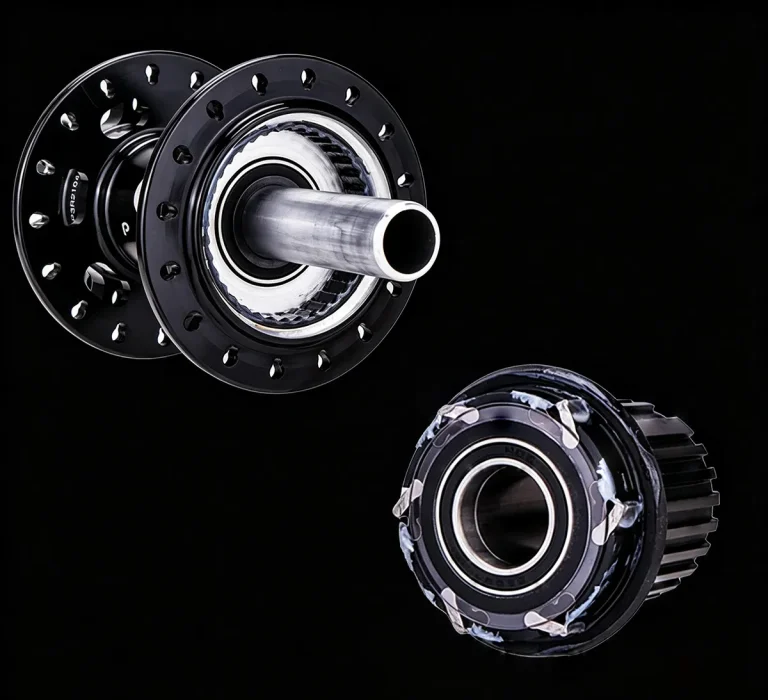
Pawl Systems
- Spring-loaded tabs click into a ratchet ring.
- Can be very fast-engaging (high POE).
- Louder, more complex, smaller contact patches = potential wear points.
Ratchet / Star Ratchet
- Two star-shaped discs engage under spring pressure.
- Larger contact area = more durable, smoother, often quieter.
- Traditionally slower engagement, but modern versions rival pawls.
Which to choose?
- For long-term reliability, wet/dirty conditions, gravel, or heavy torque: ratchet.
- For maximum engagement speed, lightweight builds, clean-road use: pawl (if well-maintained).
Sealed cartridge bearings > loose-ball. Always. Weather resistance, lower maintenance, longer life.
Freehub body matters too. Shimano HG? XDR? Campagnolo? Match it to your cassette — or you’re dead on arrival.
Braking: Carbon Isn’t What It Used to Be (But Still Has Limits)
Old carbon rims? Sketchy in rain. New ones? Much better — especially with grooved brake tracks.
But let’s be clear: carbon rim brakes still can’t match disc brakes in wet conditions. If you ride in rain frequently, descend long mountain passes, or want consistent modulation regardless of weather — go disc.
If you’re stuck with rim brakes:
- Avoid riding in rain if possible.
- Brake intermittently on long descents — don’t drag. Overheating = blowout risk.
- Use high-quality pads specific to carbon.
- Consider tubeless — reduces heat buildup vs. tubes.
Disc brake carbon wheels? No compromises. Same aero, same stiffness, zero brake fade, zero rim wear.
Durability, Impact Resistance, and Warranty: Don’t Get Burned
Carbon isn’t fragile — but it’s not indestructible. Impact damage (potholes, curbs, rocks) causes ~45% of carbon wheel failures.
Manufacturers test for this — rolling road, impact simulations, real-world abuse — but warranties rarely cover impact damage. What they do offer: crash replacement policies.
Before you buy:
- Does the brand publish impact testing data?
- Is there a clear crash replacement policy?
- Are bearings sealed? Are spokes tensioned properly?
- What’s the warranty length? (Look for 2+ years minimum)
A well-built carbon wheelset should last 5+ years on normal roads — even rough ones — if you avoid major impacts and maintain tire pressure/tension.
Pro move: Buy from brands that stand behind their product. Cheap no-name sets? Good luck.
Real-World Matching: Pick Your Weapon Based on Where & How You Ride
Stop chasing “best.” Chase “best for you.”
Hill Climber / Mountain Goat
- Rim depth: 30–38mm
- Weight: <1400g/set
- Internal width: 21–23mm
- Brakes: Disc preferred, rim okay if dry-only
- Hub: Lightweight pawl or ratchet, fast engagement
All-Rounder / Weekend Warrior
- Rim depth: 40–50mm
- Weight: 1400–1600g/set
- Internal width: 21–23mm (or 25mm if running 30mm+ tires)
- Brakes: Disc strongly recommended
- Hub: Sealed ratchet for durability
Flatland Speed Demon / TT Triathlete
- Rim depth: 55–65mm+
- Weight: Secondary concern
- Internal width: 21–25mm depending on tire choice
- Brakes: Disc mandatory for control at speed
- Hub: Aero-optimized, sealed, high-engagement
Gravel / Mixed Surface Explorer
- Rim depth: 35–45mm (stability > aero)
- Weight: <1600g/set
- Internal width: 25mm+ (for 35–50mm tires)
- Brakes: Disc only
- Hub: Ratchet system, bombproof sealing
Final Checklist Before You Click “Buy”
- ✅ Rim depth matches your terrain and wind exposure
- ✅ Internal width compatible with your tire size and pressure goals
- ✅ Hooked or hookless? Know the pressure limits and tire requirements
- ✅ Hub type suits your riding style and maintenance habits
- ✅ Braking system (rim/disc) fits your conditions and safety needs
- ✅ Tubeless-ready? Tape, valves, sealant all accounted for
- ✅ Warranty + crash replacement policy clearly stated
- ✅ Axle standard (QR/thru-axle) and freehub body match your bike
P.S. If you’re building a wheelset from scratch or sourcing OEM, prioritize consistent spoke tension, verified rim layup quality, and hub bearing preload specs. Those three things separate “good” from “great” — every single time.
1