
Field Notes · Wheel Performance
There’s a quiet shift happening in gravel riding — not loud, not flashy, just a steady move toward wheels that feel more planted, more responsive, and more alive under the bike. For a lot of riders, that shift has one clear direction: carbon.
Carbon wheels on gravel bikes used to be a niche thing — a “maybe someday” upgrade for people who raced everything or chased every gram. That’s changed. Gravel as a discipline has matured, and so have carbon wheelsets built for demanding terrain. The overlap between the two is now far more interesting than it used to be.
This isn’t a sales pitch. It’s a practical, no-nonsense look at what carbon actually changes on a gravel bike, when it’s worth the money, and when it’s just overkill dressed up as performance.
Why gravel even cares about carbon
Gravel sits in a funny space. It’s not road. It’s not mountain biking. It’s something in between — fast enough that weight and efficiency matter, rough enough that durability and comfort matter just as much.
That’s why wheels matter more on gravel than a lot of people expect. On a road bike, you’re mostly on smooth surfaces. On a mountain bike, you’re mostly on dirt and technical terrain. On gravel, you’re on everything: hardpack, loose rocks, washboard, mud, chip seal, broken pavement, and the occasional section that makes you wonder if you took a wrong turn somewhere.
Carbon wheels bring a few clear advantages to that mix:
- Lower weight — lighter rotating mass means faster acceleration and easier climbing.
- Higher stiffness — better power transfer, especially on hardpack and punchy climbs.
- Better shape retention — carbon resists denting and holds its true longer under load.
- Design flexibility — rims can be tuned for specific strength, compliance, and tire support goals.
But carbon isn’t magic. It doesn’t erase bad lines, fix poor fitness, or make sketchy descents suddenly safe. What it does is refine the ride — make it feel more connected, more efficient, more confident.
Weight, stiffness, and feel
Let’s talk numbers for a second. A good set of carbon gravel wheels can be lighter than a comparable alloy set by a meaningful margin — noticeable the moment you get on the trail.
Lighter wheels accelerate faster. They climb with less effort. They change direction more easily. On a gravel bike — where you’re constantly switching between surfaces, speeds, and efforts — that adds up.
Stiffness is where things get interesting. Carbon rims are generally stiffer than alloy, which means more direct power transfer when you’re hammering on the pedals, especially on hardpack or loose-over-hard surfaces. It also means the bike feels more planted in corners, more stable at speed, and more responsive when you need to sprint or surge.
But stiffness without compliance can turn into a harsh, chattery ride on rough terrain. The best carbon gravel wheels are designed to be stiff where it matters — under power, in corners — but compliant enough to absorb trail chatter and keep the tires planted. That balance is what separates good carbon wheels from great ones.
Impact resistance: the hidden strength
One of the biggest myths about carbon is that it’s fragile. In reality, good carbon rims handle impacts better than alloy in many cases. When an alloy rim takes a hard rock strike at speed, it tends to dent, bend, or flat-spot — and those dents can make tire seating difficult, cause air leaks, or create weak points that lead to future failures.
Carbon doesn’t dent. It’s engineered to absorb and distribute impact energy. If it does fail, it’s usually a crack or fracture — rarer, but more serious when it happens.
For gravel riders who regularly hammer through rock gardens, washboard sections, or rough terrain, carbon’s ability to hold its shape and resist deformation is a major advantage. Bicycle wheel and rim safety, including impact and load resistance, is exactly the kind of thing standards bodies formalize — the ISO 4210 series is the reference framework the industry tests against.
Durability and longevity
Durability is where carbon starts to shine over time. Alloy wheels are tough, but they take damage differently — they dent, bend, and lose true more easily. Spoke tension can drift as the rim deforms, meaning more truing, more maintenance, and potentially shorter wheel life.
Carbon wheels, when built well, tend to hold spoke tension longer, stay true under repeated loads, resist cosmetic damage from minor hits, and maintain structural integrity over years of hard use.
The catch: carbon failures are less common but more catastrophic. A cracked rim is usually a write-off, whereas a dented alloy rim might still be rideable, if not ideal. That’s why brand reputation, warranty, and build quality matter so much with carbon — you’re not just buying performance, you’re buying peace of mind.
Is carbon worth it for gravel?
Here’s the honest part: carbon wheels cost more, a lot more. Is that worth it? For some riders, absolutely — if you race or push your limits regularly, ride technical terrain where wheel performance matters, value weight savings and ride feel, and plan to keep the wheels for years.
For casual riders, weekend cruisers, or those on a tight budget, alloy still makes a lot of sense. Modern alloy wheels are lighter, stronger, and better than ever. They’re not “second best.” They’re just different.
Who should consider carbon?
Lean carbon
- Rides aggressively, wants the performance edge
- Wants lighter, stiffer wheels that hold their shape
- Rides terrain where impact resistance matters
- Values long-term durability over upfront cost
- Plans to upgrade once and stick with it for years
Stay alloy
- Riding on a tight budget
- Casual riding, mostly smooth trails
- Newer rider, still likely to crash or misjudge lines
- Doesn’t notice or care about subtle ride-feel differences
There’s no shame in either choice. It’s about matching the wheel to the rider — a question we dig into further in Can Beginners Ride Carbon Wheels?
How carbon feels on gravel
Here’s the part that matters most. When you swap from alloy to carbon on a gravel bike, you don’t just notice a number on a scale — you notice how the bike feels.
- The bike feels lighter, especially when accelerating or changing direction.
- Corners feel more planted and confident.
- The bike feels more “alive” under power.
- Rough sections feel less punishing, if the wheel is well-designed.
- The bike holds speed better through technical sections.
It’s not a revolution. It’s a refinement. And for many riders, that refinement is worth every penny.
Choose the wheel that fits your riding
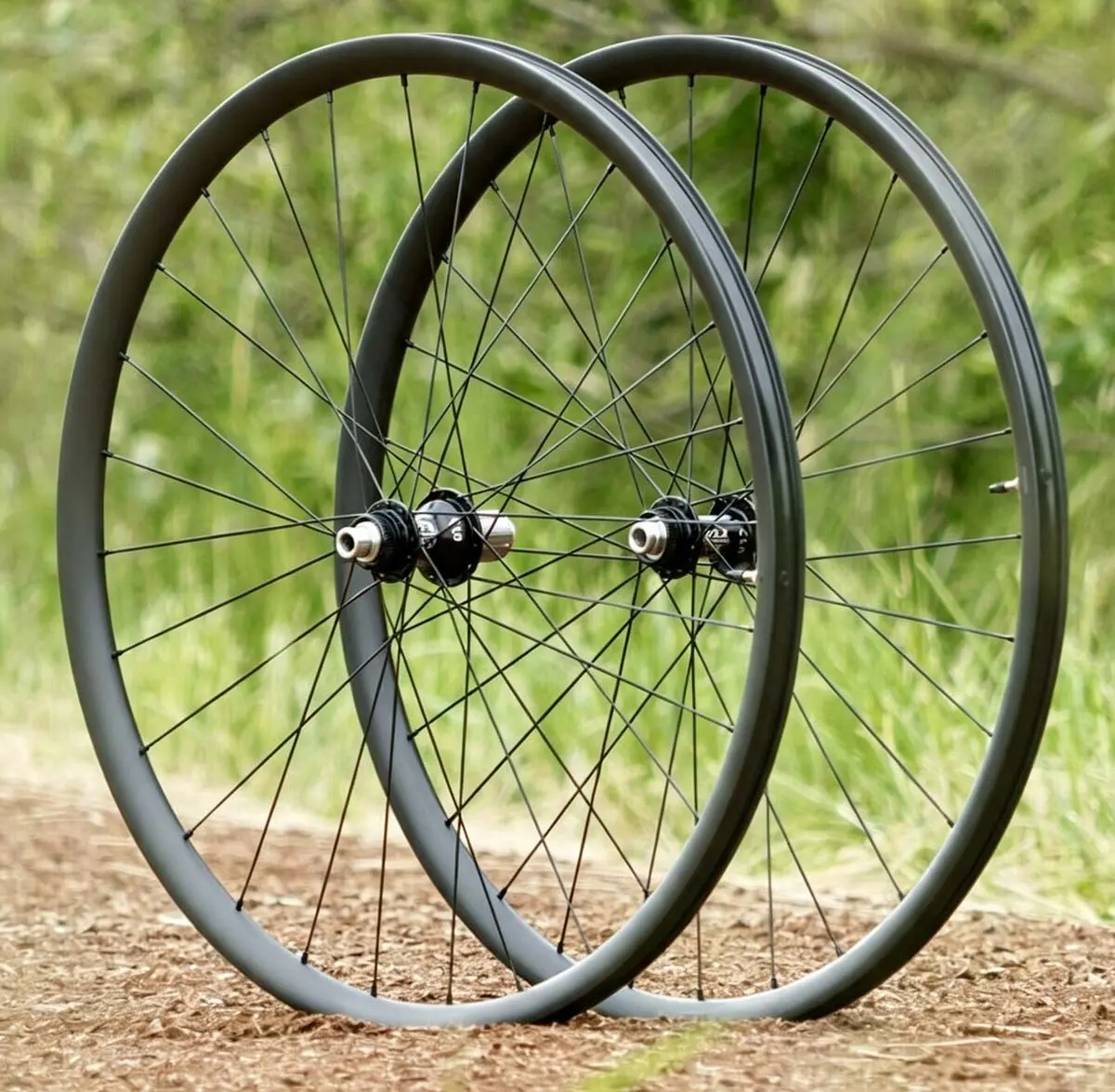
Carbon fiber gravel wheels aren’t magic. They’re not a requirement. They’re not even the “best” choice for every rider. But they are a real, practical option for riders who want more from their wheels.
If you ride hard, value performance, and plan to keep your wheels for years, carbon is worth serious consideration. If you ride for fun, stick to simpler trails, or prefer to spend your money elsewhere, alloy is still a fantastic choice.
The best wheel isn’t the one with the most impressive spec sheet. It’s the one that makes you want to ride more, push harder, and enjoy the gravel a little more every time you roll out. Browse the full range on the XDRU homepage to see where handmade carbon craftsmanship fits into your own build.
Frequently asked questions
Are carbon gravel wheels worth the extra cost?
For riders who race or push their limits on technical terrain, yes — the weight, stiffness, and impact resistance add up. For casual riding, alloy delivers most of the practical benefit for less money.
Do carbon rims crack easily on gravel?
Well-built carbon rims are actually more resistant to denting than alloy. Failures are less frequent, but when they happen they tend to be a crack or fracture rather than a repairable dent.
How much lighter are carbon gravel wheels than alloy?
Most carbon gravel wheelsets save roughly 200–500 grams over a comparable alloy set, which is noticeable in acceleration and climbing but matters less on flat, smooth trails.
Can beginners ride carbon wheels on gravel?
Carbon isn’t off-limits for newer riders, but the higher price makes crash risk a bigger factor early on. Start with alloy if you’re still learning, then upgrade when you’re ready to commit.
1