
There’s a common idea in cycling that carbon wheels are something you “graduate” into. First you learn to ride, then you get fitter, then maybe, eventually, you earn the right to buy the fancy wheels.
That sounds neat. It’s also a little backwards.
The truth is simpler: beginners can use carbon wheels, and in many cases benefit from them more than they expect. The real question isn’t whether a beginner is “allowed” to ride carbon — it’s whether the wheelset fits how they ride, the roads they ride on, and the budget they’re working with.
Yes — beginners can absolutely use carbon wheels, but the right choice prioritizes confidence, durability, and ease of use over flashy specs and pure weight savings. |
Why Beginners Even Consider Carbon
Most new riders don’t start by asking about carbon. They ask later, once the bike bug gets under their skin — the stock alloy wheels feel a little heavy, group rides are getting faster, or the bike just doesn’t quite have the snap you wanted.
A decade ago, carbon wheels often felt fragile, temperamental, or too race-focused for casual riders. That’s changed — today’s carbon wheelsets are commonly stable, wide enough for modern tires, tubeless-ready, and built for real roads, not just perfect testing conditions.
What Carbon Actually Changes
Carbon wheels don’t magically turn a beginner into a faster rider overnight. They don’t erase bad pacing, poor cornering, or soft fitness. What they do is make the bike feel easier to carry speed on.
| Aerodynamics | Deeper or better-shaped rims reduce drag |
| Weight distribution | Lighter wheels feel more eager when accelerating |
| Stiffness | Good carbon feels more direct under power |
| Tire integration | Wider modern rims pair better with modern tires |
The biggest thing beginners notice usually isn’t some dramatic race-day transformation — it’s that the bike feels more alive. It rolls more cleanly. It carries momentum better. It feels less like you’re pushing a machine, and more like you’re moving with it. That feeling matters, especially while you’re still building confidence.
Watch Out For
The “Too Much Wheel, Too Soon” Trap
When beginners buy carbon, the instinct is often “if some carbon is good, more must be better.” That backfires. A beginner usually doesn’t need:
| ✕ | 60mm+ race-specific rims |
| ✕ | Ultra-light builds that sacrifice robustness |
| ✕ | Hookless systems without understanding tire compatibility |
| ✕ | Exotic hubs that are expensive to service |
| ✕ | Wheels that demand specific handling in crosswinds |
A first carbon wheelset should feel like an upgrade — not a project.
What Beginners Should Prioritize
Stability |
Probably the biggest one. A beginner benefits more from a wheelset that feels predictable than from one that shaves a few grams. A stable wheel doesn’t twitch in the wind, doesn’t feel nervous on fast descents, and doesn’t make you second-guess every movement — that calmness is worth a lot.
Mid-Depth Rims |
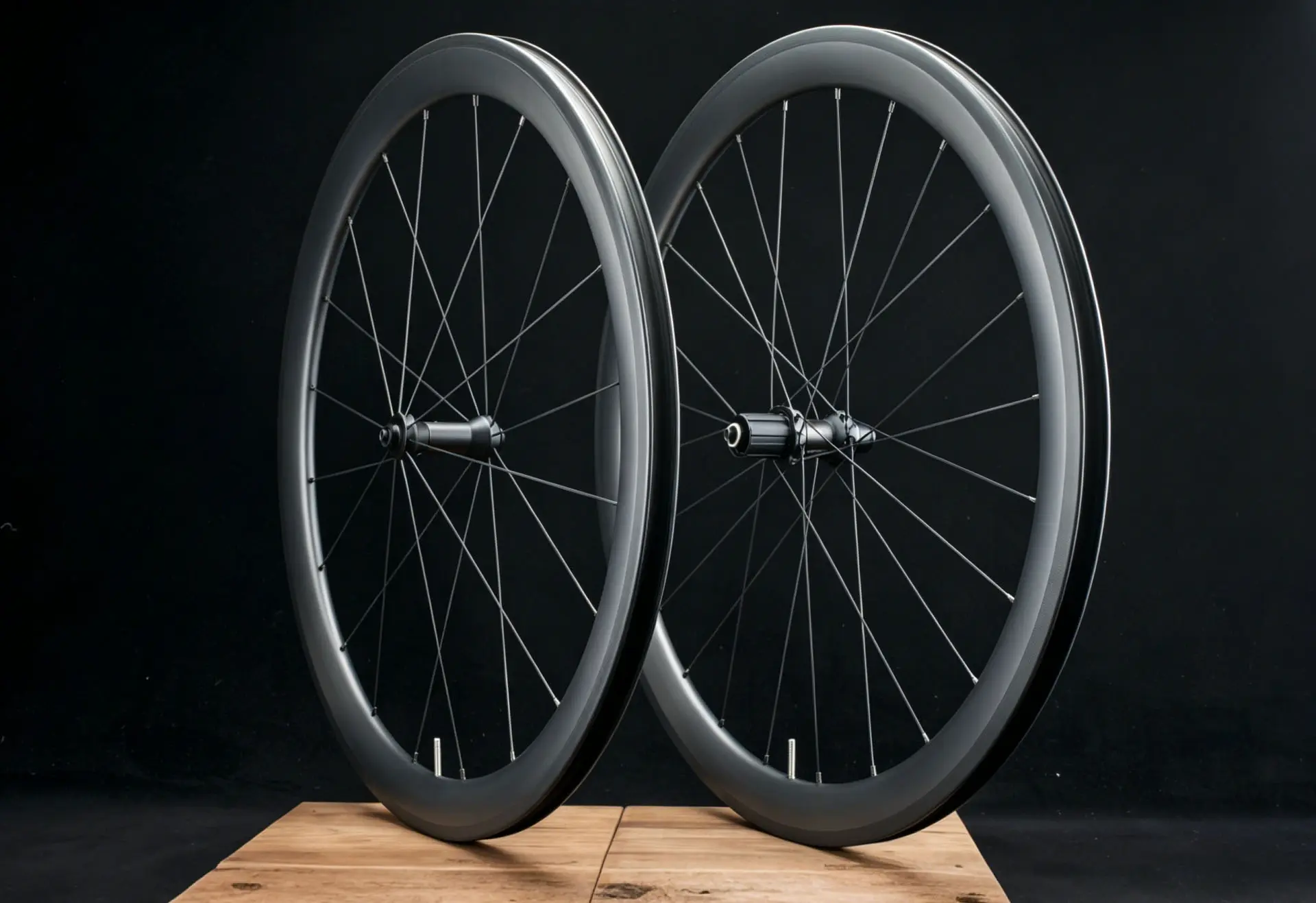
Something around 35–50mm usually makes the most sense — real aero benefit without making the front wheel a handful in gusty conditions. Very shallow wheels are safe but may not feel like much of an upgrade; very deep wheels can be a bit too demanding while you’re still learning the bike’s feel.
Modern Rim Width |
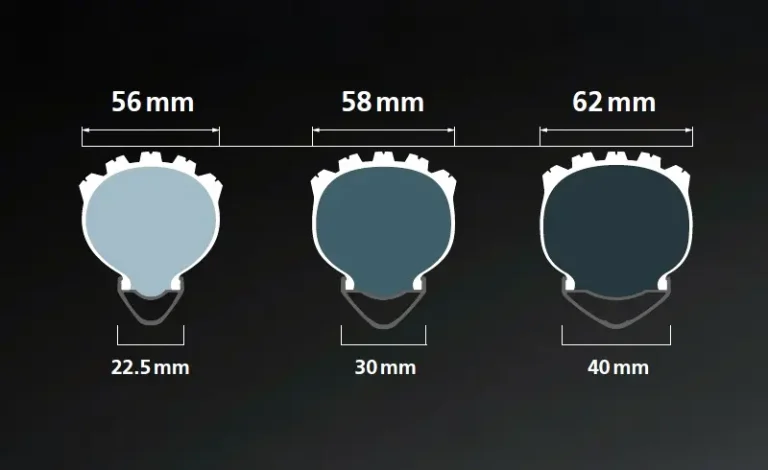
Wider internal rims support wider tires better — meaning better grip, better comfort, and lower pressures without the bike feeling vague. A comfortable bike is a bike you actually want to ride more often.
Reliable Hubs |
You don’t need the most exotic hub engagement in the world — you need something smooth, durable, and easy to live with. That’s what matters after the honeymoon period wears off.
Tubeless Compatibility |
Not mandatory, but worth serious consideration — it can reduce punctures, improve comfort, and let you run slightly lower pressures. There’s a small learning curve, but for many riders it pays off.
Disc Brake or Rim Brake?
This depends on the bike you already have. If you’re on a modern road bike, you’re most likely running disc brakes — usually the easier path with carbon, since disc wheels remove most of the old rim-brake concerns.
On a rim-brake bike, carbon is still very possible — just pay closer attention to brake track quality, pad compatibility, heat management on descents, and the wheel brand’s reputation.
For beginners, disc brake carbon wheels are usually the simpler, more forgiving option. That doesn’t make rim brake carbon a bad idea — it just means the margin for error is a little smaller.
Weight Matters, But Not the Way People Think
A lot of beginners get stuck on wheel weight. Lighter wheels can feel nice — better acceleration, better climbing feel — but weight isn’t the whole story, and it’s definitely not the first thing to obsess over.
A very light wheelset that feels delicate or nervous is not a good beginner choice. It might look impressive on a spec sheet, but you ride on roads, not spec sheets. For new riders, something in the 1450–1650g range is often a sensible target for road use, though the exact number depends on the build, braking system, and terrain.
Not “what’s the lightest wheel I can buy?” — but “what wheel gives me the most confidence every time I ride?”
Are Carbon Wheels Safe for Beginners?
Yes — if they’re good wheels, properly installed, and used within their design limits. Modern carbon wheels are not some fragile, pro-only object that fails the moment a beginner rides them. They’re built to be used.
What matters is choosing a wheelset from a brand that’s transparent about weight limits, compatibility, brake type, tire compatibility, and warranty support. For general guidance on building the skills and confidence that go with any equipment upgrade, resources from established cycling bodies like the League of American Bicyclists are a solid, non-commercial starting point.
Being a little picky here is part of being a smart buyer, not a cautious one.
Ready — or Should You Wait?
✓ Carbon makes sense if…
| ⏸ Better to wait if…
|
There’s a temptation to buy the most visible upgrade first — wheels are glamorous, easy to show off. But sometimes the smartest upgrade is the one nobody sees. Still, if the rest of the bike is already in a good place, carbon wheels can be a fantastic first “serious” upgrade.
A Good Beginner Wheelset, at a Glance
| Rim depth | 35–50mm |
| Internal width | 19–23mm |
| Brake type | Matched to your bike (disc preferred) |
| Tubeless-ready | Yes, if possible |
| Hub quality | Reliable, sealed, serviceable |
| Weight | Balanced, not extreme |
| Brand support | Clear warranty & compatibility info |
The Real Answer
So, can beginners use carbon wheels? Absolutely. In fact, the right carbon wheels can make a beginner’s bike more enjoyable, more confidence-inspiring, and more exciting to ride.
The trick is avoiding the trap of thinking “first carbon wheelset” has to mean race-bred, ultra-deep, ultra-light, no compromise. That’s usually the wrong story. If you’re still weighing depth, width, and stiffness trade-offs in general, our broader guide to choosing carbon wheels covers the fundamentals in more depth.
For beginners, the best carbon wheels are the ones that feel stable, reliable, and easy to live with — the ones that disappear beneath you in the best possible way.
Ready for your first carbon upgrade?
Browse beginner-friendly wheelsets built for stability first.
Shop Carbon Wheels →Can a beginner really benefit from carbon wheels, or are they only for advanced riders?
Yes, beginners can benefit from carbon wheels if they choose a stable, well-matched wheelset. The biggest gains are usually in ride feel, confidence, and speed retention rather than dramatic performance jumps.
What type of carbon wheels are best for beginners?
Mid-depth, stable wheels are usually the best choice. A rim depth around 35–50 mm with modern width and reliable hubs tends to offer the best balance of confidence, comfort, and performance.
Should beginners choose carbon over alloy for their first wheel upgrade?
Not always. Alloy is still a very practical choice if budget, rough roads, or simplicity matter most. Carbon makes sense when the rider wants a more noticeable performance and ride-quality upgrade.
Are carbon wheels safe for new riders?
Yes, as long as they are from a reputable brand, match the bike’s brake system, and are used within the recommended weight and pressure limits. Modern carbon wheels are designed for real-world riding, not just racing.
How deep should a beginner’s carbon wheels be?
For most new riders, 35–50 mm is the sweet spot. Very shallow rims may feel less exciting, while very deep rims can be harder to handle in crosswinds and fast descents.