
Field Notes · Hub & Bearing Care
Every wheel has a sound it makes when it’s healthy, and a different sound it makes when it isn’t. Spin a good hub next to your ear and you’ll hear almost nothing — just a faint, even hiss of air. Spin a tired one and you’ll hear grit: a dry, uneven whisper that gets a little louder every month you ignore it. That sound is bearings talking to you, and bearing maintenance guide is about learning to listen.
Quick Reference
Bicycle hubs use one of two bearing systems: cup-and-cone (loose balls between an adjustable cone and a fixed cup, fully serviceable) or cartridge bearings (a sealed, pre-assembled unit that’s cleaned and re-greased but not adjusted, and replaced as a whole when worn). Whichever type you have, the two things that actually keep a hub alive are correct bearing preload and keeping fresh grease between the balls and their races — everything else in this bearing maintenance guide is really just the practical detail behind those two ideas.

Two Bearing Families, One Job
Strip away the branding and every hub bearing does the same thing: it lets a rim spin freely around a fixed axle while carrying the rider’s full weight through a contact patch smaller than a fingernail. How that job gets done splits into two design philosophies, and knowing which one lives inside your hub changes almost everything about how you maintain it.
Cup-and-Cone
Loose steel balls sit between a cup pressed into the hub shell and a cone threaded onto the axle. Tightening or loosening the cone changes how much the balls are squeezed — that squeeze is called preload. Fully serviceable: pop it open, clean it, regrease it, adjust it, ride another season.
Cartridge (Sealed)
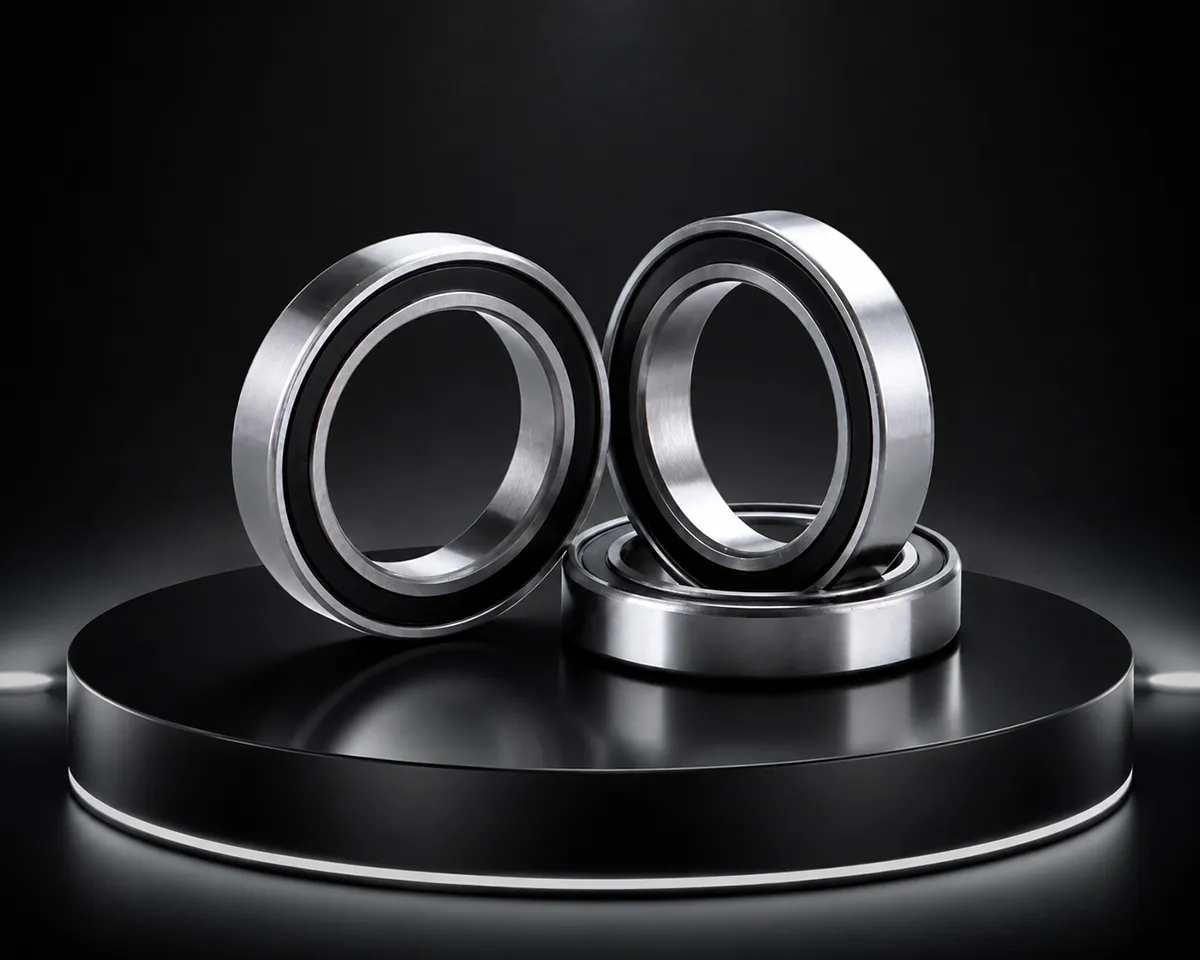
A self-contained ring of balls, races, and shields pressed into the hub as one unit — no adjustment possible. Lift the shield to clean and regrease it, but once the races pit or the balls flat-spot, the whole cartridge is pressed out and swapped, not repaired.
Neither design is objectively “better” — cup-and-cone rewards an owner willing to do occasional hands-on maintenance, while cartridge bearings trade that flexibility for years of low-attention running before an eventual straight swap.
Reading the Warning Signs
A bearing rarely fails without warning — it just warns quietly, in a language most riders never learn to read. Here’s the checklist a good mechanic runs through before touching a single tool:
01 Lift the wheel off the ground and grab the tyre at the top and bottom. Rock it side to side. Any clunk or play means the bearing preload has loosened.
02 Spin the wheel slowly by hand with your ear close to the hub. A smooth bearing is nearly silent; a worn one produces a gritty, uneven texture you can often feel through your fingertips on the axle.
03 Remove the wheel and rotate the axle by hand. Roughness that appears only in certain spots of the rotation usually means individual balls or a section of the race have pitted.
04 Notice unexplained drag while coasting, or a hub that feels warm after a short ride. Both point to bearings running either too tight or dry of grease.

How Often, Really?
Riders ask for a single number and mechanics keep refusing to give one, for a good reason: bearing life is a function of contamination, not calendar days. A hub that only ever sees dry pavement can comfortably outlast a hub that gets ridden through wet grit every weekend by a factor of three or four. Think of servicing intervals as a sliding scale rather than a fixed date.
DRY / INDOOR
check yearly
MIXED ROADS
check twice a year
GRAVEL / RAIN
check quarterly
MUD / WINTER SALT
check monthly
Cup-and-cone hubs sit toward the frequent end of that scale, since their seals are simple and mainly built to keep out dust rather than driving rain. Cartridge bearings, with their tighter tolerances and better shielding, generally stretch further between services — but “sealed” is a relative term. No hub seal on the market is designed to survive a direct pressure-washer blast, and treating one as waterproof is the single fastest way to wash factory grease straight out of a bearing.

Servicing a Cup-and-Cone Hub
This is the maintenance most riders can genuinely do at a kitchen table with basic tools, and it rewards patience more than strength. The sequence matters, so follow it in order.
Hold the locknut with one cone wrench and loosen the outer locknut with a second wrench, turning counter-clockwise. Keep the cone from spinning while you work, or the adjustment underneath will drift.
Unthread the cone fully and slide the axle out. Catch the balls as they’re freed — a magnetic tray or a simple rag laid flat saves a lot of crawling around on the floor.
Wipe the cup, cone, and axle completely clean of old grease with a rag and a light solvent. Inspect the cup and cone surfaces for pitting — run a ballpoint pen tip along the race; if it catches on tiny craters, the part is worn and should be replaced rather than reused.
Pack fresh grease into the cup, press new or cleaned balls into place, and slide the axle back through. Thread the cone down until it just contacts the balls with no play, then back it off a fraction of a turn.
Hold the cone still and tighten the locknut against it. Recheck by hand: the axle should spin freely with zero perceptible side play. If either symptom returns, loosen the locknut and nudge the cone a hair in the needed direction — this step is almost always an iteration, not a one-shot fix.
Servicing a Cartridge Hub
There’s no preload to chase here, which makes the job shorter but also less forgiving of a bad diagnosis. Gently lift the rubber or metal shield on the outer face of the bearing with a fine pick, taking care not to bend it. Flush the exposed balls with a light solvent, spin them dry, and pack fresh grease directly into the race before pressing the shield back into place. If, after this, the bearing still feels rough, gritty, or shows any play when you wiggle the inner ring against the outer one, cleaning is no longer the answer — the cartridge needs to be pressed out and replaced as a complete unit. Trying to “adjust away” play in a cartridge bearing is a losing game; unlike a cup-and-cone hub, there’s no cone to fine-tune.
Service, or Replace?
Every bearing conversation eventually reaches this fork, and the honest answer depends on where the wear actually lives. If the balls are dull, pitted, or flat-spotted but the cup and cone races are still smooth to the touch of a pen tip, replacing just the balls and adding fresh grease is enough — this is the cheapest and most common fix on a cup-and-cone hub. If the race itself is pitted, no amount of new balls will fix the underlying roughness, because the balls will simply ride over the same craters. At that point the cup or cone — and on a cartridge system, the entire sealed unit — needs replacing. As a rule of thumb: grease solves dryness, new balls solve wear on the balls themselves, and only a new race or cartridge solves wear on the race.
Frequently Asked Questions about Bearing Maintenance
Can I over-grease a hub bearing? Not in the sense of damaging it, but excess grease packed too densely can add noticeable drag, especially in cold weather when grease thickens. Aim for a light, even coating rather than filling the cavity solid.
Why does my hub feel fine on the stand but rough when I ride? Bearings under load behave differently than bearings spinning free. A pitted race can feel smooth with no weight on it and turn gritty the moment the rider’s weight passes through — always check for play under load, not just free spin.
Is a little bit of side play acceptable? No. Even barely perceptible play accelerates wear because it lets the balls hammer against the race under every bump rather than roll smoothly. Preload should always be adjusted to zero play, not “close enough.”
Do sealed cartridge bearings ever need adjustment? No — that’s the defining trade-off of the design. They’re either running correctly or they need replacing; there’s no cone or preload to fine-tune in between.
Bearing care will never be the part of owning a wheelset that gets talked about at the coffee stop. But every smooth, silent mile you ride is really just correctly preloaded steel doing its quiet job, and every rider who’s felt a hub grind to a halt mid-ride already knows what it sounds like when that job goes undone. Listen for the sound, act on the play, and a good hub will comfortably outlast several sets of tyres.
For the full mechanical walkthrough with tool-specific detail, Park Tool’s hub overhaul and adjustment guide remains one of the clearest technical references available.
Curious how bearing quality and preload feed into overall ride feel? Our earlier piece on wheel stiffness and the physics behind ride feel covers the wider picture.
Looking to skip the maintenance and start from a well-built hub? Browse our full wheelset and parts lineup to compare builds designed for long-term reliability.