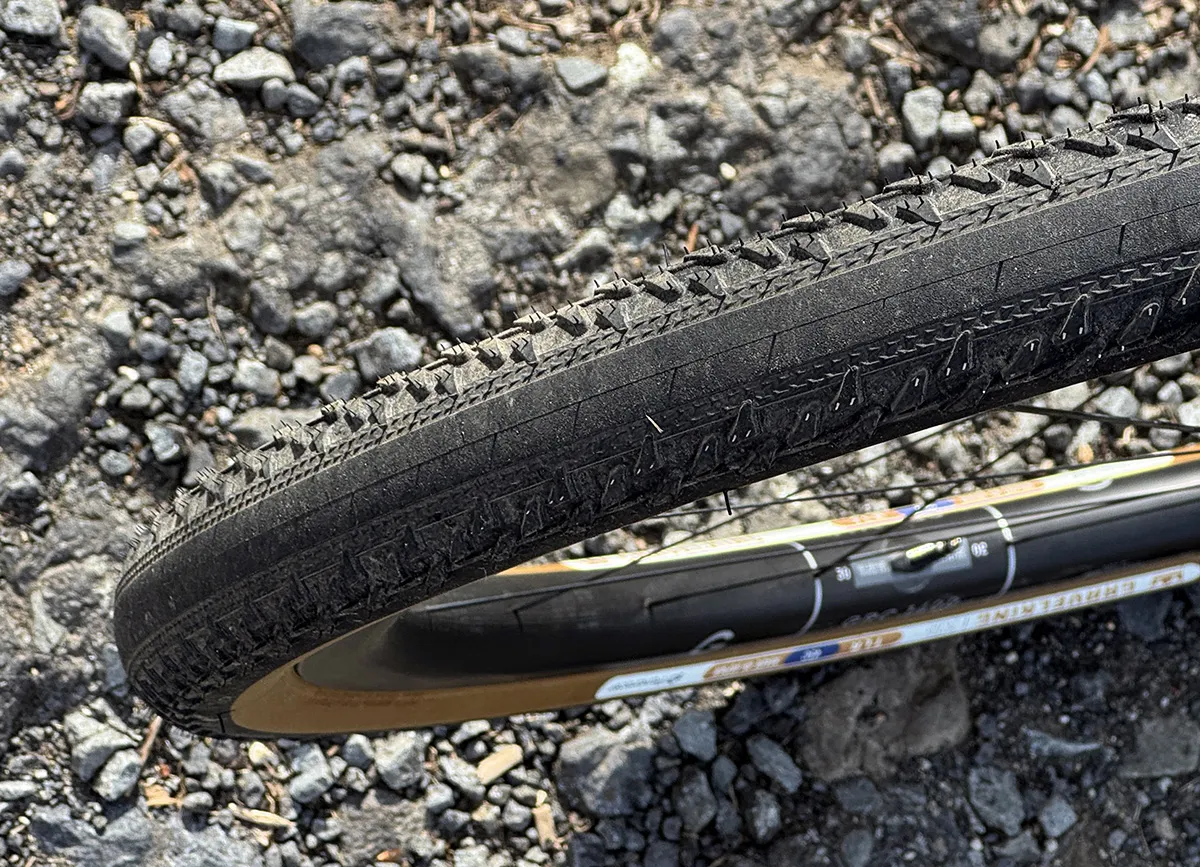

ROAD WHEELS. GRAVEL SLICKS. ONE BIKE?
Slick gravel tires on road wheels: an all-road solution—or a compromise in disguise?
A smooth gravel tire can make a carbon road wheelset feel ready for a wider map. But comfort, road speed, loose-surface grip, and compatibility do not improve together automatically. The right answer starts with the route—not the tire label.
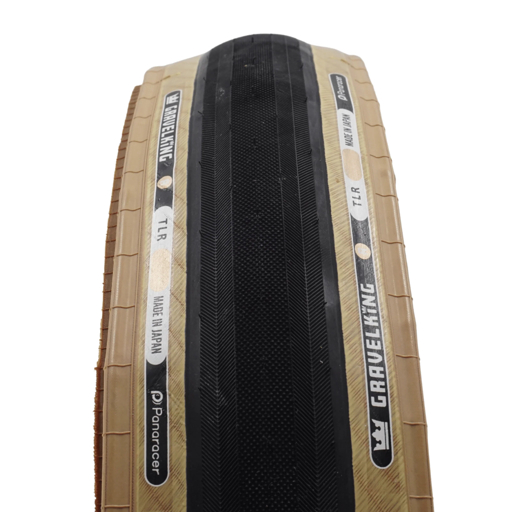
A strong use case when comfort and rough-road versatility matter more than maximizing race-speed efficiency.
Often workable on dry, compact surfaces with an appropriate tire, pressure, riding style, and approved equipment.
The limitation becomes traction. More air volume cannot replace the mechanical grip of suitable tread.
A deliberate
all-road choice.
Not an all-terrain pass.
Slick gravel tires on carbon road wheels can be an excellent setup for rough pavement, endurance riding, and occasional dry, firm gravel—provided the complete combination is approved.
They become a less convincing choice when the priority is maximum paved-road speed, or when the route regularly includes loose corners, deep gravel, mud, and demanding impacts.
The central trade-off is specialization. You can broaden the bike’s useful range, but a wider smooth tire does not turn a road-racing wheelset into a technical gravel wheelset, and it does not guarantee road-race tire efficiency.
Smooth is a tread description.
Not a complete performance specification.
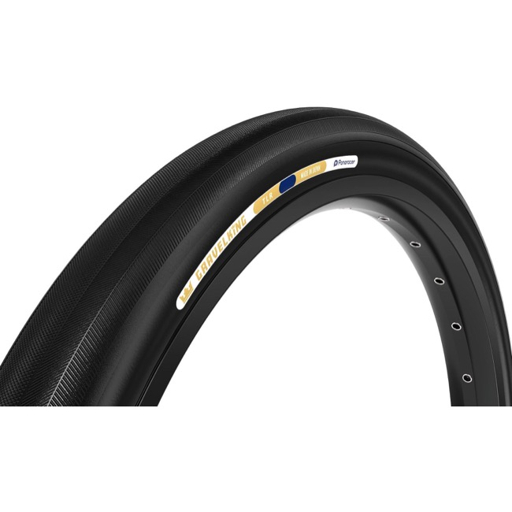
A smooth running surface
A slick gravel tire typically emphasizes a smooth or finely textured tread, with little substantial knob height. Its casing, rubber compound, protection layers, and available widths can still differ significantly from a road-racing tire.
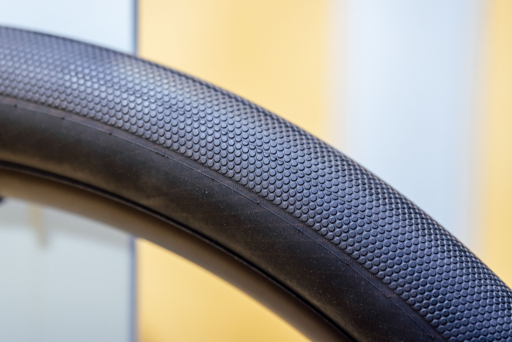
Not every fast gravel tire is a slick
Semi-slicks, shallow micro-knob tires, and fully smooth tires are related but different options. Shoulder knobs may help in some cornering conditions, while a smooth center alone does not establish road speed or predictable loose-surface grip.
Before asking whether it is fast,
establish whether it is allowed.
Match the bead-seat diameter
Use the tire’s ETRTO marking, not just a marketing size. A 40-622 tire has a nominal 40 mm width and 622 mm bead-seat diameter. Diameter must match the rim; a 650B tire is not interchangeable with a 700C tire.
Match tire width to the actual rim
Check internal rim width, rim construction, and the current tire-and-wheel compatibility instructions. Internal width governs fit considerations; external width matters separately, including for aerodynamics.
Verify hooked or hookless approval
“Tubeless ready” is not a universal compatibility guarantee. The exact tire model, size, and version must be suitable for the exact rim. Installing a tube does not remove hookless tire-compatibility requirements.
Measure frame and fork clearance
Check both width and height after inflation. Mounted dimensions depend on the tire, rim, and pressure, and may change after installation. Preserve the bicycle manufacturer’s required clearance, including allowance for debris and movement.
Check the wheel’s intended use
Being able to mount a gravel tire does not prove that a road wheel is approved for gravel impacts. Confirm the wheel’s use category, load limit, and any off-road restrictions, as well as the bicycle’s intended use.
Respect the complete pressure envelope
Use a pressure within all applicable tire, rim, width-dependent, and setup limits. A tire sidewall maximum is not a target. Do not exceed a lower rim limit or assume that road-bike pressure is appropriate for a larger-volume tire.
A successful inflation is not a compatibility test. If the manuals do not clearly approve the combination, obtain confirmation from the relevant manufacturers before riding.
More volume.
Less buzz.
Not automatically
less resistance.
Are slick gravel tires slower than road tires?
The answer depends on the actual models and the surface. A smooth tread removes one obvious source of difference, but casing deformation, rubber losses, protection layers, pressure, and tire dimensions still influence rolling resistance.
A fast gravel slick should not be assumed to match a fast road-racing tire simply because both look smooth. Equally, the word “gravel” is not enough to predict how much slower a particular tire will be.
Rough pavement changes the equation
On broken asphalt, a suitable larger tire can reduce harshness and help the bike track the surface. The practical benefit may be better comfort, more consistent control, and an easier time maintaining your preferred position over a long ride.
Pressure matters here. Increasing pressure may reduce some casing losses in a controlled drum test, while excessive pressure on a rough road can increase vibration-related losses. The fastest real-world setup is not necessarily the hardest one.
A deep rim
cannot make
a wide tire
disappear.
What happens when the tire is wider than the road rim?
The tire forms the leading part of the wheel’s airflow shape. A substantially wider tire can change that shape and reduce the aerodynamic benefit of a road rim developed around a narrower tire.
That does not mean the wheel becomes useless, or that its aerodynamic benefit falls to zero. It means you should not assume that performance measured with a road tire transfers unchanged to a much wider gravel slick.
When should you care?
For fast solo riding on smooth, exposed roads, aerodynamic differences deserve attention. For a mixed-surface endurance ride, the comfort and route flexibility of the wider tire may be more valuable than preserving every part of the road wheel’s original aero optimization.
Do not turn a tire-to-rim width rule into a safety rule or a universal watt calculator. Compatibility and aerodynamic optimization are separate questions.
Not the fastest
on every surface.
More useful
across your route.
An all-road setup earns its place when it lets you join rough-road sections and firm unpaved connectors without making the majority of the ride unpleasant.
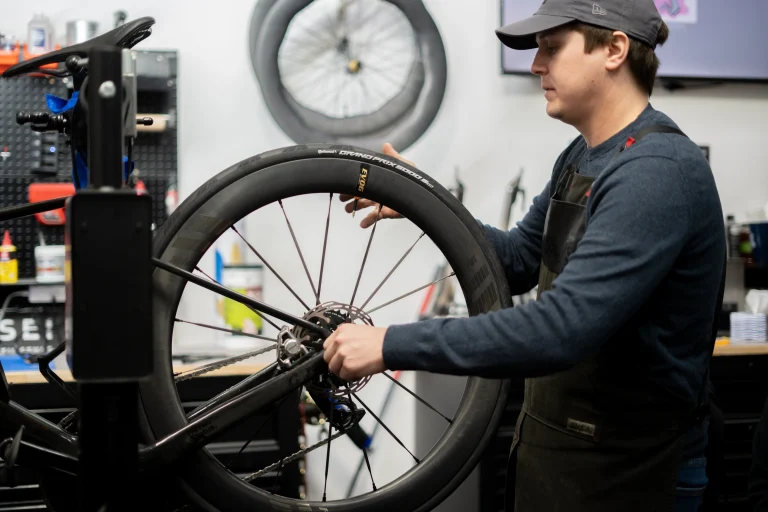
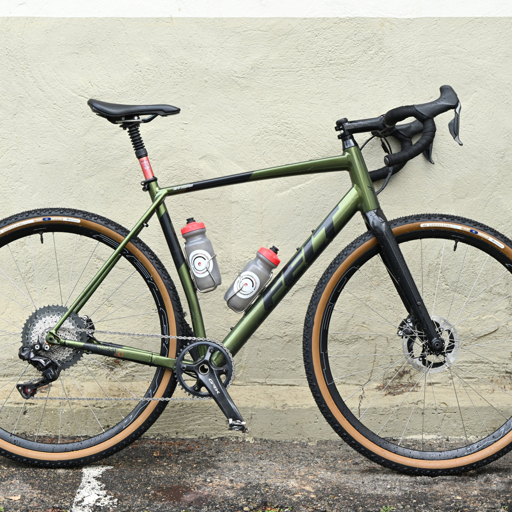
Lifestyle image from a GravelKing product gallery. The pictured bicycle is not an XDRU compatibility demonstration.
Volume supports.
Tread engages.
They are not
substitutes.
How much gravel can a slick tire handle?
Dry, compact gravel and firm dirt are the most convincing unpaved applications. A larger contact patch and appropriate pressure can help the tire follow the ground, but neither creates the same mechanical engagement as suitable tread in loose or soft material.
The limitation often appears under braking or in a corner, not while pedaling straight ahead. A route that feels easy on a flat connector can demand much more traction when it turns downhill or becomes loose.
Wet asphalt and wet dirt are different problems
On normal paved roads, rubber compound and surface conditions are central to grip. A slick is not automatically a poor rain tire merely because it lacks large tread blocks.
Mud, wet grass, and loose dirt are different. Suitable tread can engage the surface in ways a smooth tire cannot. Painted markings, metal covers, leaves, and contamination also remain hazards regardless of the category printed on the sidewall.
Do not solve every problem by dropping pressure
Excessively low pressure can cause casing instability, rim strikes, tube pinch flats, or tubeless air loss. A heavier rider, added luggage, or sharp-edged impacts can reduce the usable margin.
Where gravel slicks on road wheels make sense.
Broken asphalt
and long road rides
Useful when comfort, predictable road behavior, and puncture strategy matter more than extracting maximum paved-road speed. Compare casing options rather than selecting by width alone.
Pavement with
firm gravel connectors
A compelling all-road use case if the bike and wheelset are approved for the surface. Keep expectations conservative when braking and cornering on loose material.
Fast road training
and competitive rides
A dedicated wide road tire may provide the comfort you want with a more road-focused casing and aero pairing. A gravel label is not necessary for every rough-road problem.
Loose descents
and deep gravel
Braking and lateral traction become more demanding. Consider a suitable gravel wheel-and-tire system with the volume, protection, and tread the terrain requires.
Mud, wet trails,
and technical terrain
Smooth tread and a road-oriented wheelset are not a shortcut to all-terrain capability. Confirm equipment use categories and select a surface-appropriate tire.
32, 35, or 40 mm?
Start with the job, then check the fit.
These nominal width bands are editorial starting points. They are not approvals, performance rankings, or promises of a specific mounted size.
Road-first thinking
Worth considering when pavement dominates and clearance is limited. A wide road tire may be the more relevant comparison. Occasional unpaved use still depends on the tire, equipment approval, and surface.
All-road territory
A useful shortlist for rough pavement and firm unpaved connectors, where approved. Check the actual inflated width and height rather than assuming an endurance road frame can accommodate the label.
Volume-led versatility
More room to prioritize rough-surface comfort, but often beyond conventional road-frame clearance. Recheck rim fit, wheel use category, tire stability, and aerodynamic expectations rather than assuming bigger is better.
One wheelset.
Two tire sets.
Or two complete
wheel systems?
One set of slicks: the simplest all-road solution
Keep one suitable tire setup if your routes stay within a consistent range: mostly pavement, rough lanes, and manageable firm gravel. The benefit is simplicity, not winning every individual performance comparison.
Changing tires: possible, but not friction-free
Swapping tires can preserve a single-wheelset budget. With tubeless, it also involves sealant handling, bead seating, tape inspection, and renewed pressure and clearance checks. Frequent changes may become more work than expected.
Two wheelsets: greater separation of priorities
A dedicated road setup and a properly approved gravel setup can separate road efficiency from off-road grip and impact requirements. That comes with added cost, storage, and maintenance.
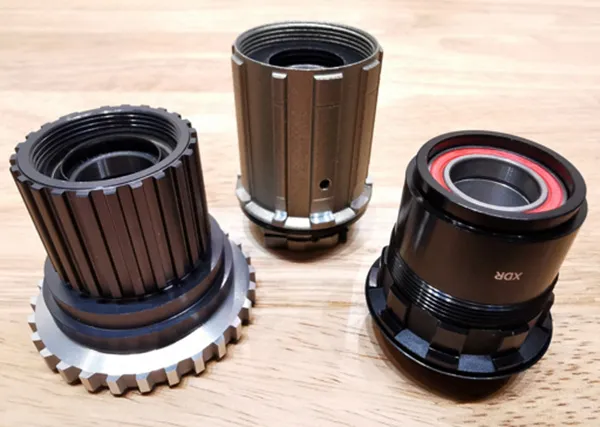
A second wheelset also needs the correct axle, freehub, cassette, and rotor configuration. Differences in rotor or cassette position can require adjustment. “Swap and ride” should be verified, not assumed.
Start with the rim.
Confirm the system.
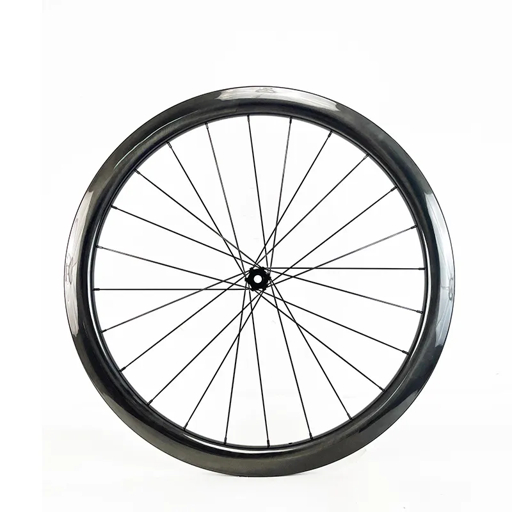
The CHASE 45 AR illustrates why wheel dimensions are more useful than category names when planning a tire change. Its published specifications provide a starting point for a compatibility discussion—not a substitute for one.
XDRU lists a recommended tire range of 23C–43C. Treat that as manufacturer-listed product information, not universal approval for every tire in that range. Confirm the exact tire, rim construction, operating pressure, load, and intended surface with XDRU and the tire manufacturer.
Review CHASE 45 AR specifications
Build confidence.
Before building speed.
- Confirm compatibility and inflate within every applicable limit. Check bead seating, wheel installation, and tire clearance before riding.
- Measure the mounted tire and recheck clearance after it has settled. Inspect the closest points at the fork, stays, and other frame features.
- Use a pressure starting point appropriate to actual tire width, system load, load distribution, and surface. Do not copy another rider’s number without context.
- Begin on familiar pavement. Assess steering, braking, tire support, and any rubbing before introducing a short, easy, firm unpaved section.
- Change one variable at a time. Track comfort, control, pressure retention, and evidence of bottoming. Do not judge the setup solely by average speed.
- Stop and reassess if you find rubbing, unstable casing behavior, unexpected pressure loss, damage, or repeated rim strikes. Do not ride through a setup problem.
Slick gravel tires on road wheels: the details that matter.
Can you put gravel tires on carbon road wheels?
Sometimes. The tire and rim must have matching bead-seat diameters and an approved width and construction pairing. The bike must have sufficient clearance, and both the wheel and bicycle must be suitable for the intended riding. Carbon construction alone answers none of those questions.
Will a 40 mm gravel slick fit a road bike?
Not necessarily. Nominal tire size does not establish mounted width or height, and many road frames do not provide the required clearance. Use the bicycle’s current specifications and verify actual inflated dimensions.
Are gravel slicks better than wide road tires?
Neither category is universally better. For mostly paved riding, a suitable wide road tire may solve the comfort problem without adopting a gravel-focused casing. For mixed surfaces, compare exact protection, construction, available volume, rolling resistance, and approval.
Are slick tires safe in the rain?
A slick can provide good grip on normal wet pavement when its compound and setup are suitable. That does not imply dependable grip on wet grass, mud, oily surfaces, paint, metal covers, or other contamination.
Does tubeless mean I cannot get a pinch-related failure?
No. Removing the inner tube removes the conventional tube-pinch failure, but a hard impact can still damage the tire or rim. Too little pressure can also compromise tire stability and air retention.
Do slick gravel tires need less pressure than road tires?
Larger-volume tires commonly use lower operating pressures for a given load, but there is no universal category-based number. Actual dimensions, load, surface, stability, impact demands, and manufacturer limits determine the usable pressure range.
An all-road solution.
Not an all-terrain shortcut.
Fit slick gravel tires to suitable carbon road wheels when your real goal is a more comfortable, versatile bike for pavement and modest firm-surface detours. That is a coherent setup—not a compromise that needs apologizing for.
Choose something more specialized when the route demands it: a road-focused tire for maximum paved performance, or an appropriately approved gravel system with suitable tread for loose, muddy, and more demanding terrain.
The best combination is not the one that claims to do everything. It is the one whose limits match the roads you actually choose.