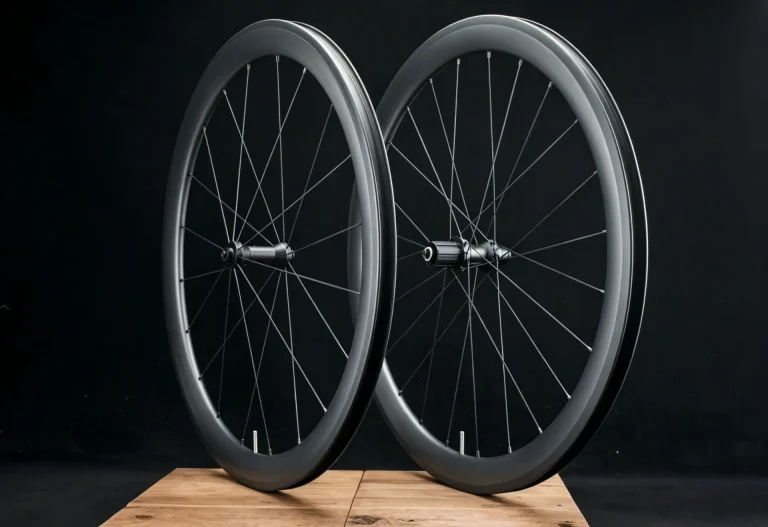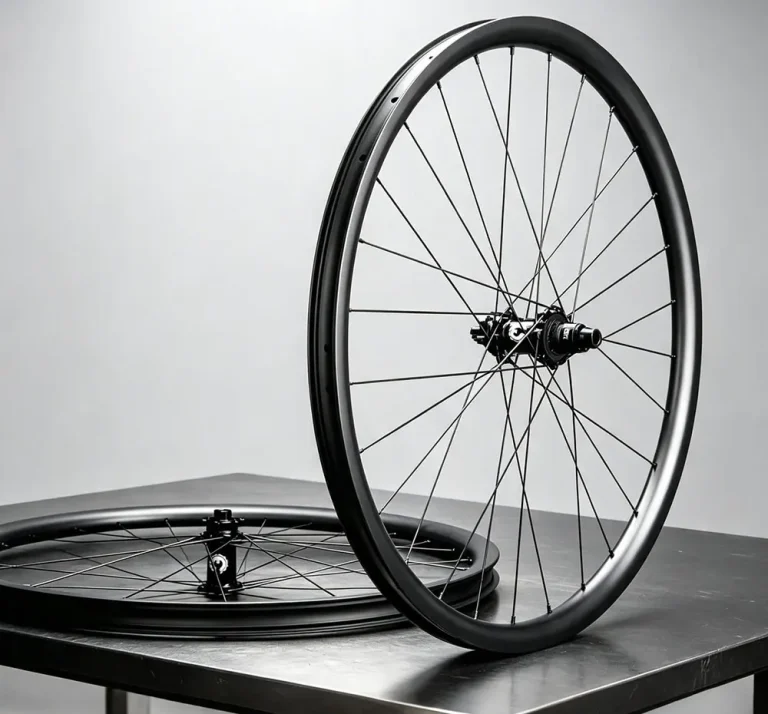

Less weight.
More mountain.
How to choose climbing carbon road wheels that make sense beyond the summit.
A practical guide to lightweight wheelsets, rim depth, crosswind stability, tire setup and long mountain descents.
Not just the uphill.
starting point
For many riders, a well-built 35–45mm carbon road wheelset is a sensible place to begin a mountain-riding shortlist. Go shallower when exposed roads and front-wheel confidence dominate. Consider more depth when fast approaches and rolling terrain make up a substantial part of the ride. In every case, compatibility, load capacity, tires and braking come before the last few grams.
The summit is only half the brief.
A low wheelset weight is easy to compare. Mountain performance is not.
Your route might begin with an hour of valley riding, rise into a gusty pass and finish with tight corners on imperfect tarmac. A wheelset that looks ideal on a scale may not be the one you want under you for that entire day.
The best carbon wheels for climbing are not automatically the shallowest or lightest available. They are the wheels whose compromises fit your terrain, riding style and equipment.
Start with what the wheelset must do reliably. Only then decide how much weight you want to save.
What does a lighter wheelset actually save?
Less mass reduces the work required to gain elevation. That matters on a climb. But the relevant mass is the complete system: rider, bicycle, clothing, bottles, tools and anything else you carry.
For an 80kg rider-and-bike system, removing 200g reduces total mass by 0.25%. That is a real reduction—not the dramatic percentage suggested by comparing wheelset weights alone.
A small number with a useful lesson.
The calculation does not mean that lightweight wheels are pointless. It means that a modest mass saving should be weighed against the rest of the package rather than treated as a transformation.
0.20 × 9.81 × 5.56 × 0.08 ≈ 0.87W
Illustrative small-gradient approximation. It isolates gravitational power and excludes aerodynamic differences, acceleration, rolling resistance and drivetrain losses. It is not a product test or a prediction of time saved.
Rim weight is not “double” on a steady climb.
A gram at the rim and a gram at the hub add the same gravitational demand for the same elevation gain. Rim mass also contributes to rotational inertia when wheel speed changes, but that is a separate effect.
The familiar claim that rotating weight always counts twice does not describe steady-speed climbing.
Compare the complete riding setup.
Check whether quoted wheel weights include tape and valves. Then compare systems equipped with suitable tires, tubes or sealant, rotors and the correct cassette interface.
A lighter bare wheelset can lose some of its advantage once both options are ready for the same ride.
How deep should climbing carbon wheels be?
Rim depth is useful for narrowing a shortlist. It is not a complete performance specification.
A deeper wheel can remain competitive in weight. A shallower wheel can still be a poor match if its tires, construction or load approval do not suit the rider.
Use the following ranges as practical starting points—not standardized categories or guaranteed speed rankings.
Worth investigating for exposed passes, frequent gusts and riders who prefer a less demanding front wheel. Confirm actual handling evidence and weight rather than assuming every shallow wheel is light.
A useful shortlist for long climbs, valley approaches and everyday road riding. The appeal is balance across a route, not a claim that this range wins on every gradient.
Consider when your climbing rides contain substantial fast riding. Evaluate complete weight and front-wheel behavior before deciding that extra depth is the right compromise.
There is no universal “aero versus weight” gradient.
A claim such as “light wheels win above 6%” needs assumptions about rider power, system mass, speed, wind and the actual wheels being compared. As climbing speed falls, mass generally becomes relatively more important. But a fast rider on a shallow climb and a slower rider on a steep ascent face different trade-offs.
Pay special attention to the front wheel.
A gust can create a steering moment around the front wheel’s steering axis. How that moment changes as the wind arrives influences the correction you feel at the bars.
Depth plays a part, but rim shape, tire profile and wind angle also matter. That is why “stable in crosswinds” needs more support than a rounded rim shape or a confident product description.
Lighter rider? Be more selective, not more dogmatic.
Rider mass affects the response to external forces, but there is no universal body-weight cutoff for a particular rim depth. Position, bicycle geometry, experience and wind exposure also influence control.
Feedback from a much heavier rider on sheltered roads may not tell you how a wheel will feel on your exposed descent.
Mixed depths can be a rational option.
A shallower front and deeper rear may offer a useful handling-and-aero compromise. Swiss Side’s testing illustrates that wheel combinations can change drag and steering moment differently.
That supports the principle—not a numerical performance claim for an untested combination. Confirm that the manufacturer supports the proposed build.
A small theoretical gain is not much use if the setup makes you ride tense through every exposed corner.
Choose the contact patch before polishing the weight figure.
For many modern disc-brake road bikes, 28–32mm tires are a useful range to investigate for mountain riding. That is a starting point, not a fit recommendation for every frame or rim.
Actual inflated width depends on tire construction and rim width. A tire labeled 28mm will not necessarily measure 28mm on your wheels.
Confirm the approved tire-and-rim pairing, then check the fitted tire against the bicycle manufacturer’s required clearances.
Pressure should reflect system mass, actual tire size, surface and manufacturer limits. A maximum pressure is a ceiling—not the default pressure for best performance.
Too much pressure is not free speed.
On imperfect surfaces, excessive pressure can make the bicycle harsh and unsettled. Too little pressure can allow excessive tire movement or rim impacts. Start from appropriate manufacturer guidance or a reputable pressure calculator, then refine cautiously within the approved limits.
“Tubeless-ready” does not answer every compatibility question.
Verify whether the rim is hooked or hookless, which tires and widths are approved, and which pressure limit applies to that exact combination. Adding an inner tube does not make an incompatible pairing safe.
Descending changes the buying decision.
During a descent, some of the energy gained on the climb is dissipated through air resistance, rolling losses and braking. The braking system’s job is to manage its share of that energy without exceeding its operating limits.
The braking surface moves to the rotor.
Disc brakes avoid direct brake-pad heating of the carbon rim. They do not make the braking system immune to heat buildup, fade or maintenance problems.
- Use rotor sizes approved for the frame, fork and brake system.
- Confirm pad and rotor compatibility, wear limits and bedding-in instructions.
- For long descents or heavier loads, check that the approved configuration is appropriate for the intended use.
- Never exceed the bicycle’s permitted rotor size simply to seek more braking capacity.
The rim is part of the heat-management system.
Brake-track construction, approved pads and operating guidance become central purchase criteria. A carbon-fiber grade or low weight does not establish descending suitability.
- Use the exact pad type approved for the rim.
- Inspect pads and tracks for contamination, debris and damage.
- Follow the wheel maker’s wet-weather and long-descent instructions.
- Confirm any tire-pressure, load or usage restrictions before buying.
Control speed. Do not chase a cooling technique.
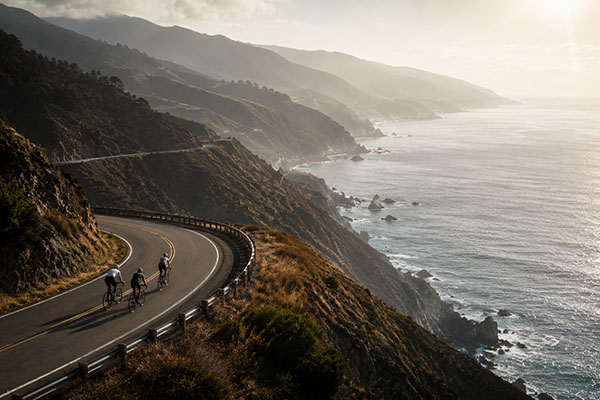
Manage speed for the visibility, surface and corner ahead. Avoid prolonged brake dragging where conditions safely permit periods of release, but never ride faster simply to cool the brakes. Follow the equipment manufacturer’s instructions.
If braking fades, lever feel changes unexpectedly or a wheel or tire appears damaged, stop safely and have the system inspected before continuing.
A good wheelset is a good system.
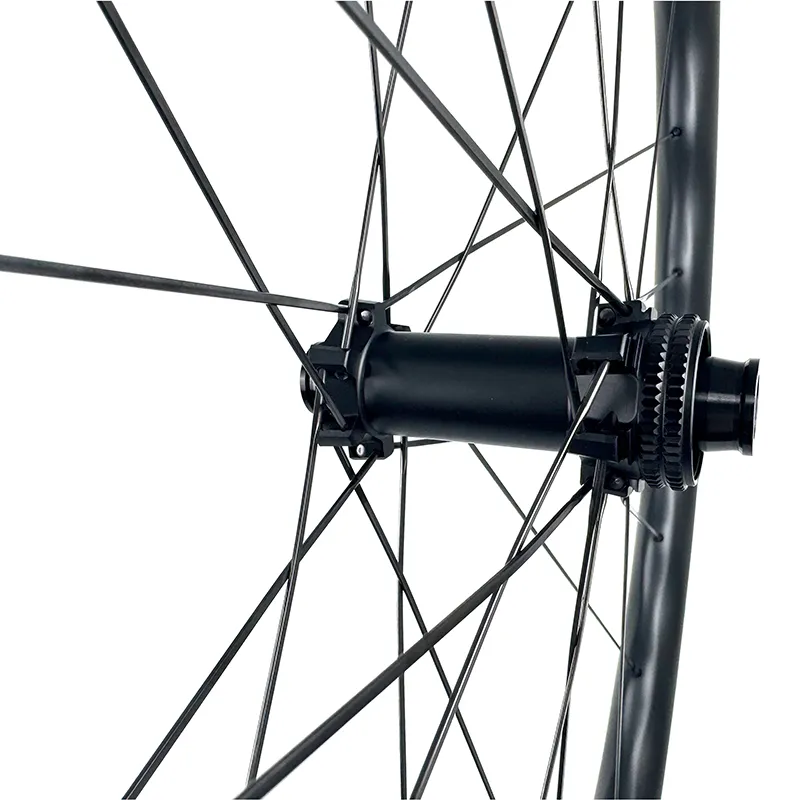
Fiber grade alone cannot tell you how durable, stiff or impact-resistant a finished wheel will be. Laminate design, manufacturing, rim geometry, spoke support, hub geometry and assembly all contribute.
Spoke count is not a standalone stiffness score either. Read it alongside the spoke type, lacing, rim construction and intended load.
For mountain trips, serviceability deserves a place beside weight. Ask how replacement spokes, nipples, bearings and freehub parts are supplied—and whether a local workshop can carry out the work.
Check what “maximum weight” means.
A rider-weight limit and a total-system-weight limit are different. Obtain the definition, then account for the bicycle, bottles, clothing and carried equipment wherever the specification requires them.
Three rides. Three different priorities.
The exposed summit day
Open roads and gust-prone descents put front-wheel confidence high on the list. Compare shallower and moderate-depth options, then evaluate actual mass, load approval, tires and braking. Predictable control matters more than a small theoretical gain.
The fast mountain loop
Valley roads, rolling approaches and sustained climbs make lightweight mid-depth carbon wheels worth investigating. A 35–45mm shortlist can be useful, provided the front-wheel behavior suits the rider. Optimize the whole route, not only its slowest kilometer.
The rough-road gran fondo
Hours in the saddle and repeated descents elevate tire volume, pressure, braking, load capacity and repairability. Choose the complete wheel-and-tire system together. A manageable setup late in the ride is more useful than an impressive bare-wheel weight.
Lightweight. Mid-depth.
Still a decision to make.
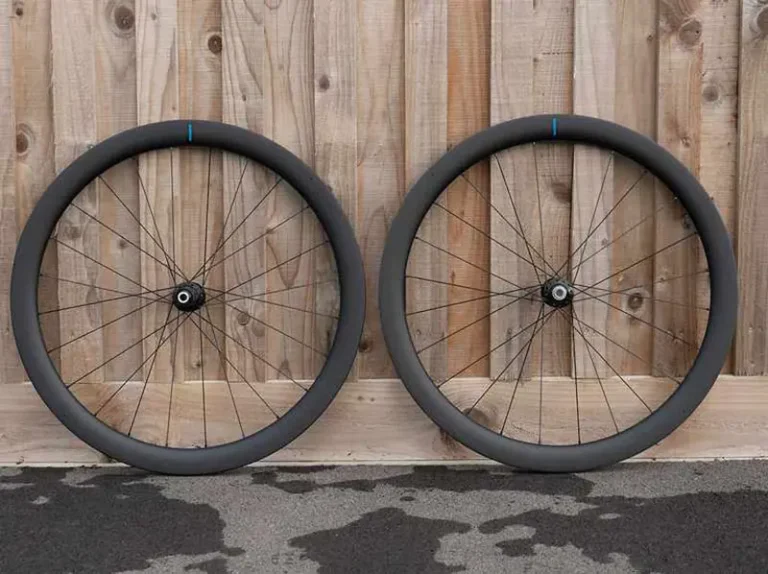
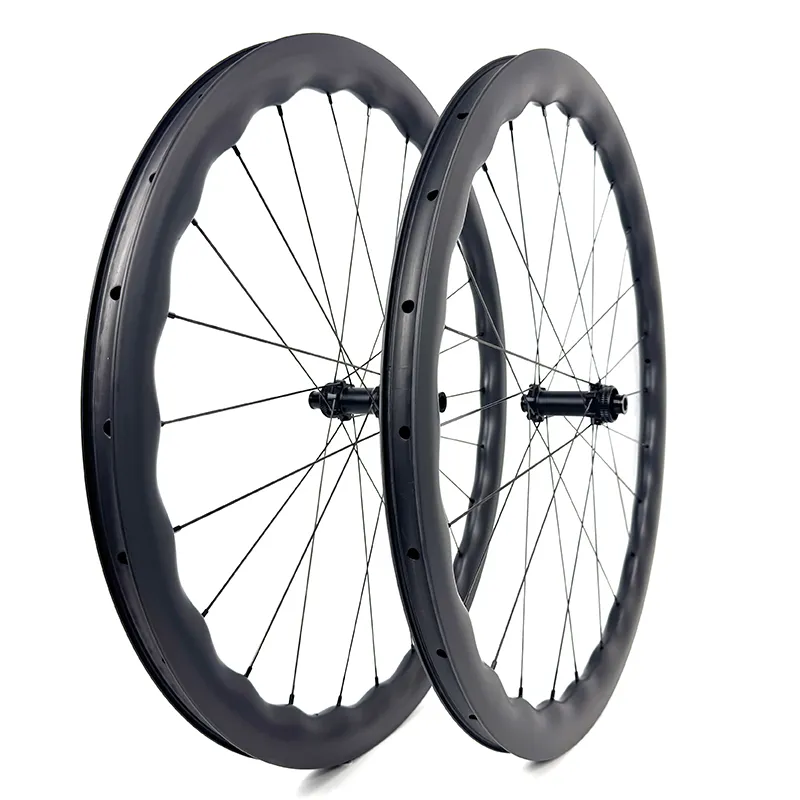
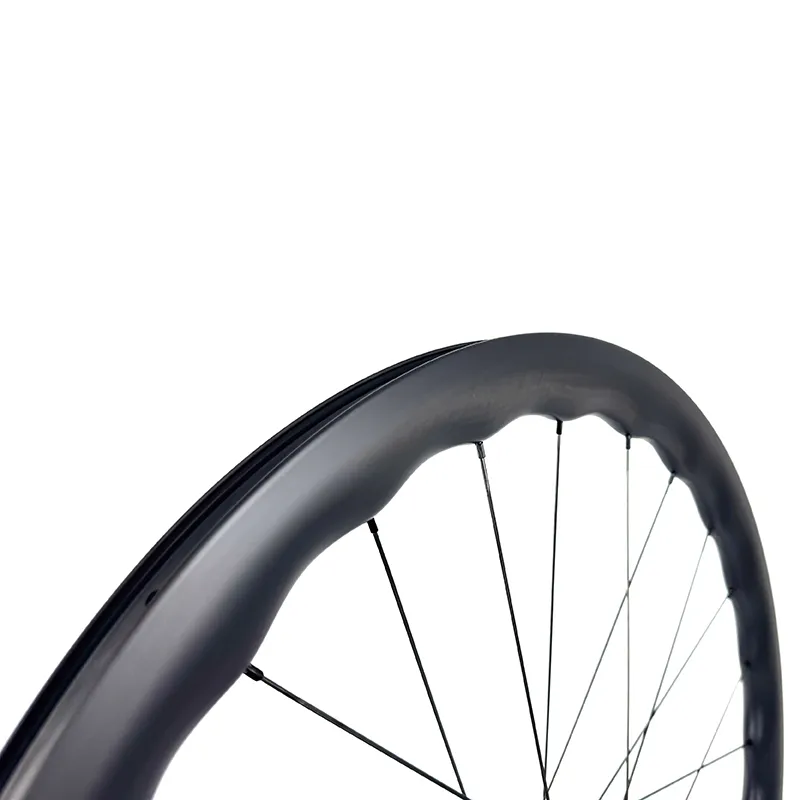
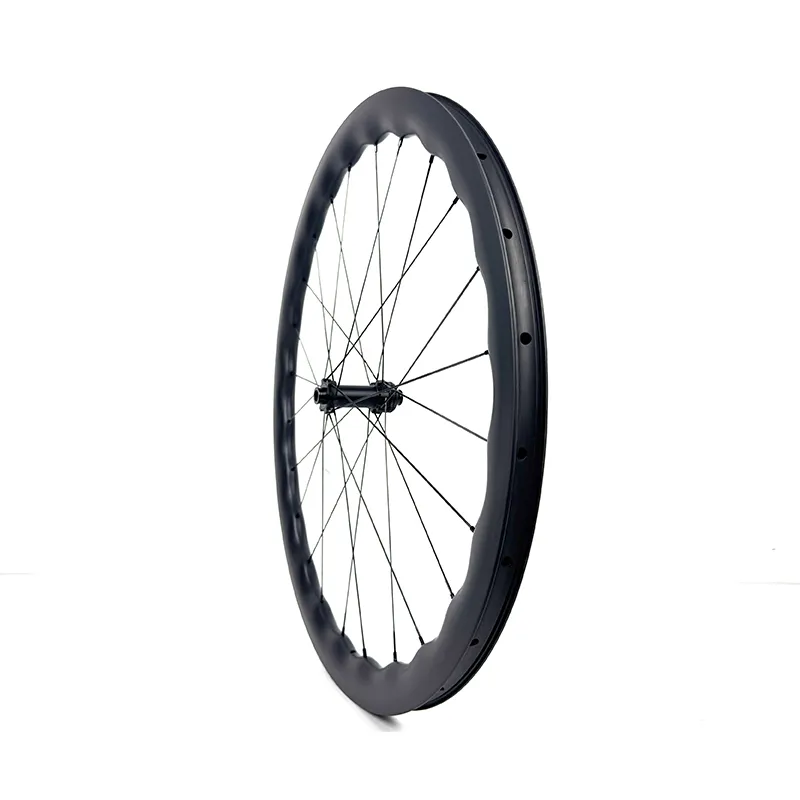
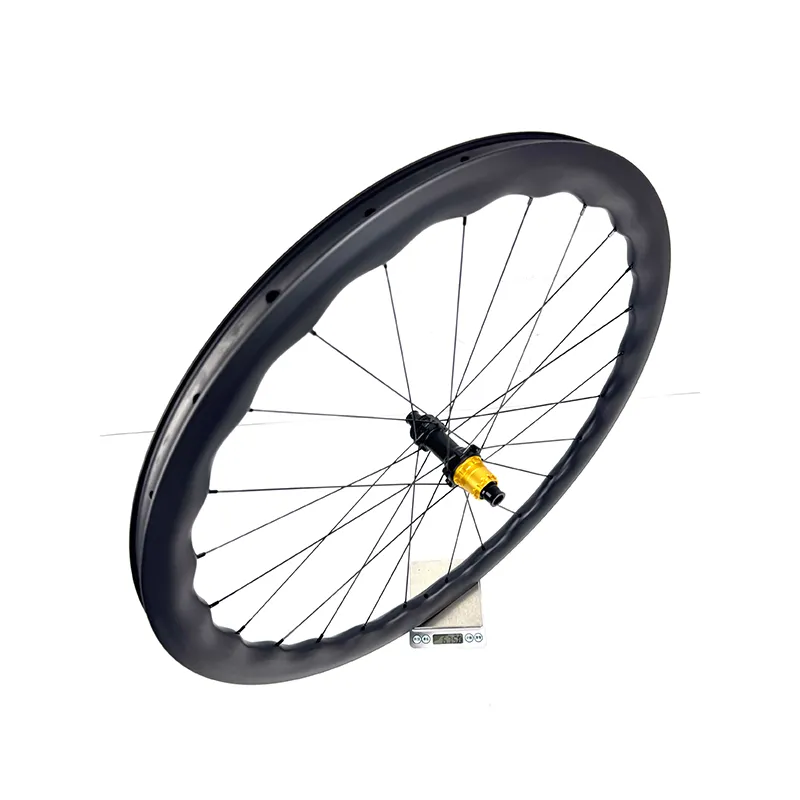
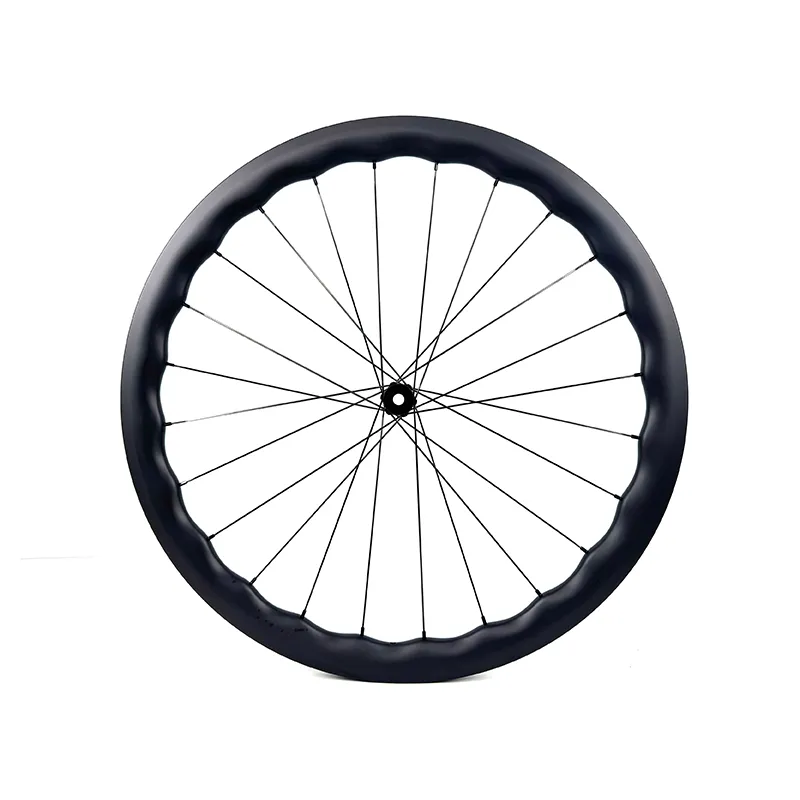
The CHASE 45 AERO SL is a relevant option to evaluate if your shortlist calls for lightweight 45mm carbon road wheels. Its published specifications establish dimensions and claimed weight; they do not replace checking compatibility or provide independent proof of handling and descending performance.
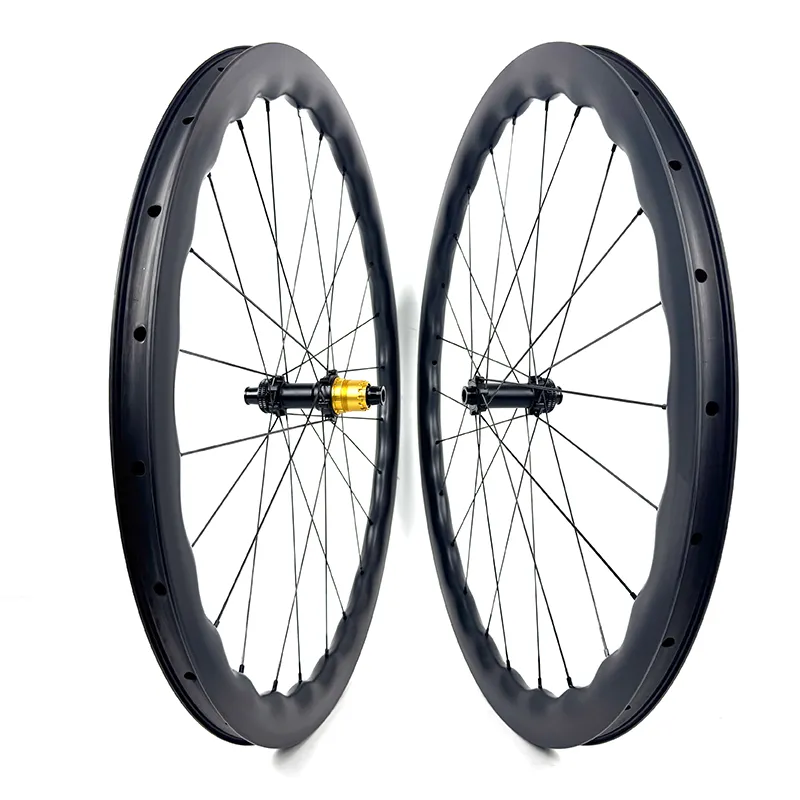
CHASE 45 AERO SL / Front wheel pictured.
CHASE 45
AERO SL
For riders comparing a low claimed wheelset weight with a versatile mid-depth profile.
Published specifications also list 24/24 spokes, a 36T ratchet hub, 12×100mm / 12×142mm axles and HG or XDR freehub options.
Before ordering, confirm weight inclusions, exact configuration, permitted load, bead design, approved tires and pressure limits. Specifications may change; use the current confirmed configuration.
Explore CHASE 45 AERO SL →Eight checks that matter more than a headline.
Confirm wheel size, axle standards, brake interface and cassette compatibility.
Obtain the permitted load and establish whether it means rider mass or total system mass.
Verify bead design, approved tire models and widths, pressure limits and fitted clearance.
Match the braking system to the route, weather, load and manufacturer’s instructions.
Choose a front wheel you can manage in your actual wind exposure—not only in calm conditions.
Compare ready-to-ride weight using consistent inclusions and stated tolerances.
Check replacement-part availability, service requirements and warranty conditions.
Separate measured specifications from unverified aerodynamic or handling claims.
Climbing carbon wheels, clarified.
Are 45mm carbon wheels good for climbing?
They can be a good match for routes that combine climbing with faster roads. Assess complete weight, front-wheel behavior, tire compatibility, load approval and braking requirements rather than making the decision from depth alone.
Are lighter wheels always faster uphill?
Lower mass reduces gravitational demand when other factors are equal. Actual wheelsets also differ in aerodynamic performance, tire systems and construction, so a lower weight does not establish which complete setup is faster in every situation.
Should a lightweight rider choose shallow rims?
A shallower front wheel is worth considering when gusts are a concern. There is no universal rider-weight cutoff for a particular depth; rim design, riding position, wind exposure and confidence also matter.
Is tubeless automatically better for mountain riding?
No. Tubeless can offer useful pressure flexibility and seal some punctures, but it requires approved components, correct installation and maintenance. A compatible tube setup can remain a practical choice. Compare complete systems rather than treating tubeless as a universal upgrade.
Can carbon road wheels handle long mountain descents?
Suitability depends on the specific wheel, tire and braking system and their intended use. Disc-brake carbon wheels avoid direct rim-braking heat. Carbon rim-brake wheels require particular attention to approved pads, brake-track condition and descent guidance. Neither removes the need for inspection and appropriate speed control.
Buy for the mountain.
Not just the summit.
A good climbing wheelset makes sense before the climb, under power, in the wind and on the way down. Once compatibility, load capacity, braking and control are settled, weight becomes a useful refinement rather than a distraction.
The right choice is not necessarily the shallowest, deepest or lightest wheel on the shortlist. It is the one whose compromises match your roads.