
WOBBLE.
HOP.
WHAT NEXT?
A carbon wheel looks out of true.
Should you adjust it—or stop?
First identify what is moving. Then separate a tire or installation problem from a wheel-build issue—and both from possible structural damage.
FIRST.
New movement after an impact is not a “ride and see” problem.
Stop riding if wobble or hopping follows a crash or hard impact, or comes with a suspected crack, bulge, damaged bead area, broken spoke, rapid pressure loss, significant hub play, or changed braking behavior.
Move to a safe place and arrange inspection or transport. Do not loosen the brakes, add pressure, or tension the spokes simply to make an unexplained symptom disappear.
Carbon wheels
can be trued.
Damage cannot
be trued away.
A serviceable, adjustable spoked carbon wheel may be corrected by a qualified wheelbuilder when the problem is spoke tension or alignment—not a damaged rim.
But a moving tire, an incorrectly installed wheel, hub play, or a rubbing brake rotor can mimic an out-of-true rim. Turning nipples before identifying the cause can create a second problem.
The priority is diagnosis: identify the component, establish the history, and inspect its condition before attempting correction.
This guide covers conventional serviceable spoked wheels. Bonded, molded, carbon-spoke, and proprietary systems may require different tools, procedures, or factory service.
Three alignment questions. Not one.
Lateral runout
Side-to-side variation as the rim rotates. This is what riders usually mean by wheel wobble or a wheel being laterally out of true.
Radial runout
Variation in the rim’s distance from the hub. A local high or low spot can appear as a vertical hop when the wheel rotates.
Dish or centering
The rim’s overall lateral position relative to the hub. A wheel can rotate straight yet sit off-center. Installation and frame alignment also need checking.
Original simplified illustrations. These describe different conditions; they do not show tolerances or certify wheel condition.
Watch the rim.
Watch the tire.
Do not treat them
as the same signal.
Tire tread can move even when the rim runs consistently. A rim can deviate while the tire partially hides it. A rotor can rub while neither tire nor rim has meaningful runout.
Diagnose each component against an appropriate reference before choosing a repair.
What you see is a clue—not a verdict.
Tire moves; rim appears steady
Uneven bead seating, casing variation or damage, or another tire-installation issue.
Inspect the tire and its seating-reference line on both sides. Do not adjust spokes to compensate for a tire symptom.
Rim moves side to side at the same point each revolution
Lateral runout, potentially associated with tension imbalance, damaged spokes, nipple problems, or rim damage.
Record the location and history. A technician should assess rim condition and spoke tension before correction.
Tire or rim appears to hop vertically
Tire seating or casing variation, radial rim runout, or localized impact damage.
Separate tire motion from rim motion. A new localized hop after an impact requires inspection before riding.
Wheel shifts when gently pushed sideways
Incorrect wheel retention, hub or axle play, loose components, or another mechanical issue.
Verify installation according to the bicycle and hub manuals. Unresolved play belongs with a mechanic, not a spoke wrench.
Disc brake rubs once per revolution
Rotor alignment, caliper position, wheel installation, hub play, or related brake issues.
Observe rotor and rim separately. Rotor rub alone does not establish that the carbon rim needs truing.
Wheel looks consistently closer to one side of the frame
Installation, wheel dish, frame or fork alignment, or asymmetric visual reference points.
Confirm correct seating first. A dish gauge and appropriate alignment checks may be needed; the frame’s appearance is not a calibrated gauge.
Gather evidence before changing anything.
These checks help describe a problem. They do not certify structural integrity or authorize riding after suspected damage. If there are clear damage signs, stop the inspection and contact the manufacturer or a qualified shop.
Record when it started
Note whether the symptom followed a tire change, wheel removal, pothole strike, crash, transport incident, or earlier spoke adjustment. Save a short slow-rotation video before making changes.
Check wheel installation
With the bike stable and the wheel stopped, verify correct seating, axle or quick-release installation, end-cap presence, and retention using the relevant manuals. Do not guess torque or tighten beyond specification.
Inspect the visible rim and tire
Under good light, look for cracks, bulging, lifting fibers, bead damage, cuts, and irregularities around spoke entries. Do not press hard on a suspected damaged area or assume that an unmarked surface proves the rim is sound.
Rotate slowly and separate the signals
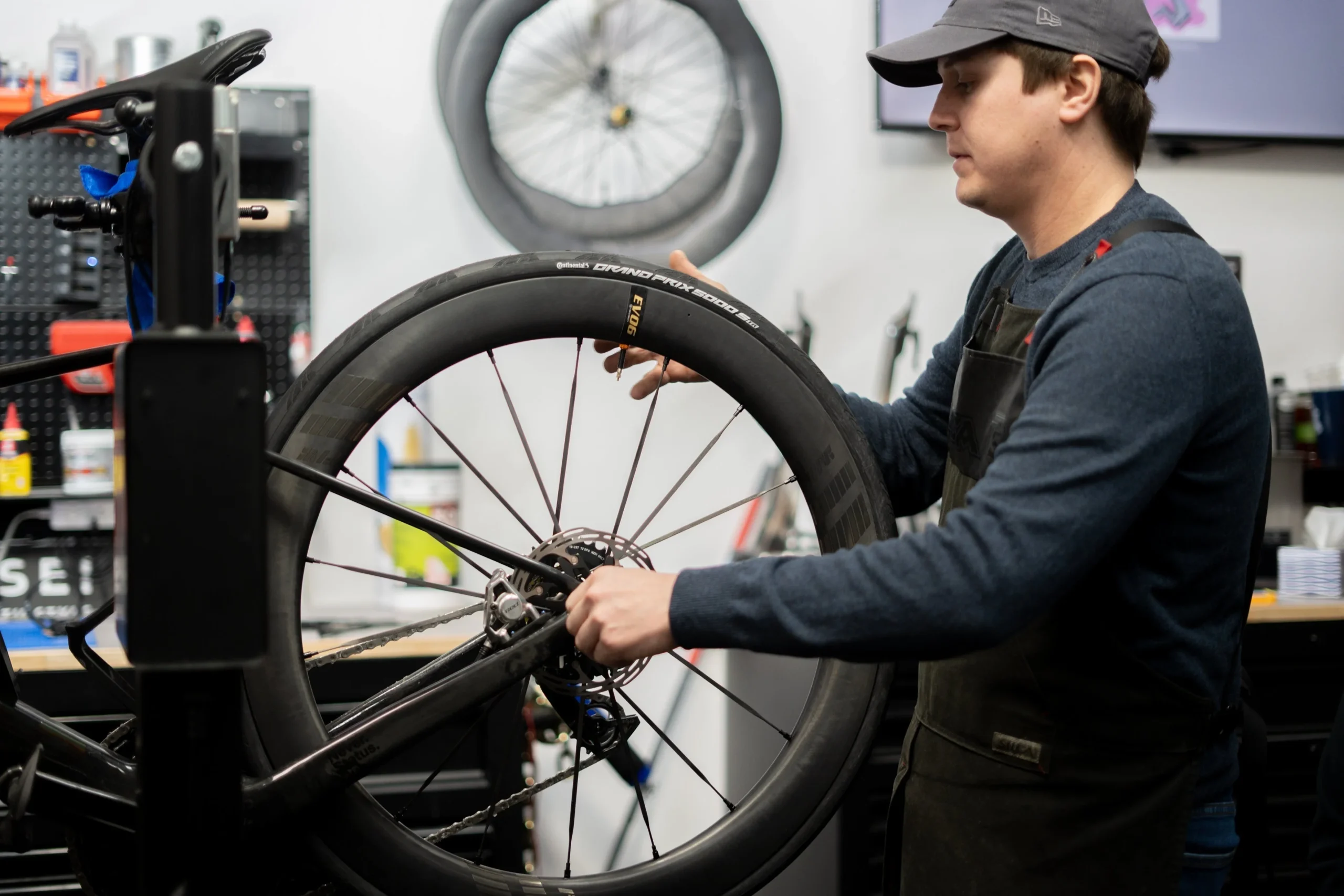
Secure the bicycle in a suitable stand and turn the wheel slowly by hand. Watch an appropriate rim reference separately from the tire. Keep hands, clothing, and loose objects away from spokes and rotors.
Check the tire’s seating indication
Where present, compare the molded reference line with the rim edge around both sides. A dip, bulge, or exposed bead needs investigation. Never exceed a tire or rim pressure limit to force seating.
Document—not retension—suspect spokes
Note a broken spoke, an obviously slack spoke, or a displaced nipple. Do not begin tightening until the cause and manufacturer’s tension requirements are known. Repeatedly plucking or squeezing spokes is not a calibrated tension measurement.
A straight-looking wheel is not the complete objective.
Truing changes the tension system
In a conventional spoked wheel, spokes pull the rim toward the hub and toward their respective hub flanges. Controlled tension changes can alter lateral alignment and roundness.
Those changes interact. Correcting one area can affect radial runout, lateral runout, dish, and nearby spoke tensions. A visually straighter rim is not enough if the resulting tension is unsuitable.
The carbon structure still has to be sound
Truing is not a method for repairing cracked laminate, damaged bead seats, distorted brake tracks, or compromised spoke beds.
A technician should not use extreme tension differences to force a damaged rim into an acceptable-looking shape. If structural damage is suspected, assessment comes first.
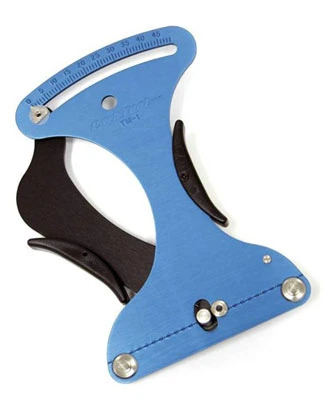
Book an inspection before the next ride when the cause is unresolved.
Impact-related change
New wobble, hopping, rubbing, pressure loss, or altered handling after a crash or hard impact warrants inspection. A wheel that still spins can still be damaged.
Suspected structural damage
Cracks, bulges, lifting fibers, damaged bead areas, distorted brake tracks, or changes around spoke holes need manufacturer-directed assessment.
Broken or recurring loose spokes
A replacement spoke may be part of the repair, but repeated loosening or breakage calls for a complete build assessment—not another isolated adjustment.
Persistent radial hop
Once tire seating and casing issues are separated, a localized rim hop deserves careful assessment, especially when it is new or impact-related.
Specialized construction
Internal nipples, proprietary spokes, carbon spokes, unusual adjustment interfaces, and unavailable service data are good reasons to use an experienced technician or the manufacturer’s service channel.
Correction will not stay corrected
If the wheel repeatedly goes out of true, the underlying cause may involve tension, damaged parts, nipple condition, assembly, or the rim itself. Repeated visual correction is not a diagnosis.
Ask for a wheel assessment—not just “a quick true.”
The mechanical baseline
- Correct hub support, axle installation, and bearing condition.
- Lateral and radial rim runout at appropriate reference surfaces.
- Wheel dish or centering relative to the hub.
- Spoke condition and tension using suitable conversion data.
- Nipple condition, accessibility, and signs of movement or damage.
The condition and service decision
- Whether the tire or its installation is creating the visible symptom.
- Whether tire removal is needed to inspect the rim and bead area.
- Whether correction can be achieved within manufacturer limits.
- Whether suspected damage requires manufacturer or specialist review.
- What post-service checks and follow-up are required.
How much carbon wheel wobble is acceptable?
There is no universal millimeter figure that declares every carbon wheel safe. A manufacturer’s runout specification is a service or acceptance criterion for that product—not a substitute for checking damage, tension, retention, and clearance.
The measurement also needs a definition: lateral or radial, which rim surface, how the hub is supported, whether the tire is installed and inflated, and whether the figure represents total measured variation.
A small new change after an impact can matter more than a larger longstanding tire-casing variation. Conversely, a visibly straight rim may still have unsuitable spoke tension or structural damage.
Give the technician a useful case history.
Bring the facts
Record wheel model and serial details, spoke type, tire model and size, pressure, and any recent service. Describe the impact or event and whether the symptom appeared suddenly or gradually.
Include any previous nipple adjustments, even if they were small. Knowing what changed helps prevent the next person from diagnosing an altered baseline.
Bring clear evidence
Capture the complete wheel, close-ups of suspect areas, and a slow-rotation video showing rim and tire separately. Record valve position or another reference so the affected section can be found again.
Photos and video support triage; they cannot establish internal carbon integrity or replace an in-person inspection where needed.
Correct parts.
Correct procedure.
Correct diagnosis.
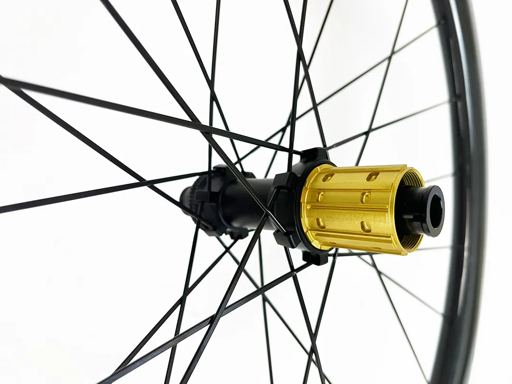
XDRU lists the CHASE 45 AR with Sapim CX-Leader aero bladed spokes, Pillar brass nipples, and a 24H/24H spoke configuration.
For service, confirm the exact production specification, replacement spoke dimensions, required tools, tension guidance, and runout criteria with XDRU. Do not infer those values from the spoke brand alone.
Review CHASE 45 AR component specificationsCarbon wheel truing: what riders ask most.
Can carbon wheels be trued like aluminum wheels?
Many conventional adjustable spoked carbon wheels can be trued through controlled spoke-tension changes. The rim and spoke system’s service limits still apply. Structural carbon damage is not repaired by truing, and some proprietary systems require special service.
Why does my tire wobble when the rim looks straight?
Uneven seating, casing variation, or tire damage can create that appearance. Inspect the tire separately, including its seating indication on both sides. A bulge or suspected bead problem requires stopping and correcting the cause before riding.
Can I ride home with a broken spoke?
Do not assume it is safe, especially on a low-spoke-count wheel. Stop, assess the situation, and arrange recovery rather than treating brake clearance as permission to ride. The wheel needs inspection and repair.
Does brake rub mean the wheel is out of true?
Not necessarily. Rim-brake contact can reveal lateral rim movement but can also involve setup issues. Disc brake rub may originate at the rotor, caliper, hub, or wheel installation without rim runout.
Should I tighten the loose-looking spoke first?
Not before identifying the cause and tension requirements. A very loose spoke may reflect a damaged nipple seat, broken component, or rim problem. Tightening it can hide evidence or overload another part of the system.
Can a shop confirm carbon integrity by looking at it?
Visual inspection is valuable but cannot exclude every form of internal damage. Depending on the impact, symptoms, and findings, the manufacturer may require further specialist assessment or replacement.
Does going out of true mean I need a new wheelset?
No. Tire correction, hub service, spoke replacement, or a properly executed true may resolve a serviceable wheel. If the rim is damaged, repairability or replacement must be assessed separately. Diagnosis should come before a purchase decision.
Locate the movement.
Establish the cause.
Then choose the repair.
A carbon wheel that wobbles or hops does not automatically need replacing. It does need the correct diagnosis. Separate tire motion, rim runout, hub play, wheel installation, and brake behavior before making adjustments.
When the change follows an impact, suggests structural damage, or cannot be explained confidently, stop riding and use a qualified technician or the manufacturer’s service channel. The goal is not simply a wheel that looks straight—it is a wheel that can be returned to service on a sound, documented basis.