
The Physics of Ride Feel
Wheel Stiffness Explained: Why it matters more than the marketing copy ever lets on.
Ask ten cyclists what makes a wheel “fast,” and you’ll hear the usual suspects: weight, aerodynamics, maybe even bearings. Stiffness comes up too — but often as a vague buzzword. Something desirable, sure. But what does it actually mean, and how does it translate on the road?
The truth is, wheel stiffness is one of the most misunderstood aspects of performance. It’s not just about feeling “solid.” It’s about how efficiently your power turns into forward motion, how predictably your bike handles under load, and how your wheels behave when conditions are less than perfect. Let’s unpack it properly.
What Is Wheel Stiffness?
At its core, stiffness is resistance to deformation under load. When you pedal, corner, or sprint, forces travel through the wheel in multiple directions. A stiff wheel resists bending or flexing under those forces; a less stiff wheel deforms more.
That sounds simple. But in practice, stiffness isn’t one thing — it’s three.
Lateral
Side-to-side rigidity
Critical for cornering and sprinting — the one riders actually feel.
Radial
Vertical compliance
Affects comfort and how the wheel absorbs road surface.
Torsional
Resistance to twisting
Especially under hard acceleration and braking loads.
Most riders, when they talk about stiffness, are really feeling lateral stiffness — the one that determines whether your bike feels sharp, or vague, when you put power down.
Why Stiffness Matters on the Road
Imagine standing out of the saddle and sprinting — you’re rocking the bike, applying force unevenly through each pedal stroke. A laterally stiff wheel holds its line, and power goes into forward motion.
A flexible wheel, on the other hand, can:
| — | Rub against brake pads on rim brake setups |
| — | Feel delayed or “spongy” under acceleration |
| — | Reduce steering precision in fast corners |
The difference isn’t always dramatic, but it’s noticeable — especially at higher speeds or under higher loads. There’s also a subtle efficiency gain: less flex means less energy lost to deformation. Not all of that loss is significant on its own, but over long efforts, it adds up.
“A well-designed carbon wheel doesn’t just feel stiff — it feels precise.”
The Carbon Advantage
Carbon fiber changed the conversation around stiffness. Unlike aluminum, carbon can be engineered with directional stiffness — meaning designers can make a rim extremely stiff laterally while still allowing some vertical compliance.[CMH-17]
The Ideal Balance
| ✓ High lateral stiffness | for power transfer |
| ✓ Tuned vertical compliance | for comfort and grip |
It’s not magic — it’s material science. Layup patterns, fiber orientation, and resin systems all play a role.
What Actually Affects Wheel Stiffness?
It’s not just the rim. A wheel is a system, and stiffness comes from multiple components working together.
Rim Depth & Profile
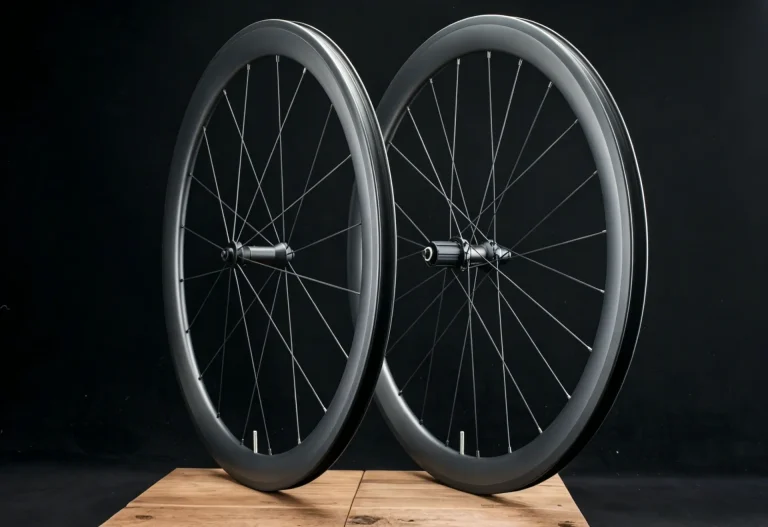
Deeper rims are generally stiffer — a 60mm section resists lateral flex more than a 30mm rim, simply due to its structure. But deeper isn’t always better: increased stiffness can come at the cost of weight and crosswind stability.
Spoke Count & Lacing Pattern
More spokes mean more structural support.
| 20–24 spokes | Common for road performance wheels |
| Higher counts | More durability and stiffness — heavier riders, rough terrain |
Lacing patterns — radial vs. crossed — also influence how forces are distributed.
Hub Design & Flange Width
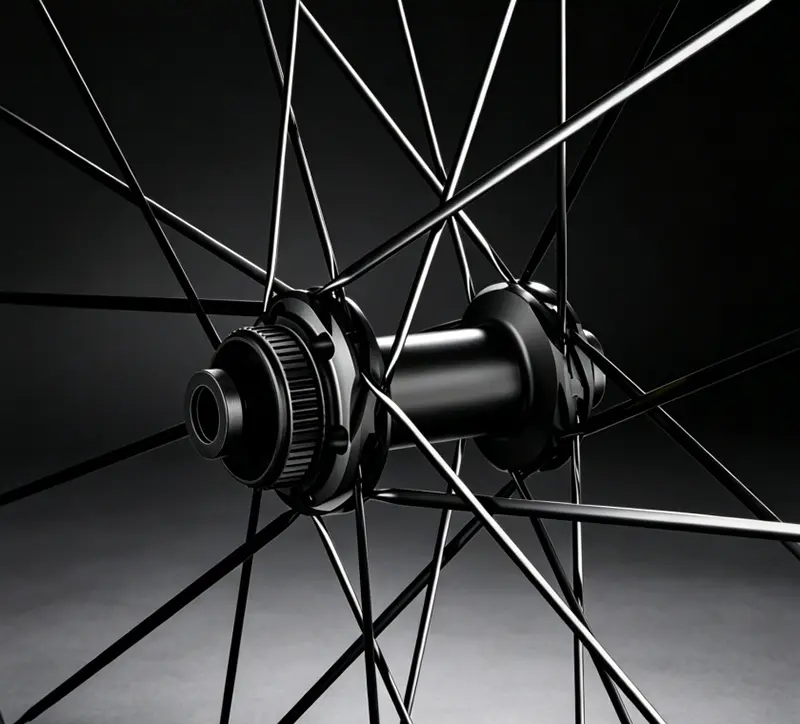
Wider hub flanges create a broader spoke bracing angle, increasing lateral stiffness — one reason disc brake wheels, especially with modern hub standards, often feel stiffer than older rim brake setups.
Spoke Tension
Higher, even tension improves stiffness and durability. Uneven tension leads to localized flex and long-term issues. Good wheels aren’t just built — they’re precisely tensioned.
The Trade-Off: Stiffness vs Comfort
A very stiff wheel can feel incredibly responsive — but also harsh. Every road imperfection transfers more directly to the rider. That’s why radial compliance matters. You want a wheel that resists lateral flex while absorbing small vertical impacts.
| Comfort-Tuned | Race-Stiff |
| Endurance riders | Mixed / all-round | Sprinters, racers |
Modern carbon wheelset aim for this balance. It’s not about maximum stiffness — it’s about optimal stiffness. Neither end is “better.” It depends on how you ride.
Rider Weight & Power Output
Stiffness is relative. A 60kg rider and a 90kg rider will experience the same wheel very differently — the heavier or more powerful the rider, the more force goes into the system, and the more stiffness matters.
Signs your wheels may not be stiff enough:
| · | Brake rub under hard efforts (rim brake bikes) |
| · | A vague or wandering feeling during sprints |
| · | Instability in high-speed corners |
If you’ve never noticed these issues, your current stiffness level is probably sufficient.
Disc brake systems introduced new torsional loads during braking, leading to stronger hub designs, more crossed spoke patterns, and increased overall system stiffness. The result: modern disc wheelsets tend to feel more planted and consistent, particularly in technical terrain.
Does More Stiffness Always Mean Faster?
Not necessarily.
Beyond a certain point, gains in stiffness offer diminishing returns. If a wheel is already stiff enough for your weight and riding style, making it stiffer won’t suddenly make you faster. In fact, excessive stiffness can increase fatigue on long rides and reduce traction on rough surfaces.
Speed comes from a combination of factors — stiffness is just one piece of the puzzle. Aerodynamics, rolling resistance, and rider position often matter more.
A Practical Example
Consider two carbon wheelsets:
Wheelset A
| Depth | 35mm |
| Spokes | Moderate |
| Tuned for | Comfort, all-day |
Wheelset B
| Depth | 60mm |
| Tension | Higher, race-built |
| Tuned for | Max power transfer |
On a smooth road, during a sprint, Wheelset B will feel sharper and more immediate. But over 100 km of mixed terrain, Wheelset A may actually help you maintain speed longer — simply because it’s less fatiguing.
That’s stiffness in context.
How to Choose the Right Stiffness
Instead of asking “what’s the stiffest wheel,” ask how much power you put down, what terrain you ride most, and whether you prioritize comfort or responsiveness.
| Climbing / endurance | Moderate stiffness, lighter rims |
| Sprinters / powerful riders | Higher lateral stiffness, deeper rims |
| Gravel / rough roads | Balanced stiffness, more compliance |
If you’re unsure, err on the side of balance. The best wheels disappear beneath you — they don’t constantly remind you how stiff they are.
Final Thoughts
Wheel stiffness isn’t a marketing term — it’s a real, measurable property that directly affects how your bike feels and performs. But it only makes sense when viewed in context.
The goal isn’t maximum stiffness. It’s the right stiffness — for your body, your riding style, and your roads.
Get that right, and everything clicks. The bike tracks better. Power feels immediate. Confidence goes up.
And that’s when you stop thinking about your wheels — and just ride.
FAQ
What is wheel stiffness?
Wheel stiffness is a wheel’s ability to resist deformation under load. It influences power transfer, handling precision, braking stability, and overall ride feel.
Does a stiffer wheel make you faster?
Not always. A wheel only needs to be stiff enough for your riding style and power output. Beyond that point, additional stiffness offers diminishing performance gains and may reduce comfort.
Are deeper carbon wheels stiffer?
Generally, yes. Deeper rims usually provide greater lateral stiffness because of their structural shape. However, rim depth is only one factor—spokes, hubs, and wheel build quality also affect overall stiffness.
How does wheel stiffness affect comfort?
Very stiff wheels transmit more road vibration to the rider, while wheels with better vertical compliance absorb small impacts more effectively. The best wheelsets balance stiffness with comfort.
Does rider weight affect the ideal wheel stiffness?
Yes. Heavier or more powerful riders place greater loads on their wheels and typically benefit from higher lateral stiffness. Lighter riders may prefer wheels with more compliance for improved comfort.
Can spoke count change wheel stiffness?
Yes. Increasing spoke count generally improves stiffness and durability, especially for heavier riders or rough terrain. Proper spoke tension and lacing patterns are equally important.