
Internal Rim Width Science
The spec-sheet number nobody asks about — and the one that quietly changes how a wheel rides.
For years, riders obsessed over depth. 50mm, 60mm, deeper, faster — that was the conversation.
Then something shifted, quietly, in the background.
If you’ve ridden a modern wide carbon wheel back-to-back with an older narrow one, you already know why. The difference isn’t theoretical — it’s immediate. The bike feels more planted, more predictable, and, somewhat unexpectedly, often faster in the real world.
Still, internal rim width remains one of the least understood parts of a wheelset. It’s often reduced to a number — 19mm, 21mm, 25mm — easy to compare, hard to interpret. Let’s make sense of it properly.
In This Guide
| ① What it actually means | ④ Aerodynamics |
| ② How it shapes your tire | ⑤ Matching width to tire size |
| ③ Rolling resistance | ⑥ Common misconceptions |
01
What Internal Rim Width Actually Means
Internal rim width is simply the distance between the inner walls of the rim — the part that supports the tire. Not the external width you see from the outside. Not the marketing-friendly profile. The inside.
That dimension directly determines how your tire sits, spreads, and behaves under pressure. Change the internal width, and you change the shape of the tire. Change the shape, and you change almost everything: rolling resistance, grip, comfort, even aerodynamics.
A small number, with outsized consequences.
02
Why Wider Rims Became the Standard
Go back a decade, and most road wheels had internal widths around 15–17mm. Tires were narrow — 23mm was standard — and the system more or less matched. But as tire technology improved, riders moved toward 25mm, then 28mm, and now 30mm+ for road.
At the same time, research and real-world riding showed something counterintuitive: wider tires, at lower pressures, can be faster — not just more comfortable. That only works if the rim supports the tire properly.
Independent tire testing has quantified this relationship in detail — see Bicycle Rolling Resistance‘s lab data on how tire width and pressure interact with real-world speed.
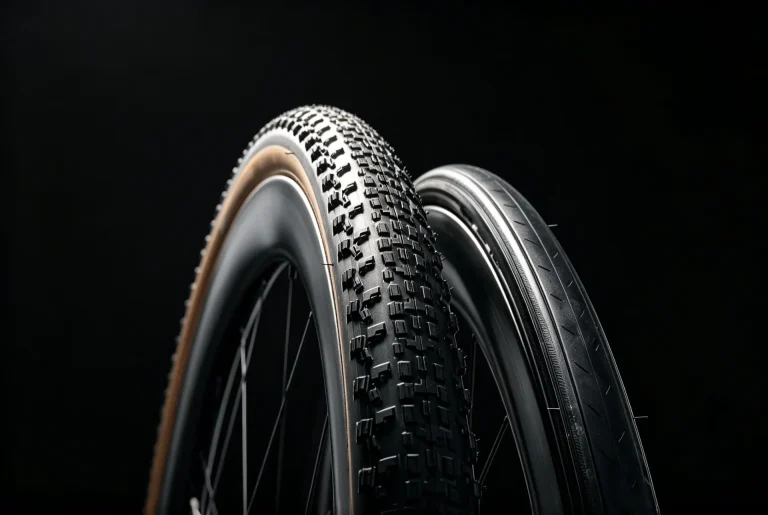
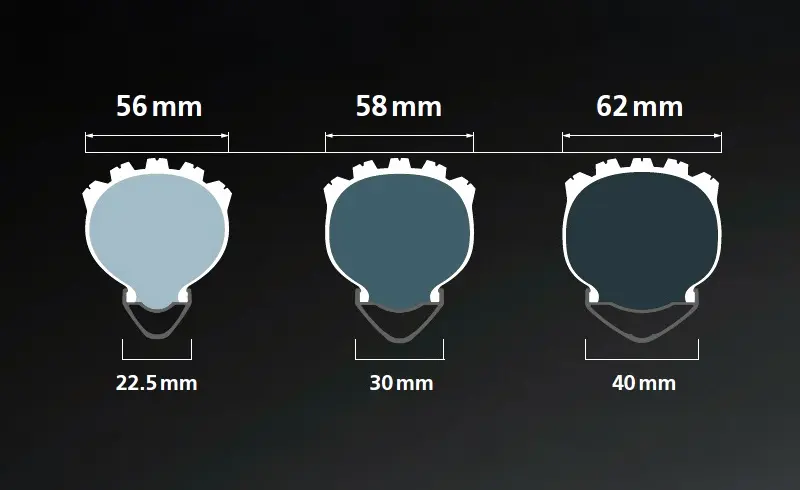
A narrow rim paired with a wide tire creates a “lightbulb” shape — bulging sidewalls, vague cornering, less stability. A wider internal rim flattens that profile into something more supported and stable.
03
Rolling Resistance
Rolling resistance isn’t just about tire construction — it’s also about how the tire deforms as it rolls. A well-supported tire, on an appropriately wide rim, deforms more evenly, which reduces energy loss.
Lower pressure without the tire feeling sluggish | A more efficient contact patch, not just a larger one | Real gains on rough pavement, not just smooth tarmac |
This is why many riders find a 28mm tire on a 21–23mm internal rim feels faster than a 25mm tire on a narrow rim — even if the narrower setup looks “racier” on paper.
04
Aerodynamics: Narrow ≠ Fast
There’s a long-standing assumption that narrower equals more aerodynamic — mostly true, back when rims were narrow too. Modern aero design works differently.
Rule of Thumb
The external rim width should be at least 105% of the tire width, to keep airflow smooth and continuous.
A 28mm tire on a properly designed wide carbon rim can be more aerodynamic than a poorly matched narrow setup — especially in real-world wind conditions, not just the wind tunnel.
05
Matching Width to Tire Size
This is where many buying decisions go wrong — the wheel might be excellent, but paired with the wrong tire.
| Internal Width | Best Tire Size |
| 19–21mm | 25–28mm tires |
| 21–23mm | 28–30mm tires |
| 23–25mm+ | 30–35mm tires (all-road, gravel) |
Too narrow a tire on a wide rim feels stretched and harsh. Too wide a tire on a narrow rim feels unstable — the sweet spot is where tire and rim work as one system.
06
Common Misconceptions
| ✕ | “Wider is always better” Go too wide for your tire choice or riding style, and you lose the balance that makes the system work. |
| ✕ | “It’s just about comfort” It affects comfort, yes — but also speed, handling, and aerodynamics. |
| ✕ | “It doesn’t matter for road riding” It matters more now than ever, as road setups move toward 28–32mm tires. |
Side by Side
Same Bike, Same Tire, Different Rim
A modern endurance road bike set up for 28mm tires:
Option 1
| Option 2
|
On paper, the difference looks small. On the road, it isn’t. Option 2 typically feels more stable in corners, smoother over rough sections, and often faster over long distances — not because it’s lighter or deeper, but because the tire is finally working the way it should.
The Takeaway
Internal rim width isn’t a trend. It’s a fundamental shift in how modern wheel systems are designed. Get it right, and everything improves quietly: grip, comfort, efficiency, confidence. Get it wrong, and even a high-end carbon wheelset won’t feel quite right.
If you’re upgrading, don’t treat rim width as a secondary spec — it’s one of the primary decisions, and one that should be matched carefully to your tires, your roads, and how you actually ride. If depth and stiffness are also on your list of variables to sort out, our guide to wheel stiffness covers the other half of that equation.
It’s not about wider or narrower. It’s about balance — how the whole system comes together beneath you when the road starts to ask questions.
Ready to find your match?
Browse carbon wheelsets built around properly matched internal widths.
Shop Carbon Wheels →FAQ
What is internal rim width?
Internal rim width is the distance between the inside walls of a bicycle rim where the tire beads sit. It determines the tire’s mounted shape, which directly affects grip, comfort, rolling resistance, and handling.
Why does internal rim width matter?
Internal rim width influences how a tire supports the rider and interacts with the road. A properly matched rim and tire improve cornering stability, ride comfort, rolling efficiency, and overall confidence.
Does a wider internal rim make a bike faster?
It can. A wider internal rim allows lower tire pressures and creates a more stable tire profile, which can reduce rolling resistance and improve speed on real-world road surfaces, especially rough pavement.
How does internal rim width affect tire size?
A wider internal rim makes the same tire measure slightly wider once installed. For example, a labeled 28mm tire may measure close to 30mm on a 23mm internal rim.
What is the best internal rim width for 28mm road tires?
Most manufacturers recommend an internal rim width of 21–23mm for modern 28mm road tires, providing a balanced combination of support, comfort, and aerodynamic performance.
Can I use wide tires on a narrow rim?
Yes, but there are limits. Mounting a wide tire on a narrow rim can create a “lightbulb” profile that reduces cornering stability and requires higher tire pressure. Always follow the tire and rim manufacturer’s compatibility recommendations.
Does internal rim width affect aerodynamics?
Yes. Modern aerodynamic wheel designs work best when the rim and tire are properly matched. A well-supported tire can produce smoother airflow than an oversized tire mounted on a narrow rim.
Is wider internal rim width always better?
No. The ideal internal rim width depends on your tire size and riding style. An excessively wide rim paired with a narrow tire can make the tire profile too square and reduce ride quality.
- Top 10 Best Spoke Brands for Bicycle Wheels in 2026
- Straight-Pull vs J-Bend Spokes: Complete Bicycle Wheel Guide
- Ratchet vs Pawl Hub Systems: Which Is Better for a Carbon Wheelset?
- Are 29 inch carbon mountain bike wheels worth it?
- 700c Carbon Disc Wheelset: What Really Matters Before You Buy
- Are Carbon Gravel Wheels Worth It? Performance, Ride Feel & Buying Guide
- Wheel Guide · Materials & Ride Feel
- Wide vs. Narrow Rims: The Quiet Revolution in Cycling Performance
- Can Beginners Ride Carbon Wheels?
- Bicycle Hub Bearing Maintenance Guide: Service, Adjustment & Replacement