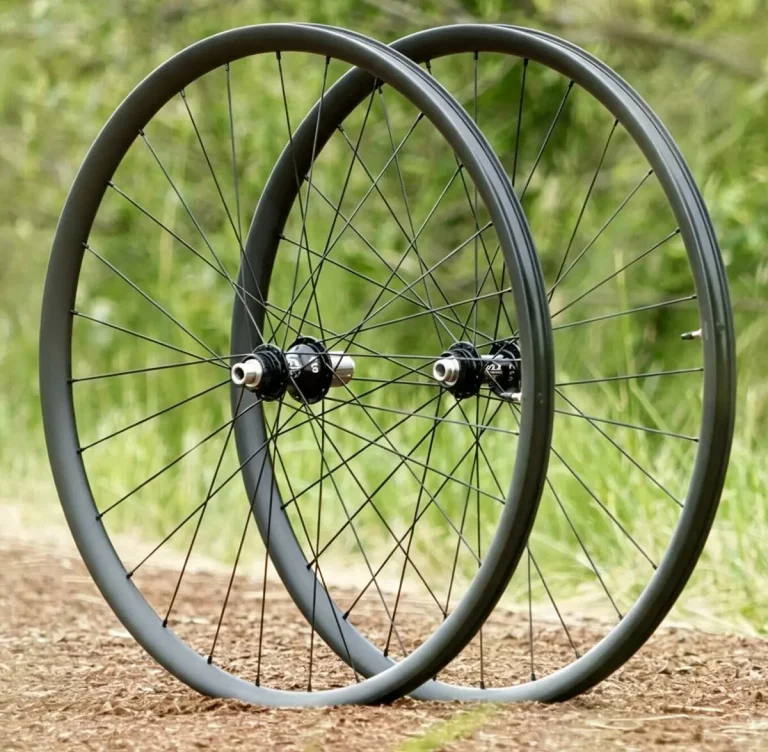

Built to hold the fast line.
How to choose carbon wheels for fast flat-road riding: balance rim depth, tire width and crosswind stability without buying speed you cannot comfortably use.
For many riders, a well-matched 50mm carbon wheelset is a sensible place to start. Consider 60mm carbon wheels when fast, sustained riding is the priority and you are comfortable with their handling in your local wind. Choose the tire and pressure as part of the same system. If a deeper front wheel makes you tense, sit up or hesitate, its potential aerodynamic advantage may not translate into a faster ride.
On flat roads, think resistance—not just grams.
A long, fast stretch of road asks a different question from a steep climb. Once your speed settles, you are not continuously paying to accelerate the wheels. You are mainly supplying the power needed to overcome aerodynamic drag, tire rolling losses and smaller mechanical losses.
Wheel weight still matters during acceleration and whenever the road rises. But for sustained flat-road cruising, a small weight saving alone is a weak reason to choose one carbon wheelset over another. Tire performance, wheel aerodynamics and the position you can hold deserve more attention.
CdA combines drag coefficient and frontal area. The relationship above assumes still air and otherwise comparable conditions. In wind, air-relative speed and wind direction must also be considered; ground speed alone does not describe the airflow.
This is why aero wheels become especially relevant as the pace rises. It is also why a claimed watt saving needs context: test speed, yaw angle, tire model, mounted tire width and the comparison wheel can all change the result. “Ten watts faster” without a test protocol is not a useful buying specification.
50mm vs 60mm carbon wheels: choose the operating window.
Rim depth is a useful sorting tool, not an aerodynamic ranking. A deeper rim gives designers more profile to work with, but the final result also depends on its shape, width, spokes and interaction with the tire.
A well-developed 50mm wheel can be a better complete package than a poorly matched 60mm wheel. Equally, a well-designed deeper wheel need not handle worse than every shallower alternative. Compare actual wheel-and-tire systems whenever reliable test data is available.
More margin for variable days.
Worth considering for exposed routes, riders who dislike steering corrections, and riding that mixes fast flats with technical roads. Shallower does not mean immune to crosswinds.
A useful center of gravity.
A practical starting range for fast group rides, rolling terrain and everyday performance riding. It keeps meaningful depth in the conversation without making maximum depth the goal.
More purpose. More scrutiny.
A logical range to investigate for sustained fast efforts, racing and open flat roads. Ask more of the handling evidence, particularly for the front wheel, rather than assuming every deep rim behaves alike.
These ranges are editorial buying heuristics, not measured performance boundaries, rider-weight limits or wind-speed ratings.
Crosswind stability is more than sideways force.
A wheel can produce side force without feeling especially nervous. What often matters to the rider is how the aerodynamic loads affect steering, and how abruptly those loads change during a gust.
That distinction explains why “stable in crosswinds” needs more evidence than a rounded rim profile or a marketing label. Useful testing looks at steering moment and behavior across changing yaw angles, not just a low drag number at one angle. Yaw is the angle between the apparent incoming airflow and the bicycle’s direction of travel.
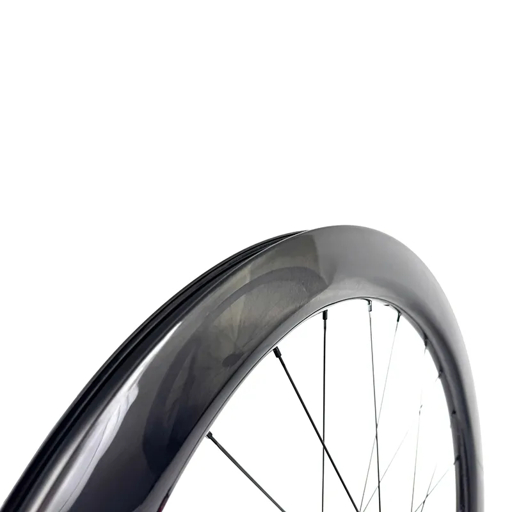
The front wheel sets the handling conversation.
Aerodynamic loads on the front wheel can feed directly into the steering system. The rear wheel also experiences wind loads, but it does not steer the bicycle in the same way.
This is the logic behind a shallower front and deeper rear. A 50mm front with a 60mm rear can be a sensible configuration to investigate when matched, compatible wheels are available. It is not a promise of better handling for every wheel design.
A lighter rider may prefer more handling margin, but there is no universal rider-weight cutoff for a 60mm wheel. Bike geometry, speed, riding position, wind exposure and experience all contribute.
Choose for the gust after the shelter.
A steady breeze on an open road is only one scenario. Hedge gaps, bridge exits and passing vehicles can change the airflow quickly. Evaluate a new wheelset progressively in a safe, low-traffic environment. If conditions exceed your control margin, reduce speed or change the ride—not your definition of acceptable handling.
The fastest tire is the one that works with the rim and road.
“What tire width is best for aero wheels?” has no useful one-number answer. Start by separating three measurements: internal rim width, external rim width and actual mounted tire width.
- Internal rim width helps determine tire support and mounted shape. It must suit the tire manufacturer’s compatibility requirements.
- External rim width helps describe the aerodynamic transition between the tire and rim.
- Mounted tire width is what the airflow and frame clearance actually encounter. The number printed on the sidewall is only the labeled size.
A labeled 28mm tire may measure differently on different rims. Tire model and inflation pressure also affect the result. Measure the installed tire at your intended operating pressure, after it has settled, rather than assuming every “28” is identical.
| Riding priority | A useful starting candidate | What decides the final choice |
|---|---|---|
| Smooth roads and sustained fast efforts | Performance 28mm front and rear | Approved fit, mounted width, tire rolling performance and wheel-specific aero data |
| Fast riding on mixed pavement | 28mm front / 30mm rear, or 30mm at both ends | Road texture, rider load, clearance and pressure needs |
| Rough surfaces and long days | 30–32mm, where the complete system permits | Reduced vibration losses and comfort versus any aerodynamic penalty |
These are starting candidates, not a ranking of fastest tire widths. A narrower tire is not automatically faster, and a wider tire is not automatically lower-drag or lower-resistance. Construction, compound, pressure and road surface matter.
A narrower front and wider rear can be a rational compromise: preserve a promising front-wheel aero match while giving the rear more volume. But use a manufacturer-supported combination, not a tire-width rule detached from the actual wheel.
Pressure is a tuning variable, not a toughness test.
A tire that feels hard and lively can still be wasting energy. On imperfect pavement, excessive pressure can increase the energy spent moving the bicycle and rider over surface irregularities. These vibration-related losses are often described as impedance losses.
Too little pressure has its own costs: excessive casing deformation, vague handling, rim impacts and, depending on the setup, pinch flats or tubeless burping. The objective is an appropriate operating range, not the lowest possible reading.
- Start with total system weight: rider, bicycle, bottles, tools and luggage.
- Use measured mounted tire width and the actual tire construction, not labeled size alone.
- Use a reputable pressure calculator or manufacturer guidance as a starting point, within all published limits.
- Adjust for front/rear load, surface condition and handling. Change one variable at a time on a familiar route.
Tubeless can provide puncture-sealing benefits and useful pressure flexibility. It does not make every tubeless tire faster than every tube-type tire. Casing design, sealant requirements and the alternative tube material all matter.
Hookless compatibility is a separate safety decision.
“Tubeless ready” does not tell you whether a rim is hooked or hookless. Before installation, confirm the bead design, approved tire models, permitted tire widths and pressure limits with the wheel and tire manufacturers.
For road hookless systems, 5 bar / approximately 72.5 psi is a ceiling commonly cited in manufacturer guidance—not a target pressure and not a universal allowance. Some tire sizes and components require lower limits. Always follow the lowest applicable limit. Adding an inner tube does not make an unapproved tire safe on a hookless rim.
Read the whole wheelset—not just the rim sticker.
Once depth, tire fit and handling make sense, inspect the hardware that keeps the wheel useful. A high-speed road wheelset needs appropriate load capacity, a sound build and serviceable parts—not just an attractive claimed weight.
- Check disc or rim-brake compatibility first. A disc-brake wheel is not interchangeable with a rim-brake wheel.
- Match axle dimensions, rotor interface, cassette and freehub body. “11–12 speed” alone does not identify every compatible drivetrain.
- Check maximum system weight, tire pressure limits and frame/fork clearance with the tire installed.
- Ask about spoke availability, hub servicing, bearing replacement and warranty support.
- Compare wheel weights using the same inclusion basis: rim tape, valves and accessories can change the number.
A higher engagement count changes the freehub’s pickup behavior. It is not, by itself, evidence of lower drag while continuously pedaling. Likewise, a premium hub name does not establish a wheelset’s aerodynamic advantage.
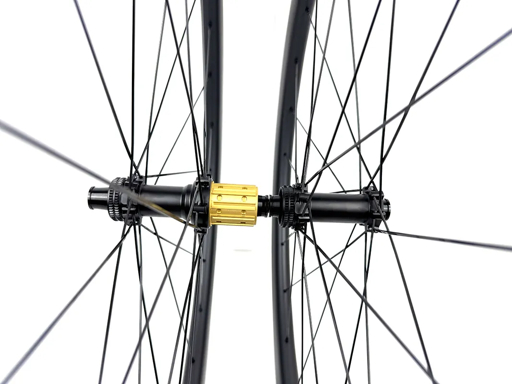
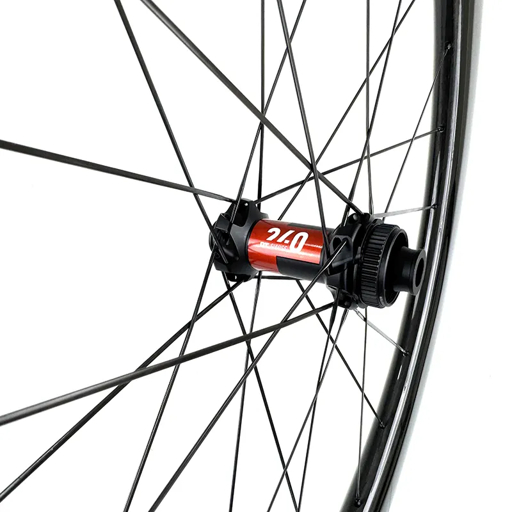
Two depths. Two starting points.
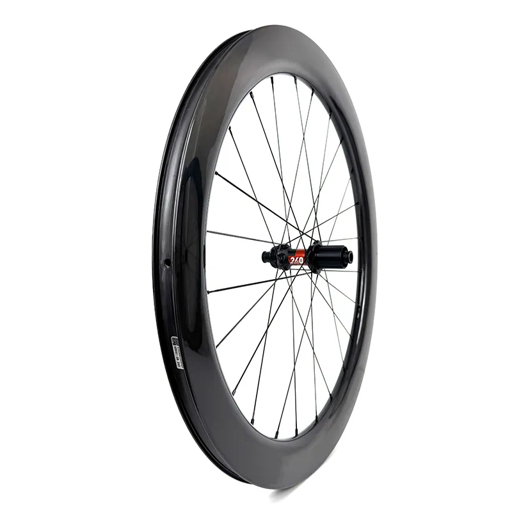
The XDRU models below put the 50mm-versus-60mm decision into a concrete shortlist. Their published specifications describe construction and fit; they do not establish a measured drag difference or a crosswind-handling ranking.
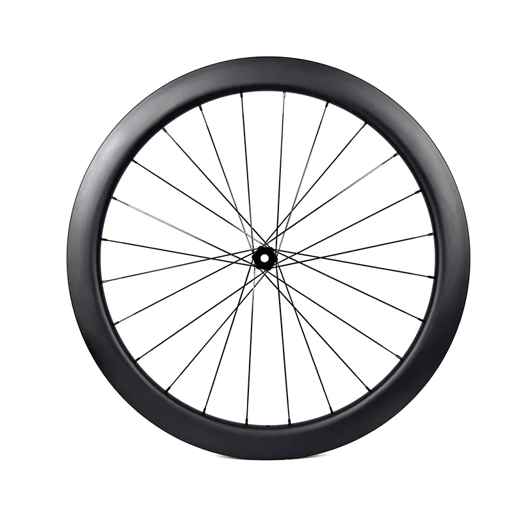
CHASE 50 AERO
A 50mm carbon disc wheelset to consider for fast road riding across a wider mix of routes. Start here if you want depth without making the deepest option your default.
Internal / external width: 21 / 28mm
Published wheelset weight: 1500 ± 30g
Hub: 36T ratchet
Format: tubeless ready · disc brake
Axles: 12 × 100mm front / 12 × 142mm rear
CHASE 60 AERO
A deeper option to investigate when sustained flat-road pace is central to your riding. Confirm tire fit and local-wind suitability rather than treating 60mm as an automatic upgrade.
Internal / external width: 21 / 28mm
Published wheelset weight: 1305 ± 30g
Hub: DT Swiss 240 EXP
Spokes: Sapim CX-Ray · 24 front / 24 rear
Format: tubeless ready · disc brake
Specifications reflect the published product listings reviewed for this article. Confirm the current build, weight measurement basis, rotor interface, freehub option, bead design, tire approvals and load/pressure limits before purchase. No independent comparative aerodynamic or steering-moment data is presented here.
Notice that the listed 60mm model is lighter than the listed 50mm model. That is a reminder that these are different complete builds, not a controlled experiment in rim depth. Do not attribute their weight difference to depth alone.
Both list a 28mm external rim width. A labeled 28mm tire is therefore not guaranteed to finish narrower than the rim once installed. That does not automatically make it a poor choice; it means an aerodynamic claim needs the actual mounted tire measurement and relevant testing.
A buying decision you can actually use.
| Your normal ride | Start the search here | Do not compromise on |
|---|---|---|
| Fast group rides with mixed terrain and changing weather | Approximately 45–55mm; compatible 28–30mm tire candidates | Predictable handling, dependable tires and service support |
| Long, smooth, flat efforts where sustained speed comes first | Approximately 55–65mm; a tested or manufacturer-supported tire pairing | Front-wheel control and meaningful aero evidence |
| Exposed coastal roads, frequent gusts or low confidence in wind | A shallower front-wheel shortlist; consider more rear depth separately | A relaxed, controllable riding position |
| Rough flat roads and long-distance endurance riding | Moderate depth with compatible 30–32mm tire candidates | Pressure suitability, clearance, grip and fatigue management |
The questions behind the purchase.
Are 60mm carbon wheels always faster than 50mm wheels?
No. Depth alone cannot establish that. Rim shape, tire pairing, spokes, wind conditions and the rider’s ability to maintain position all affect the outcome. Compare equivalent test conditions rather than product labels.
Are 50mm carbon wheels a good choice for flat roads?
They are a sensible shortlist for many riders who want fast flat-road performance without choosing a more specialized deep-section setup. They are not automatically the fastest option, nor are they guaranteed to feel calm in every wind.
Should I choose 28mm or 30mm tires for aero road wheels?
Check approved fit first, then mounted width, road surface, pressure needs and wheel-specific aerodynamic guidance. A well-matched 28mm tire can make sense on smooth roads; a 30mm tire may offer a more useful balance on rougher routes. Tire construction can matter as much as the labeled size.
Is there a speed where deep carbon wheels suddenly become worthwhile?
There is no universal threshold. Aerodynamic benefits change continuously with airflow and generally become more significant in power terms as speed rises. Whether a wheelset is worthwhile also depends on its cost, handling, tire system and the wheels you already own.
Can I combine a shallower front wheel with a deeper rear?
Yes, when both wheels meet the bike’s compatibility requirements and the manufacturers support the intended setup. Treat it as a system choice, not permission to assume any two wheels will produce a known aero or handling result.
Buy usable speed.
Not just a deeper silhouette.
Choose enough rim depth to suit your fast-road ambitions. Pair it with a tire that fits the rim and the pavement. Set pressure for the real load. Keep enough handling margin to stay comfortable when the road stops being predictable.
The right carbon wheelset is the one that lets you hold your position, trust your line and keep riding smoothly when the pace stays high.