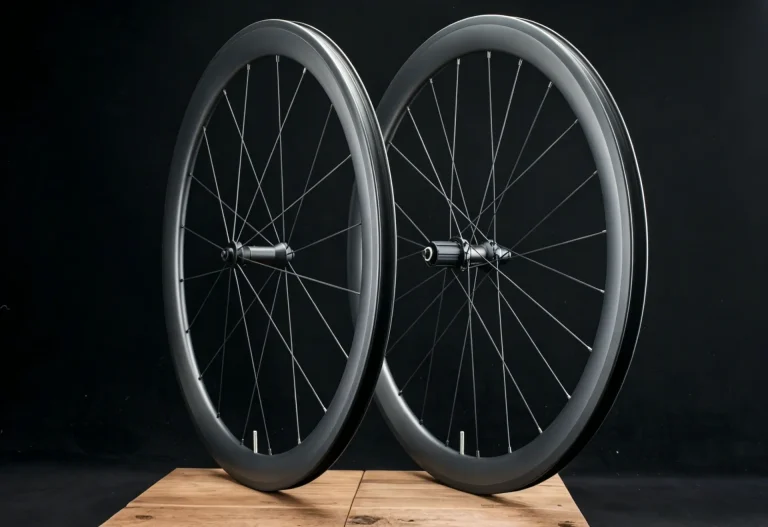
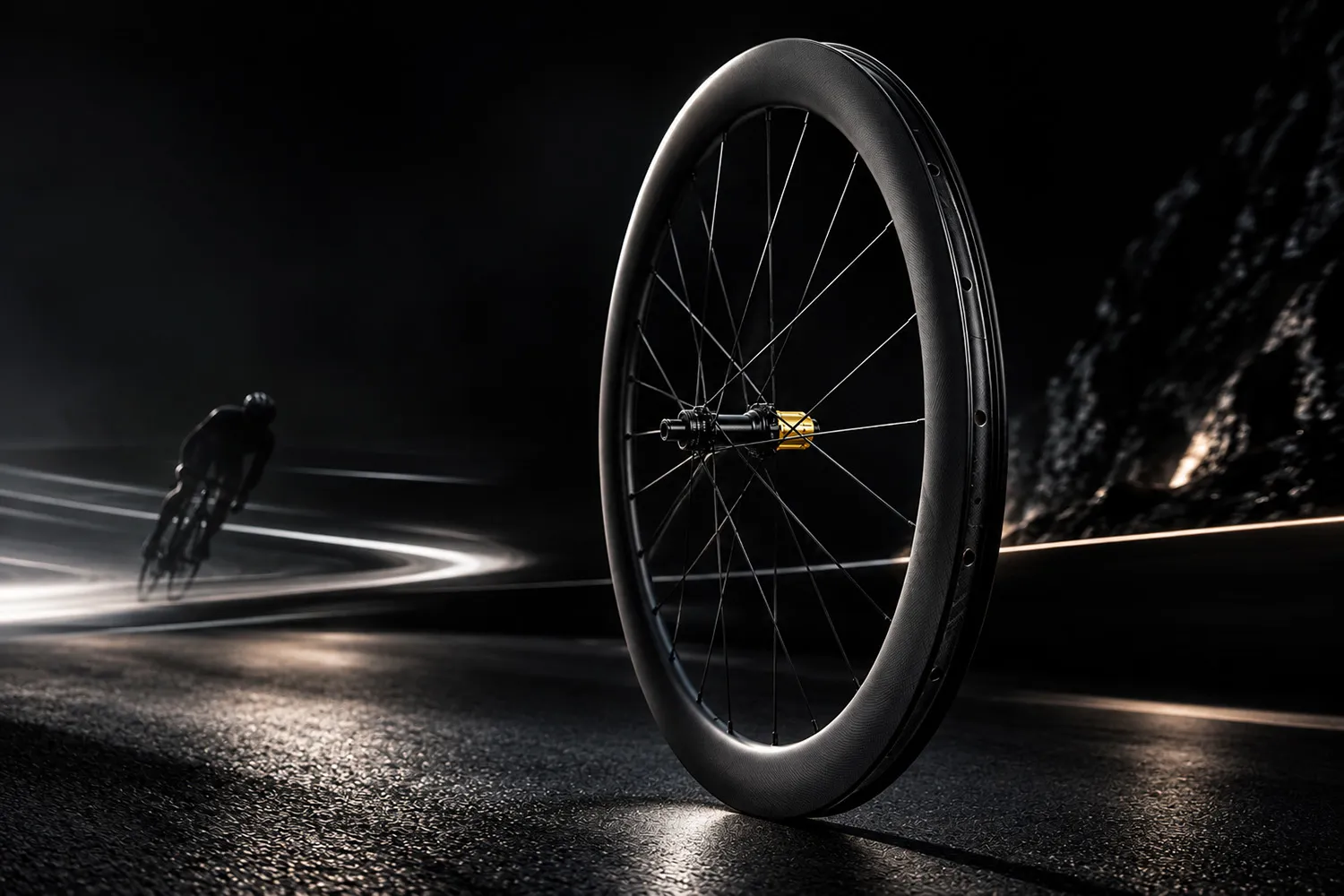

There is a reason 50 mm carbon wheels have become the default answer for riders who want one fast wheelset rather than a garage full of specialists.
They are deep enough to make a real aerodynamic difference. Shallow enough to remain usable on ordinary roads. Light enough for rolling terrain and long climbs. Stable enough—when the rim shape is right—to ride confidently when the wind starts playing tricks.
In other words, a 50mm carbon wheelset sits in the middle for a reason. It is not a compromise in the disappointing sense of the word. It is a carefully useful balance.
For many road riders, it is the wheelset that stays on the bike all year.
Why 50 mm Works So Well
A 50 mm rim is deep enough to reduce aerodynamic drag at the speeds where road riding becomes interesting: fast group rides, rolling routes, long solo efforts, road races, fondos, and that familiar stretch of open road where the wind seems determined to slow everyone down.
At lower speeds, the advantage is present but subtle. Once you are moving quickly, however, a well-designed 50 mm rim can help the bike carry speed with less effort. The wheel does not make watts. It simply wastes fewer of them.
That is the appeal of carbon wheels 50mm deep: they deliver measurable aerodynamic intent without becoming a narrowly focused time-trial setup.
A 30–35 mm wheelset may feel lighter on a steep climb. A 65 mm wheelset may offer more outright speed on a calm, flat course. But most rides are not exclusively steep, flat, calm, or windy. They are mixed. A 50 mm wheel tends to make sense across the whole day.
The Speed Comes From Airflow
The aerodynamic advantage of a 50 mm carbon rim is not just about having more material between the tire and the spokes.
It is about shape.
A modern rim guides air around the rotating wheel-and-tire system more smoothly than a shallow box-section rim. Less turbulence means less drag. Less drag means lower power demand at a given speed.
The effect is most noticeable when:
- Riding into a headwind
- Holding a fast pace on flat or rolling roads
- Pulling on the front of a group
- Racing or sprinting
- Descending at speed
- Covering long distances where small energy savings accumulate
A good 50mm deep carbon wheels setup feels like the bike is more willing to stay at speed. It settles into a rhythm. You still have to do the work, of course. You just do not feel as though the air is taking quite so much back.
Why Modern Rim Shape Matters
Not all 50 mm wheels behave alike.
Older deep-section wheels were often narrow and sharply V-shaped. They could be fast in a straight headwind, but they sometimes felt abrupt in crosswinds. A sudden gust might push at the front wheel hard enough to make a rider sit up, tense their shoulders, and lose the benefit they bought the wheel for in the first place.
Modern 50mm carbon wheelset designs tend to use wider, rounder, U-shaped or blunt-nosed rim profiles.
This has two benefits:
- Better airflow across changing wind angles.
Real-world wind rarely arrives perfectly head-on. It comes from the side, shifts around buildings, spills over hills, and changes after passing traffic. - More predictable handling.
A stable rim shape gives the rider more confidence. Confidence matters because a relaxed rider maintains a cleaner line, stays in position, and can keep using the speed the wheel provides.
The best deep wheel is not necessarily the deepest or most dramatic-looking one. It is the one that feels calm when the road becomes less predictable.
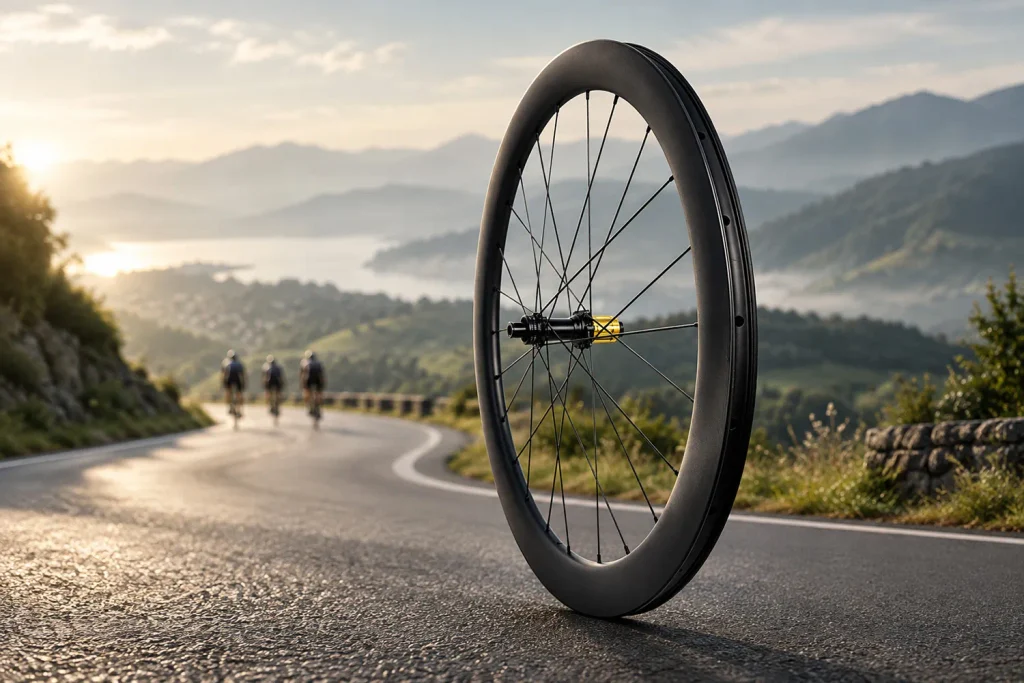
50 mm Is Not “Too Deep” for Most Riders
Many riders hesitate at 50 mm because they remember the early reputation of deep carbon wheels: quick in a straight line, nervous when the wind picked up.
That reputation is not entirely undeserved. But it belongs mostly to older rim shapes.
A well-designed modern 50 mm wheelset is usually manageable for most road riders, especially when paired with a sensible tire width and a stable rim profile. The front wheel deserves the most attention because it affects steering directly; the rear wheel has less influence on handlebar feedback.
If you ride exposed coastal roads, open farmland, bridges, or windy mountain descents, there are sensible options:
- Choose a rounded, modern aero profile rather than a narrow V-profile.
- Use a 45–50 mm front wheel and a 50–60 mm rear wheel.
- Pair the wheels with 28 mm tires rather than excessively narrow, high-pressure rubber.
- Select a wheelset based on your comfort level, not only its drag claim.
A wheel that you trust is faster than a wheel you are afraid to use.
Rim Width and Tire Choice
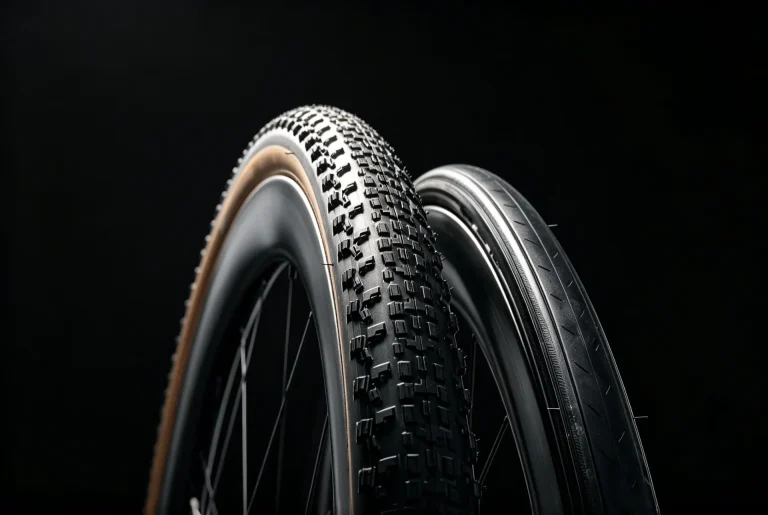
The tire is the leading edge of the aerodynamic system.
Air reaches the tire before it reaches the rim. If the tire bulges far beyond the rim’s external width, it can create a blunt transition that disrupts airflow. If the tire is too narrow for the rim, it may feel stretched and less forgiving.
For a modern 50 mm road wheelset, a common all-round setup is:
- 21–23 mm internal rim width
- 28 mm road tire
- Tire pressure selected for rider weight, road surface, and tire construction
This pairing offers a strong balance of speed, grip, comfort, and stability. The tire may measure wider than its labeled size once mounted, so frame clearance must always be checked.
A 50mm carbon clincher wheelset should be judged as a rim-and-tire system, not simply as a rim. Whether you use inner tubes or tubeless tires, correct compatibility and pressure are more important than chasing the narrowest possible setup.
Tubeless or Inner Tubes?
Most modern carbon road wheels are tubeless-ready, but the best choice depends on how you ride.
Tubeless can offer:
- Lower usable pressures
- Better grip on rough pavement
- Reduced risk of pinch flats
- Sealant protection against small punctures
- A smoother ride over long distances
Inner tubes remain a sound option for riders who value straightforward installation and simple roadside repairs.
A 50mm carbon clincher wheelset can work brilliantly either way, provided the tire is approved for the rim, the rim tape is correctly installed, and pressure remains within the manufacturer’s stated limit.
There is no prize for choosing the more complicated setup. Choose the one you can install, maintain, and trust.
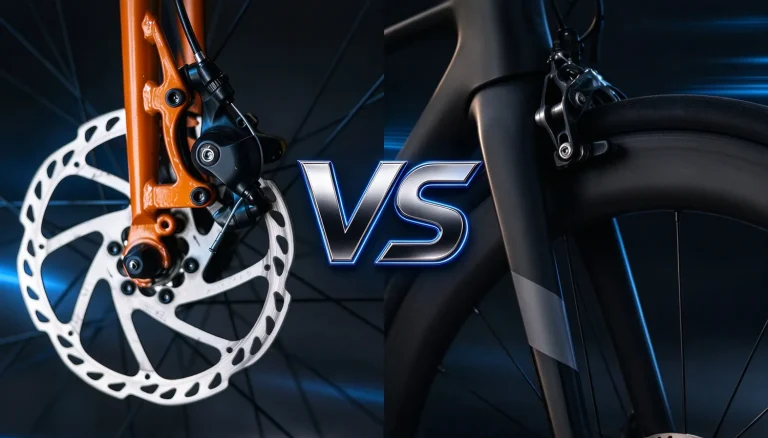
Disc Brake vs Rim Brake 50 mm Wheels
The correct brake version is determined by your bike. There is no conversion trick here: disc brake wheels fit disc-brake frames; rim brake wheels fit rim-brake frames.
50 mm Carbon Disc Wheelsets
A 50mm carbon disc wheelset uses a hub-mounted rotor for braking. Because the rim does not need a braking track, designers have more freedom to optimize its width, shape, and internal structure.
Modern disc wheels often pair naturally with 28–30 mm tires, wider internal rims, and tubeless setups. They also offer consistent braking in wet conditions and on long descents.
When choosing a 50mm carbon wheelset disc model, confirm:
- Rotor interface: Center Lock or 6-bolt
- Axle standard: commonly 12 × 100 mm front and 12 × 142 mm rear
- Freehub compatibility: Shimano HG, SRAM XDR, Micro Spline, Campagnolo, or another standard
- Tire clearance in the frame and fork
- Wheelset and tire pressure limits
- Rotor size requirements
Disc wheels are usually a little heavier as a complete system because of rotors, robust hubs, and thru-axles. For many riders, the confidence, braking consistency, and tire flexibility easily justify that trade.
50 mm Carbon Rim Brake Wheelsets
A 50mm carbon wheelset rim brake is often lighter and mechanically simpler. It can make a classic road bike feel exceptionally quick, especially on fast rolling roads or climbing routes where low system weight still matters.
But rim-brake carbon wheels have a demanding job. The rim must handle tire loads, spoke tension, road impacts, and the heat generated by braking.
For a rim-brake build, check:
- Approved carbon-specific brake pads
- Brake caliper clearance around the external rim width
- Maximum tire pressure
- Quick-release axle standards
- Brake-track condition and maintenance requirements
- Manufacturer guidance for prolonged mountain descents
A quality 50 mm rim-brake wheelset can be a superb upgrade. It simply needs the correct pads, thoughtful setup, and sensible descending technique.
Stiffness: What You Feel in a Sprint
A deep carbon rim tends to be laterally stiff because the rim structure has more depth. That can give a 50 mm wheelset a direct, connected feel when you stand up to sprint, push through a fast corner, or climb out of the saddle.
But stiffness is not just a rim-depth story.
It also depends on:
- Spoke count
- Spoke tension consistency
- Hub flange width
- Lacing pattern
- Rim layup
- Rider weight and power output
- Tire pressure and tire volume
A good 50 mm wheel should hold its line under hard efforts without becoming brutally harsh over ordinary pavement.
That balance is the point. Maximum stiffness is not automatically better. A wheel that is overly rigid can reduce comfort and traction on rough surfaces. The best wheels feel precise, not punishing.
Spokes, Hubs, and Durability
Aero wheels often use bladed spokes because their shape creates less drag than round spokes. They also need to be tensioned evenly and built around hubs that provide appropriate spoke bracing angles.
The rear wheel usually carries more load and transfers drivetrain torque, so it may use more spokes or a different lacing pattern than the front.
Do not judge durability by spoke count alone.
A 24-spoke carbon road wheel can be extremely durable if the rim, hubs, spokes, tension, and intended rider weight are properly matched. A higher spoke count may make more sense for heavier riders, rough roads, long-distance use, or riders who value resilience over the last few aerodynamic watts.
The quality of the build matters as much as the quality of the rim.
Is a 50 mm Wheelset Good for Climbing?
Yes—within reason.
On very steep climbs at low speed, a lighter 30–40 mm wheelset may be the better specialist tool. Gravity matters more than aerodynamics when the pace is low and the gradient is high.
But most climbing rides are not 100 percent climbing. They include valleys, approaches, rolling terrain, descents, and exposed ridgelines. A good 50 mm wheelset can still be an excellent all-round choice for riders who climb regularly but do not want a dedicated climbing-only wheel.
The right question is not, “Can I climb on 50 mm wheels?”
You can.
The better question is, “Do I need the last possible gram of climbing weight, or do I want a wheelset that is fast almost everywhere else too?”
For many riders, the latter is more useful.
Are 50 mm Carbon Wheels Good in Wind?
They can be—if you choose intelligently.
The wind sensitivity of a wheel depends on more than depth. Rim profile, external width, tire shape, rider weight, bike handling, road exposure, and gust variability all matter.
A modern, rounded 50 mm rim is far more manageable than an old narrow V-shaped wheel of the same depth. Even so, riders who regularly face strong, unpredictable crosswinds may prefer:
- A shallower 40–45 mm front wheel
- A 50–60 mm rear wheel
- Wider, lower-pressure tires for additional grip and control
- A wheelset known for stable handling rather than an aggressive, narrow profile
If wind makes you nervous, do not dismiss aero wheels entirely. Choose a profile that lets you relax. A rider who can ride confidently will make better use of aerodynamic efficiency than one fighting the bars.
How to Identify the Best 50 mm Carbon Wheels
There is no single best 50mm carbon wheels choice for everyone. The right model depends on the bike, the rider, and the road.
Still, a strong all-round 50 mm wheelset should offer the following:
| What to assess | What good looks like |
|---|---|
| Rim profile | Modern rounded or U-shaped aero form, designed for stability |
| Internal width | Usually 21–23 mm for contemporary 28–30 mm road tires |
| External width | Broad enough to create a smooth tire-to-rim transition |
| Weight | Sensible for intended use; not pursued at the expense of durability |
| Spokes | Aero spokes with appropriate count and even tension |
| Hubs | Reliable bearings, suitable engagement, serviceable parts |
| Tire system | Tubeless-ready where appropriate, clear pressure limits |
| Compatibility | Correct brake type, axle standard, rotor interface, and freehub |
| Support | Clear warranty terms and accessible replacement parts |
The phrase best 50mm carbon disc wheelset is useful for shopping, but the answer should always be specific. The best one is the model that fits your axle and rotor standards, supports your preferred tire width, matches your rider weight, and suits the conditions you ride most often.
A wheelset that looks exceptional but does not fit your bike or your roads is not a good deal.
A Practical Buying Guide
Choose a 50 mm carbon wheelset if you:
- Want one wheelset for most road riding
- Ride fast group rides, fondos, rolling routes, or road races
- Spend meaningful time above 28–30 km/h
- Want aerodynamic benefit without a time-trial-only setup
- Use 28–30 mm tires or plan to move in that direction
- Value a fast, purposeful ride feel
Consider a shallower wheelset if you:
- Ride mostly steep, slow mountain climbs
- Regularly experience severe, unpredictable crosswinds
- Prioritize low weight above all else
- Prefer a very neutral, traditional road-bike feel
Consider a deeper wheelset if you:
- Race time trials or triathlon
- Ride predominantly flat, fast, and sheltered roads
- Prioritize maximum high-speed aerodynamics
- Have the experience and conditions to manage stronger crosswind effects
Common Misconceptions
“50 mm wheels are only for racers.”
No. They are popular precisely because they work well outside racing. A 50 mm wheelset can make long training rides, weekend group rides, and rolling endurance events feel more efficient.
“Deep carbon wheels are always harsh.”
Not necessarily. Tire volume, tire pressure, rim width, spoke design, and frame setup all influence comfort. A 50 mm wheel paired with a 28 mm tire at an appropriate pressure can be remarkably smooth.
“Rim brake wheels are obsolete.”
No. They remain a smart choice for riders with compatible bikes who value low weight, simplicity, and the lively feel of a classic road machine.
“Disc wheels are automatically heavier and slower.”
Disc systems do add some weight, but they also enable wider rims, wider tires, better wet-weather braking, and more modern wheel profiles. The right choice depends on the bike and intended use.
“The deepest wheel is the fastest.”
Only if you can use it effectively. A stable 50 mm wheelset can be faster over a full ride than a deeper wheel that makes you cautious in gusts.
The Bottom Line
A 50mm carbon wheelset has earned its reputation because it works in the real world.
It can be quick enough for racing, stable enough for daily riding, light enough for hills, and aerodynamic enough to matter when the pace rises. It does not need perfect roads or a perfect rider to make sense.
Choose the correct brake version. Match the rim width to your tire choice. Verify axle, rotor, and freehub compatibility. Respect tire-pressure limits. Then let the wheels do what they are meant to do.
They will not pedal for you.
But on the right road, at the right pace, they may make every watt feel like it travels a little farther.