
Are Lighter Carbon
Wheels Always Better?
Not So Fast.
Weight is easy to measure. Complete performance is harder to summarize. Here is how to judge the trade-offs between wheelset mass, aerodynamics, acceleration, stiffness, durability and control.
No.
Lower weight is beneficial when the rest of the wheel remains appropriate for the rider and the task. But the lightest carbon wheelset is not necessarily the fastest, most stable, most durable or best-value choice. Treat weight as one design variable—not the final score.
A scale gives you one number.
A ride asks several questions.
Pick up a light carbon wheel and the attraction is immediate. It feels delicate, purposeful and quick. The mistake is turning that first impression into a universal performance rule.
On the road, your wheels have several jobs at once: carry the load, transmit forces, support the tires, remain controllable in wind, resist repeated impacts and roll efficiently. Reducing mass is valuable only within that larger assignment.
Nor is a heavier wheel automatically stronger. Extra material can be useful reinforcement, but it can also reflect a deeper shape, different hubs or a less weight-efficient design. Both “lighter means better” and “heavier means tougher” skip the evidence.
What does saving 200 grams actually change?
Climbing requires work against gravity. At a given elevation gain, reducing mass reduces that work. The important reference is the total rider–bike–equipment system, not the wheelset alone.
Gravitational energy saved = Δm × g × hImagine reducing wheelset mass by 200 g while keeping everything else unchanged. With an original system mass of 85 kg, that is approximately a 0.24% reduction in total mass—not a 10% or 15% improvement in climbing performance.
Approximate system-mass reduction when removing 200 g from an 85 kg rider–bike–equipment system.
Gravitational work avoided over 1,000 m of vertical ascent: 0.20 kg × 9.81 m/s² × 1,000 m.
An idealized time equivalent at a constant 250 W devoted entirely to gaining height. Not a real-world time prediction.
This gravity-only example excludes aerodynamic and rolling losses, drivetrain losses, acceleration, changes in rider output and route conditions. It establishes scale, not a guaranteed result.
Small is not the same as worthless.
For a competitive uphill event, seconds can matter. A lighter, equally suitable wheelset can be a rational upgrade, particularly when sustained climbing dominates the course.
But a route with 1,000 m of elevation gain is not automatically a climbing-only event. It may also contain fast valleys, exposed descents and long flat sections. Add up the demands of the complete route before deciding that mass should dominate the purchase.
Weight savings are real. Their importance depends on what you give up to obtain them.
Rim mass matters during acceleration.
It does not “count double” everywhere.
A moving wheel has forward-motion energy and rotational energy. The rotational contribution depends on where its mass sits relative to the axle. The same mass near the rim contributes more rotational inertia than mass close to the hub.
That gives rim-mass savings a genuine acceleration advantage. However, it does not justify assigning the entire wheelset a universal “double weight” multiplier.
At a steady climbing speed, gravitational work depends on total mass and elevation gain. A gram at the rim does not require twice the gravitational work of a gram in the frame.
Likewise, maintaining steady speed does not require repeatedly supplying the energy used to accelerate the wheel. You supply power to overcome losses; rotational inertia itself is not continuous drag.
Accelerating 200 g from rest to 36 km/h requires 10 J of additional translational energy. If that mass were idealized as a thin ring at the rolling radius, rotation would add another 10 J. That 20 J total applies to this simplified acceleration example, not to steady climbing or every component in a real wheel.
Repeated attacks and stop–start racing make acceleration relevant. Even then, the wheel’s total performance also depends on drag, stiffness, tires and rider output. A feeling of “snap” is not a substitute for a controlled speed or power comparison.
A slightly heavier wheel can still require less power.
At constant speed on level ground, weight mainly influences the rolling-resistance contribution. Aerodynamic drag is a separate cost. In still air, with drag area held constant, the power needed to overcome aerodynamic drag rises approximately with the cube of ground speed.
This is why aerodynamic design can justify some extra mass. It is also why “deeper is always faster” is too crude: the actual rim shape, mounted tire, spoke arrangement and wind conditions determine the result.
| Hypothetical change | Assumed condition | Approximate power difference |
|---|---|---|
| 200 g less system mass | 15 km/h on a 6% climb; gravitational term only | 0.49 W less climbing power |
| 200 g less system mass | 40 km/h on level ground; rolling coefficient 0.004 | 0.09 W less rolling-resistance power |
| 0.003 m² less effective drag area | 40 km/h, still air, air density 1.225 kg/m³ | 2.52 W less aerodynamic power |
These calculations illustrate different mechanisms under stated assumptions. They are not measured gains for any wheelset, not three results from the same ride, and not evidence that a particular deeper wheel achieves the assumed drag-area reduction. The climbing row uses the small-angle approximation for a 6% gradient.
There is no universal “aero versus weight” crossover gradient.
The balance depends on the actual mass difference, actual drag difference, rider power, speed, wind and route. A blanket rule such as “aero wins below this gradient” cannot cover all riders and all wheels.
Crosswind handling adds another constraint. A wheel with attractive drag numbers may be a poor match if gusts force you out of your preferred position or make descending uncomfortable. Evaluate front-wheel steering behavior, not just rim depth.
A heavier wheel also does not possess a free ability to “hold speed.” More inertia means more stored energy at a given speed, but that energy had to come from somewhere. It is not an efficiency gain that cancels aerodynamic or rolling losses.
Where did the weight come from—and what was removed?
Lower mass can result from better engineering: more efficient geometry, carefully oriented fibers, controlled manufacturing, optimized reinforcement or lighter components that remain suitable for the task. Weight reduction does not necessarily mean compromising safety or durability.
The opposite is also possible. Removing material or reducing component dimensions without preserving the required performance can narrow the operating envelope. The scale cannot distinguish these two stories.
Stiffness is not strength.
Stiffness describes resistance to deformation under load. Strength describes resistance to failure. Fatigue resistance concerns repeated loading, while impact resistance addresses another set of demands. One favorable number does not establish all four.
A wheel can feel very stiff without that proving superior impact resistance. It can also be lightweight and adequately stiff without being appropriate for every rider or surface.
The build is part of the structure.
Rim stiffness, hub geometry, spoke count, spoke section and lacing all influence behavior. Correct tension and consistent tension among spokes on the same side help the assembled wheel remain stable and durable.
More tension is not a general-purpose stiffness upgrade. Follow the component specifications and do not exceed the rim’s approved limit in pursuit of a firmer feel.
Check the exact wheel’s intended-use category, system or rider limit, tire-pressure restrictions, testing information and warranty. A “high-modulus carbon” label does not replace those checks, and a higher advertised weight is not a safety certificate.
Do not save grams by weakening the part that touches the road.
Tires, tubes or sealant, pressure and rim compatibility strongly influence the ready-to-ride result. An approved wider tire at an appropriate pressure can behave very differently from a narrow, high-pressure setup on rough surfaces.
Tire construction and surface roughness affect rolling losses. Higher pressure is not a universal route to lower real-world resistance: a setup that performs well on a smooth test surface may be less effective when it must conform to broken pavement or gravel.
Lower pressure is not automatically better either. Load capacity, casing support, rim-strike risk and the approved pressure range still apply. Do not remove necessary tire protection, use insufficient sealant or choose an incompatible tire simply to reach a target wheel-system weight.
Compare both bare wheelset mass and ready-to-ride assembly mass. Confirm whether tape, valves and the selected freehub are included in the claimed figure, then account for tires, inflation components, cassette and rotors without double-counting.
When should weight move up your priority list?
| Your main use | What deserves emphasis | Where weight fits |
|---|---|---|
| Dedicated uphill events | Low total system mass, appropriate stiffness and compliance with event rules | A high priority once compatibility, load capacity and reliability are satisfied |
| Fast road rides and racing | Wheel–tire aerodynamics, handling, stiffness and course demands | Important, but a modest mass penalty may be justified by verified drag reduction |
| Exposed or gusty routes | Predictable front-wheel behavior and confidence in changing wind | Secondary to choosing a controllable wheel, regardless of its depth or mass |
| Endurance and rough-road riding | Appropriate tires, pressure, load approval, durability and spare-parts support | Worth optimizing without sacrificing the setup needed for the surface |
| Heavier riders or loaded riding | Correct load-limit interpretation, intended use and suitable complete-wheel construction | A later-stage refinement—not the first filter |
What does the lighter option ask you to give up?
Sometimes the answer is “nothing relevant, except more money.” That can be a good purchase. Sometimes the compromise is central to the way you ride.
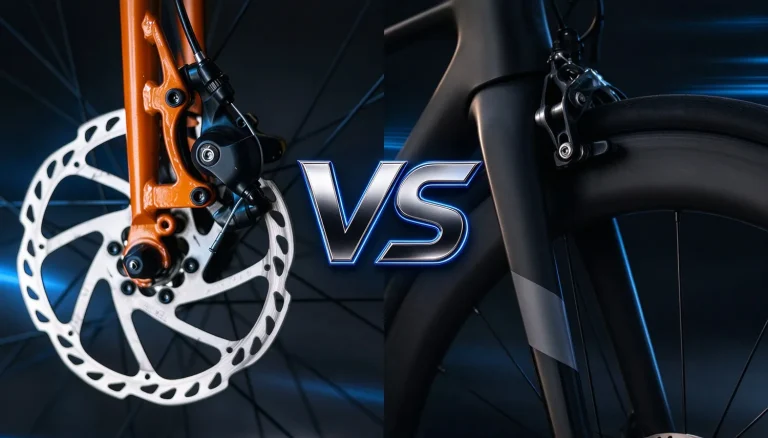
- Compare the same brake, axle, freehub and accessory configuration.
- Identify whether the difference is in the rim, hub, spokes, nipples or included parts.
- Check approved load and use category—not just the quoted mass.
- Look for relevant aero and handling evidence rather than assuming a gain from rim depth.
- Confirm tire fit, pressure limits and bicycle clearance.
- Consider replacement parts, servicing, warranty and total ownership cost.
Choose the performance you will use.
When comparing the XDRU carbon road wheelset collection, start with your routes, normal riding load, intended tires and handling priorities. Then compare the current specification of each exact configuration.
These are collection model names, not a tested performance ranking. Verify current weight, dimensions, component options, load limits and tire approvals on the relevant product documentation. No shared specifications or comparative advantages are implied here.
The goal is not the lowest number.
It is the right trade-off.
A lighter wheelset is an improvement when it reduces the cost of climbing or acceleration while preserving the characteristics your riding requires. A slightly heavier wheelset can be the better choice when it offers useful aerodynamics, suitable tire support, reliable serviceability or a more appropriate structure.
Optimize for balance: enough emphasis on weight to capture its real benefits, and enough perspective to avoid sacrificing the performance that matters more on your roads.
Lightweight carbon wheels: the details riders ask about.
Is a 1,300 g wheelset automatically better than a 1,500 g wheelset?
No. The 200 g difference has value, but it must be weighed against aerodynamic performance, stiffness, handling, intended use, load approval, tire compatibility and service support. Compare equivalent configurations before interpreting the gap.
Does removing weight from the rim help more than removing it from the hub?
During acceleration, the same mass removed farther from the axle generally reduces rotational inertia more. For gravitational climbing work, however, a gram is a gram regardless of its location. The benefit depends on the riding condition being discussed.
Will lighter wheels make me climb noticeably faster?
They can reduce the required climbing work, but the effect scales with total system mass and the size of the reduction. A small wheelset saving is usually a small percentage of rider–bike mass. Do not convert a large percentage reduction in wheelset weight directly into the same percentage improvement in climbing speed.
Are heavier carbon wheels more durable?
Not necessarily. Durability depends on construction, material placement, manufacturing quality, component interfaces, wheelbuilding and use conditions. Compare product-specific evidence and limits instead of treating weight as a strength rating.
Can deeper wheels still be suitable for climbing?
Yes. Their suitability depends on actual mass, aerodynamic performance, handling and the course. A mixed route may reward different trade-offs from a steep uphill-only event. There is no universal rim-depth limit for a “climbing wheel.”
Should I pay more to save the final 100 grams?
Only after the wheel meets the important compatibility, load, handling and service requirements. The last 100 g may be worthwhile for a specific competitive goal, but it is not automatically a better use of budget than suitable tires, dependable components or a wheelset better matched to your conditions.