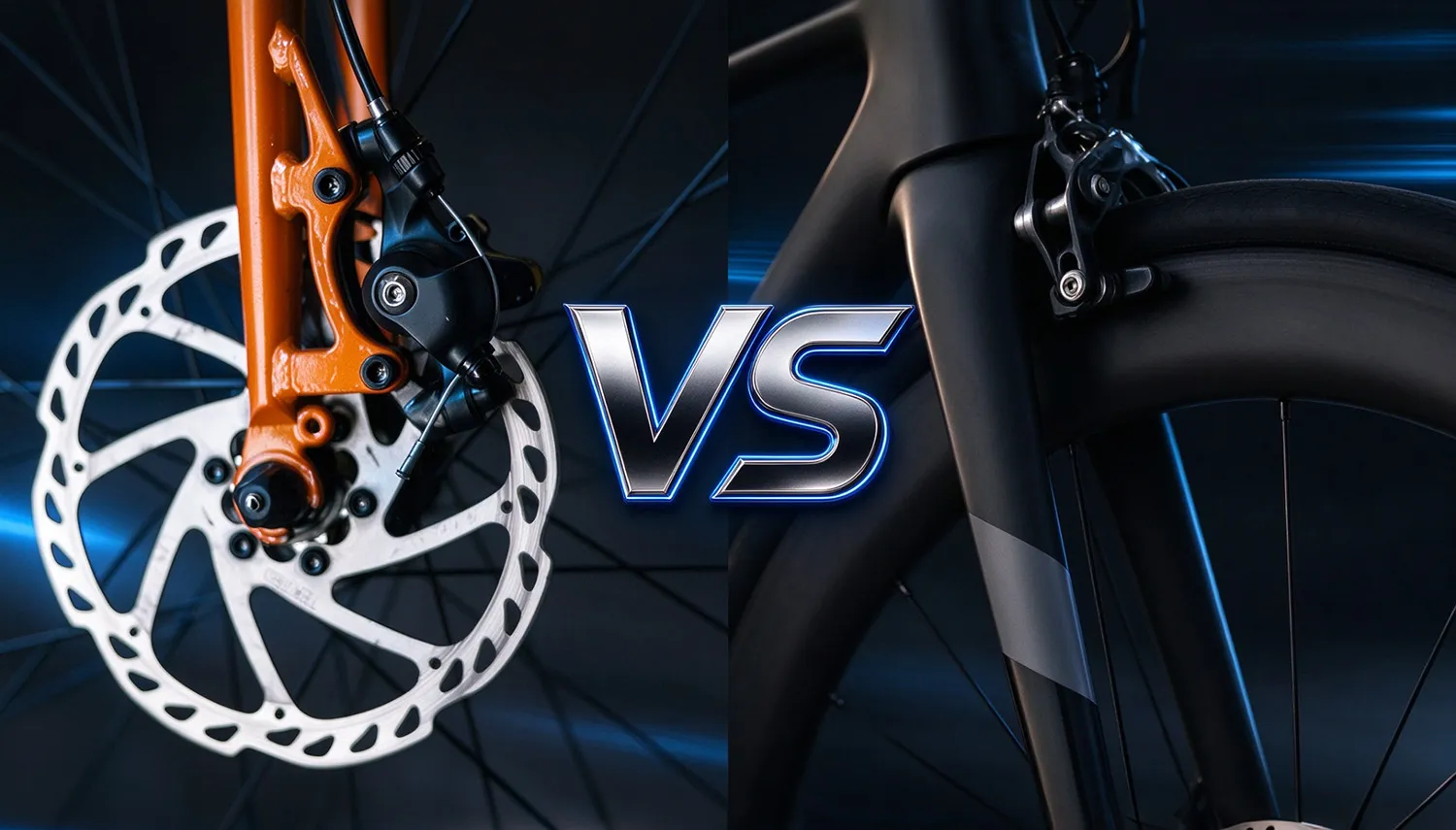

For years, the choice was straightforward: if you wanted a serious road wheelset, you bought rim brakes. Lightweight frames, clean lines, simple mechanics—and, for many riders, more than enough stopping power in dry weather.
Then disc brakes arrived and changed the shape of the conversation.
At first, they were viewed as a gravel and mountain-bike solution brought onto the road. Now they dominate new road-bike launches, endurance platforms, and all-road builds. Yet rim brake carbon wheels have not become irrelevant overnight. They remain lighter, simpler, and exceptionally fast for riders with compatible bikes.
The important thing is this: disc brake carbon wheels and rim brake carbon wheels are not interchangeable versions of the same product. They are built around different loads, different frame standards, different braking systems, and different priorities.
Choosing well starts with understanding those differences.
The Short Answer
A disc brake carbon wheel slows the bike with a rotor fixed at the hub. A rim brake carbon wheel slows the bike when brake pads press against a reinforced braking track on the rim.
That single difference changes almost everything:
| Category | Disc Brake Carbon Wheels | Rim Brake Carbon Wheels |
|---|---|---|
| Braking location | Hub-mounted rotor | Rim braking track |
| Rim construction | No brake track required | Requires heat-resistant brake track |
| Wet-weather braking | Usually more consistent | More dependent on pads, rim surface, and setup |
| Wheel weight | Often slightly heavier as a system | Usually lighter |
| Aerodynamic rim design | More design freedom | Brake track affects rim shape |
| Frame compatibility | Disc-brake frame and fork only | Rim-brake frame and fork only |
| Axle standards | Usually thru-axle | Usually quick release |
| Service needs | Rotor alignment and pad setup | Pad alignment and braking-track inspection |
| Long-term trend | Standard on most new road bikes | Common on existing and lightweight road bikes |
The first rule is non-negotiable: buy the wheelset that matches your frame and brake system. A disc-brake wheel cannot turn a rim-brake bike into a disc-brake bike, and a rim-brake wheel cannot be used on a disc-brake frame.
How the Braking Systems Work
Rim Brake Carbon Wheels
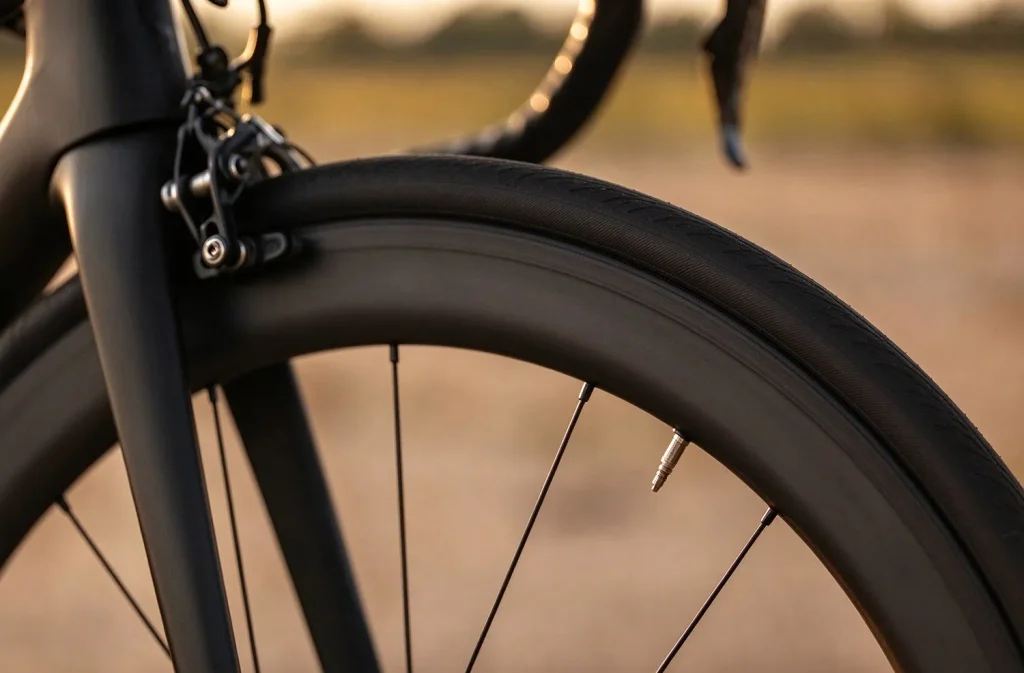
On a rim-brake bicycle, the caliper squeezes brake pads against the outer sidewalls of the rim. The rim does two jobs:
- It supports the tire and transfers riding loads through the spokes.
- It acts as the braking surface.
That is a demanding assignment, especially on carbon rims. Under hard braking—particularly on long descents—friction creates heat at the rim itself. The wheel must manage that heat without affecting the tire, tube, tubeless tape, resin matrix, or structural integrity of the rim.
Modern carbon rim-brake wheels are vastly better than early generations. Dedicated resin systems, textured brake tracks, improved pad compounds, and better heat management have made them reliable when used correctly. Still, braking performance depends on the entire system: wheel, pads, setup, rider technique, road gradient, weather, and total rider-bike weight.
Disc Brake Carbon Wheels
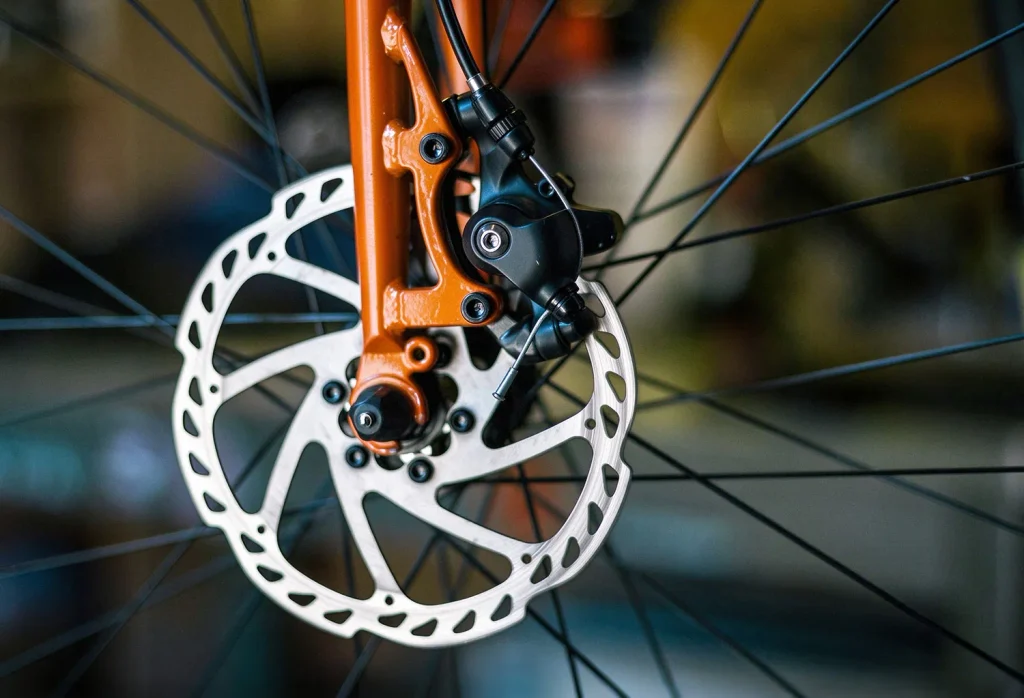
With disc brakes, the brake caliper grips a metal rotor mounted near the hub. The braking heat stays close to the center of the wheel rather than building up at the rim.
The rim is therefore free from braking duties. It can be optimized primarily for aerodynamics, weight, impact resistance, tire support, and ride feel.
That sounds like a small engineering detail. It is not.
By removing the brake track, disc brake carbon rims can use wider profiles, more rounded shapes, and lighter rim-wall designs without needing to accommodate a caliper or tolerate repeated friction at the outer rim.
Heat: The Difference You Feel on Long Descents
Heat is where the practical gap between disc and rim brakes becomes clearest.
On a rim-brake carbon wheel, braking converts speed into heat at the rim. In normal rolling terrain, that is rarely a concern. But sustained descending changes the equation. Long gradients, high ambient temperatures, heavier riders, loaded bikes, and continuous braking can all raise rim temperatures.
That does not mean rim-brake carbon wheels are unsafe by default. It means they require sensible use.
Good descending technique matters:
- Brake firmly and intermittently rather than dragging the brakes continuously.
- Use front and rear brakes in a controlled, balanced way.
- Fit brake pads specifically approved for your rim.
- Inspect pads for embedded debris before mountain rides.
- Respect tire-pressure guidance, especially in hot conditions.
Disc brake wheels move heat away from the tire and rim. The rotor becomes hot instead, which is exactly what it is designed to do. That makes disc brakes especially reassuring for long alpine descents, wet-weather riding, heavier riders, and mixed-terrain riding where braking is frequent and conditions change quickly.
Braking Performance in Dry and Wet Conditions
In dry conditions, a properly set up rim-brake carbon wheelset can provide powerful, predictable braking. Many experienced road riders still prefer the direct, light feel of a quality rim-brake bike.
The gap becomes more noticeable when roads are wet.
Water, grit, and road contamination can delay the moment when a rim-brake pad clears the surface and begins generating full braking force. Carbon-specific pads and modern brake tracks have improved this substantially, but the braking interface remains exposed to weather.
Disc brakes tend to deliver more consistent braking in rain because the rotor sits higher off the road, away from much of the spray, and the caliper applies force to a dedicated metal braking surface. They also require less hand force for strong braking, which can be welcome on long descents or in cold, wet conditions.
There is a trade-off, of course. Disc systems can rub if the rotor is not perfectly aligned, and they require attention to rotor condition, caliper alignment, pad wear, and contamination. No brake system is maintenance-free.
Weight: Why Rim Brake Still Has an Advantage
If the goal is the lightest possible complete road-bike build, rim brakes still have a natural advantage.
A rim-brake setup avoids several components required by a disc system:
- Brake rotors
- Rotor lockrings or bolts
- Heavier brake calipers
- More robust hubs
- Thru-axles
- Reinforcement built into modern disc-compatible frames and forks
At the wheel level, a disc brake carbon rim can sometimes be lighter because it has no braking track. But the complete disc wheel system—hubs, spokes, rotors, and axle hardware—typically weighs more than an equivalent rim-brake wheelset.
For climbing-focused riders, that difference can still matter. A lightweight rim-brake bike accelerates eagerly, carries beautifully over rolling roads, and is difficult to beat for mechanical simplicity.
But weight is only one part of real speed. If your rides include steep descents, unpredictable weather, rough pavement, or wide tires, the confidence and control of disc brakes may matter far more than a few hundred grams.
Rim Design and Aerodynamics
Disc brakes gave wheel designers more freedom.
A rim-brake wheel must fit between brake pads and caliper arms. Its outer width and brake-track shape are constrained by clearance requirements. It also needs a smooth, durable braking surface.
A disc brake rim does not need a brake track. Designers can therefore focus on the rim-and-tire system as a single aerodynamic shape.
This has helped drive several modern trends:
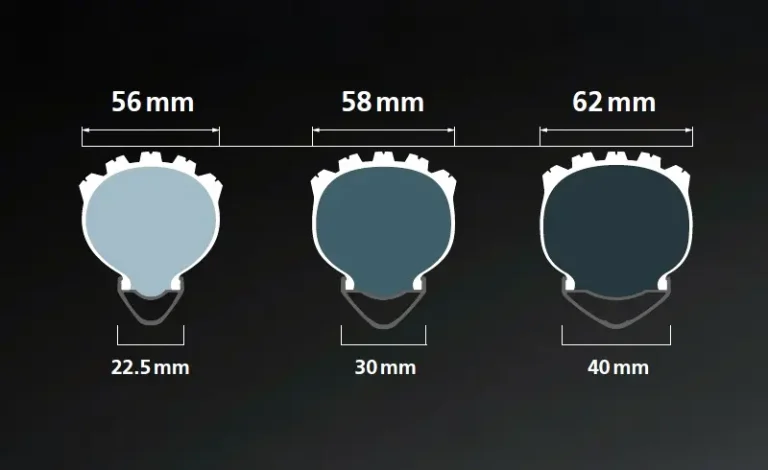
- Wider internal rim widths for 28 mm, 30 mm, and wider road tires
- Wider external profiles that blend more smoothly with modern tires
- Rounded, stable rim shapes designed for a broader range of wind angles
- Tubeless-first rim beds and bead profiles
- More room for structural reinforcement where it matters most
That does not automatically mean every disc wheel is faster than every rim-brake wheel. Aerodynamics still depend on rim depth, profile, external width, tire size, rider position, wind angle, and frame interaction.
But in the current market, many of the newest wide-tire aerodynamic designs are built around disc brakes because the platform gives engineers more room to work.
Wheel Strength and Load Paths
Disc brake wheels and rim brake wheels experience braking forces differently.
With rim brakes, braking force is applied directly at the rim. The loads are distributed around the outer structure of the wheel.
With disc brakes, braking torque begins at the hub and travels through the spokes to the rim and tire contact patch. That is why disc brake wheels often use specific lacing patterns—commonly crossed spokes on the rotor side—to manage braking torque effectively.
A disc brake wheel is not simply a rim-brake wheel with a rotor mount attached. Its hub shell, flange geometry, spoke lacing, and tension balance must all account for torsional loads from braking.
This is also why a high-quality wheel build matters so much. Even spoke tension, appropriate spoke count, strong flanges, and a rim designed for its intended use all contribute to durability and handling.
Compatibility: The Part You Cannot Ignore
Before comparing depth, weight, or price, verify compatibility.
Disc Brake Carbon Wheel Compatibility
Check the following:
- Rotor interface: Center Lock or 6-bolt
- Axle standard: Most modern road bikes use 12 × 100 mm front and 12 × 142 mm rear thru-axles
- Freehub body: Shimano HG, Shimano Micro Spline, SRAM XDR, SRAM XD, or Campagnolo N3W, depending on drivetrain
- Rotor size: Usually 140 mm or 160 mm; confirm your frame, fork, and caliper requirements
- Tire clearance: A wider rim can make a tire measure wider than its labeled size
- Frame clearance: Confirm actual clearance, not just the tire size printed on the sidewall
Rim Brake Carbon Wheel Compatibility
Check these details:
- Brake type: Standard road caliper brake or direct-mount caliper brake
- Brake-pad clearance: Especially important with modern wide rims
- Brake track: Use pads approved for the wheel’s carbon braking surface
- Axle standard: Most rim-brake road bikes use 100 mm front and 130 mm rear quick-release spacing
- Freehub body: Match it to your cassette
- Tire and frame clearance: Wide rims can increase the installed width of the tire
The most expensive wheelset in the world is a poor purchase if it does not fit the bike correctly.
Tubeless: Different Considerations
Both disc and rim brake carbon wheels can be tubeless-ready. But disc brakes have made tubeless road setups more straightforward in practice.
Why? Heat.
Tubeless sealant, rim tape, and tire beads all live near the rim. On a rim-brake carbon wheel, sustained braking can raise temperatures in that same area. Wheel and tire manufacturers provide specific compatibility guidance for a reason; it should be followed carefully.
With disc brakes, the rim stays free of braking heat, which removes one variable from the tubeless equation. It does not eliminate the need for proper installation, suitable tires, correct tape, secure valve fitment, and sensible pressure. It simply makes the thermal environment around the rim less demanding.
For riders who want 28–32 mm tubeless road tires or all-road tires at lower pressures, disc brakes are generally the more flexible platform.
Ride Feel: The Difference Is Not Only Braking
A wheelset affects how a bike accelerates, tracks through corners, responds to steering inputs, and carries speed over imperfect pavement.
Rim-brake road bikes often feel light, lively, and wonderfully direct. They tend to have narrower clearances and more traditional proportions, which can give the whole bike a sharp, classic road feel.
Disc-brake bikes often feel more planted. They usually accept wider tires, use thru-axles, and pair naturally with wider carbon rims. That combination can bring more grip, lower tire pressures, greater comfort, and more confidence when roads get rough.
Neither feel is universally superior.
A rider doing fast, dry, smooth-road climbing loops may love a light rim-brake wheelset. A rider dealing with wet descents, patched pavement, long endurance routes, or gravel connectors may find a disc brake carbon wheelset more useful every single week.
Which Riders Should Choose Disc Brake Wheels?
Disc brake carbon wheels are usually the better choice if you:
- Ride a modern disc-brake road, gravel, or all-road bike
- Regularly descend long or steep roads
- Ride in rain, mixed weather, or year-round conditions
- Want to use 28–32 mm road tires or wider
- Prioritize braking consistency and control
- Ride rough roads, mixed surfaces, or gravel
- Want the broadest selection of new wheelset designs and future component options
For San Francisco Bay Area riders, this can be especially relevant. Descents can be long, roads can vary from smooth to genuinely broken within the same route, and coastal wind plus fog can change grip quickly. More consistent braking and wider-tire flexibility are not marketing luxuries in those conditions. They are useful tools.
Which Riders Should Choose Rim Brake Wheels?
Rim brake carbon wheels remain an excellent choice if you:
- Already own a rim-brake road bike
- Prioritize low weight and mechanical simplicity
- Ride mostly in dry conditions
- Prefer traditional road-bike handling
- Spend much of your time climbing or riding smooth pavement
- Want to refresh an existing high-performance bike rather than replace it
- Are comfortable using the correct pads and maintaining braking surfaces
There is no reason to retire a good rim-brake bike simply because the industry has moved toward disc brakes. A modern rim-brake carbon wheelset can make an older road bike feel dramatically quicker and more capable.
The key is to choose a wheelset with a proven braking surface, use the correct pads, and treat long, hot descents with the respect they deserve.
A Practical Buying Framework
When deciding between disc brake and rim brake carbon wheels, work through these questions in order:
- What brake system does your bike use?
This determines the category immediately. - What tires do you want to run?
If your goal is 30 mm road tires, wide tubeless tires, or gravel rubber, disc brakes and modern wide rims usually make more sense. - Where do you ride most often?
Flat, dry roads and mountain climbing favor different priorities than wet coastal roads or technical descending. - How important is weight?
If every gram matters, rim brakes still offer a compelling route to a very light build. - What matters more: simplicity or versatility?
Rim brakes are elegant and easy to understand. Disc brakes offer broader tire clearance, more all-weather consistency, and more future-facing compatibility. - Does the wheelset match your exact standards?
Confirm axle dimensions, freehub body, rotor interface, tire clearance, and frame clearance before ordering.
Disc brake carbon wheels are not simply the “new” option, and rim brake carbon wheels are not simply the “old” one.
They are different solutions for different bikes and different kinds of riding.
A rim-brake carbon wheelset remains hard to beat for lightweight road performance, clean simplicity, and the classic feel of a well-sorted climbing bike. A disc brake carbon wheelset offers stronger all-weather confidence, wider tire compatibility, greater design freedom, and a more versatile platform for modern road and all-road riding.
Choose the system your bike is built for. Then choose the wheel depth, internal width, spoke count, hub standard, and tire pairing that suit your actual roads—not an imagined version of your riding.
That is where the real upgrade begins.