

Spend on speed. Not the spec sheet.
Which carbon wheel upgrades are worth paying for below $1,500? A practical guide to rim design, serviceable hubs, spokes, tire compatibility and the expensive details you can leave behind.
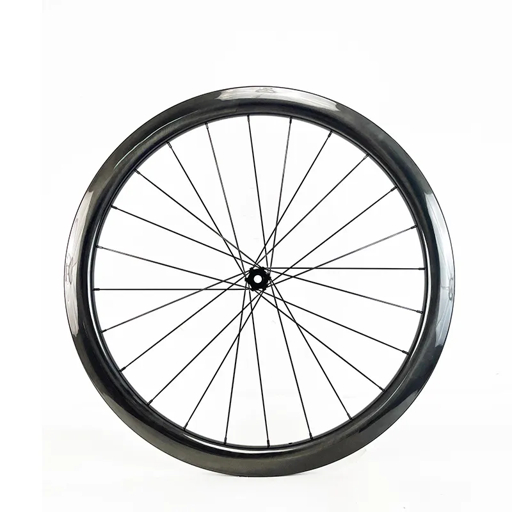
Prioritize compatibility, an appropriate rim profile, dependable wheel building and hubs you can actually service. Pay extra for lower weight or specialist spokes only when they solve a specific riding need. Ceramic bearings, extreme engagement counts and a more prestigious carbon label belong much further down the list.
A $1,500 ceiling gives you choices. That is useful—and occasionally distracting. One carbon road wheelset promises fewer grams. Another advertises a taller rim, carbon spokes or a louder freehub. The temptation is to treat each extra specification as an upgrade.
It is not that simple. The best carbon wheelset under $1500 is the one that improves your riding without making tire selection, maintenance or handling unnecessarily difficult. Sometimes that means spending close to the limit. Sometimes it means buying a less expensive wheelset and keeping money for tires, setup and future service.
This guide focuses on modern 700c disc-brake road wheels. Rim-brake bikes need a separate assessment of brake-track compatibility, pads, tire pressure and heat management; a disc-brake wheelset is not a substitute.
What is actually worth paying for?
Think in purchase priorities rather than component prestige. These are editorial buying judgments, not a claim that every expensive option performs better than every affordable one.
Correct fit and documented limits
Exact axle, freehub, brake interface, tire approval, pressure limits and system-weight rating. An incompatible bargain is not a bargain.
A better-supported hub and wheel build
Obtainable bearings, replacement freehub bodies, clear service instructions, appropriate spoke tension and accessible replacement spokes make ownership more predictable.
Rim profile and depth
Useful when matched to your tires, speed and wind exposure. More depth is not automatically more usable speed.
Lower mass and specialist spokes
Consider the complete wheel, its load rating and repair requirements. A lower published weight alone does not establish a better wheel.
Ceramic bearings and extreme engagement
Treat these as optional refinements. Require evidence before sacrificing tire budget, serviceability or a more suitable rim to afford them.
Buy the rim for your roads—not the deepest silhouette.
For an all-round carbon road wheelset, roughly 40–50mm is a sensible starting shortlist, not a universal optimum. It provides a practical middle ground to investigate before choosing a shallower climbing wheel or a deeper aero wheel.
Fast, exposed riding demands more thought. Greater depth can help aerodynamics, but crosswind steering behavior depends on the actual rim profile, tire and wind angle. A depth number cannot tell you how predictable a front wheel will feel in a gust.
When a brand charges more for “aero,” ask what supports the claim: which tire was installed, at what measured width, at what speed, across which yaw angles and against which reference wheel? A single watt figure without those conditions is not a meaningful comparison.
A rim that suits your actual tire
Internal width influences tire shape and mounted size. External width and profile affect how the tire and rim interact with airflow. Evaluate them together rather than buying the widest rim available.
“Deeper means faster”
A deeper wheel that makes you brake, tense up or avoid exposed routes may be a poor purchase. Control is part of performance, particularly at the front wheel.
Hub upgrades: pay for the next service.
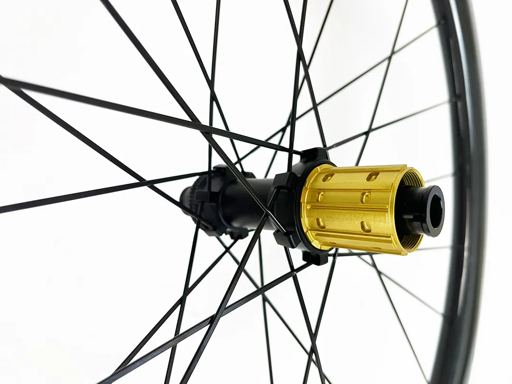
A hub upgrade earns its place when it makes the wheel easier to own. Can you order a replacement freehub body? Are bearing sizes documented? Are end caps available? Can a local mechanic service it without improvising?
DT Swiss provides a useful example of what to look for: published service resources, identified spare parts and serviceable ratchet systems. That does not make every other hub inferior. It makes documentation and parts availability worthwhile comparison points.
A generic “ratchet hub” description does not prove that a hub is DT Swiss, accepts DT Swiss parts or follows the same service procedure. Ask for the actual manufacturer and model.
Do you need faster engagement on a road wheelset?
More engagement positions reduce the crank movement before drive resumes after coasting. That can feel responsive, especially when repeatedly restarting your pedal stroke. It does not directly make steady pedaling more aerodynamic or lower tire rolling resistance.
For a simple 36-position mechanism, nominal engagement spacing is 10 degrees: 360 divided by 36. But tooth counts and pawl counts are not interchangeable across all hub designs. Compare the stated engagement angle and service requirements, not just the largest number on the page.
Are ceramic bearings worth it under $1,500?
Usually not as an early upgrade. Ceramic bearings can be part of a high-performance system, but the label alone does not establish lower installed friction, better sealing or longer life in your riding conditions. Lubrication, seals, bearing fit and assembly all matter.
If the premium forces you to keep worn tires or abandon a hub with better parts support, reconsider it. A long, unloaded spin test is not a substitute for an installed, loaded performance comparison.
Spokes and weight: judge the wheel, not the material label.
Bladed steel spokes are a practical option for a performance road wheelset. Their value is not simply an aero claim: identifiable models and available replacements make future repairs easier to plan.
Carbon spokes can enable a different balance of weight, stiffness and aerodynamic design. They are not automatically a bad purchase—or a necessary upgrade. Ask how a damaged spoke is replaced, whether special tools are required and who holds spare stock.
The same caution applies to carbon-fiber grades. A T700, T800 or other material designation does not reveal the full laminate, rim-wall design or manufacturing quality. Pay for a validated complete product rather than assuming a higher material number guarantees a stronger or faster wheel.
Lower mass matters most when climbing and accelerating, while aerodynamic differences become increasingly important as speed rises. There is no universal gradient where one wheel becomes “better”: rider power, total system mass, wind and the actual aerodynamic difference all affect the result.
A 150g reduction is still only 150g removed from the rider-and-bike system during a steady climb. Rim mass also contributes to rotational inertia during acceleration, but that does not justify treating every saved wheel gram as permanently worth twice a frame gram.
A $1,500 budget should include the ride-ready setup.
Decide whether $1,500 means wheels alone or the complete installed upgrade. Tires, valves, sealant, compatible tubes, rotor hardware, installation and tax can change the comparison. The example below illustrates a complete budget; it is not a set of market price quotes.
Complete setup, not checkout surprise.
Wheelset allowance
Pair of suitable performance tires
Setup consumables and installation allowance
Tax, delivery or contingency reserve
These amounts total $1,500. Actual costs vary by location, existing parts and installation needs. New rotors, cassette or unexpected import charges may require a different allocation.
Tires deserve their own line in the budget. Tire construction and pressure influence rolling losses, grip and comfort. SILCA’s impedance work explains why more pressure is not always faster: beyond a surface-dependent breakpoint, vibration-related losses can outweigh reductions in tire-casing losses.
That does not mean “run the lowest pressure possible.” Pressure must suit the load, measured tire width and surface while staying within the limits of every component. Too little pressure can compromise handling and increase the risk of rim impacts.
Three riding styles. Three different upgrade priorities.
Fast group rides
Start with a mid-depth aero wheelset that works with your chosen tires. Consider deeper rims when your speed, routes and handling confidence justify them. Prioritize credible wheel-and-tire aerodynamic evidence over ceramic bearings.
Climbing and exposed roads
Give more weight to manageable steering, suitable rim depth and complete-system mass. A modest weight premium can make sense, but not at the expense of load capacity, braking compatibility or dependable construction.
Endurance and rough pavement
Start with approved tire fit, adequate frame clearance, pressure suitability and repair support. A serviceable hub and obtainable spokes may be more valuable than the final reduction in claimed wheelset weight.
A real product baseline—not a reason to spend the ceiling.
An affordable carbon wheelset can provide a useful reference point for judging upgrades. The question is not “How much more can I buy?” It is “What measurable benefit or ownership advantage does the next price step provide?”
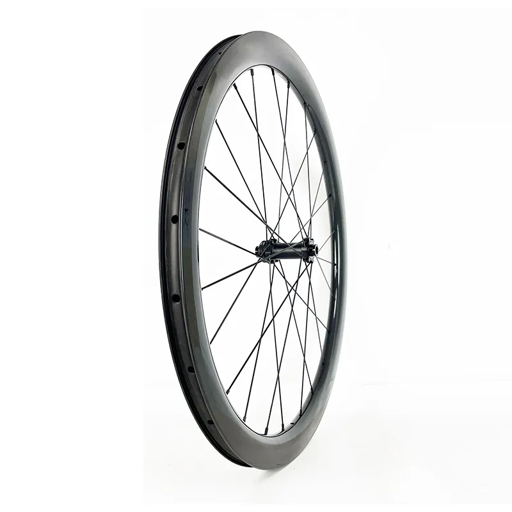
CHASE 45 AR
Listed at $799 when checked, the CHASE 45 AR provides a concrete comparison point well below the $1,500 ceiling. Its specification combines a mid-depth rim, steel aero spokes and a ratchet hub.
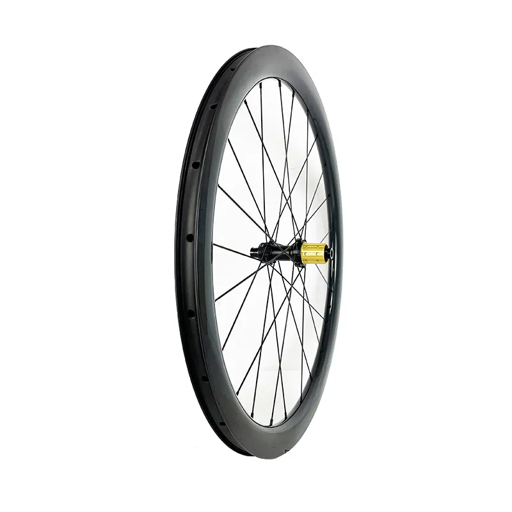
The listing specifies tubeless-ready construction, disc brakes, brass nipples and HG or optional XDR freehub configurations. Confirm the exact cassette, rotor interface, rim bead design, pressure limits and system-weight rating before ordering. “Tubeless-ready” alone does not establish those details.
Price and specifications checked October 27, 2026; subject to change. Verify current configuration, inclusions, delivery terms and warranty conditions before purchase. No independent aero, fatigue or impact test result is claimed here.
The checks that come before payment.
- Match wheel size, brake type, front and rear axle dimensions, rotor mounting standard and freehub interface to your bicycle. HG, XDR and Micro Spline are not interchangeable cassette interfaces.
- Establish whether the rim is hooked or hookless. Confirm approval for the exact tire model, size and installation method. Do not assume that adding a tube makes an incompatible tire safe.
- Obtain the applicable pressure limits for the actual tire-and-rim combination. Follow the lowest applicable limit; do not substitute a generic internet pressure recommendation.
- Check the maximum permitted system weight and its definition. Rider weight alone may exclude the bicycle, clothing, bottles and luggage that the published limit includes.
- Ask which replacement spokes, nipples, bearings, end caps and freehub bodies can be supplied—and how to order them.
- Read warranty and crash-replacement terms separately. Confirm claim shipping costs, exclusions, return conditions and who performs the repair.
- Compare the final delivered, ride-ready cost. A headline wheelset price and a complete upgrade budget are different numbers.
Carbon wheelset under $1500: buyer questions.
Is a $1,500 carbon wheelset always better than a $1,000 wheelset?
No. The higher price may buy lower mass, different hubs, specialist spokes, local support or a different warranty. Those benefits matter only if they suit your use. Compare exact configurations and ownership terms rather than price alone.
What rim depth should I choose for an all-round road wheelset?
Roughly 40–50mm is a useful starting shortlist. Riders facing frequent gusts may prefer a shallower option, while sustained fast riding can justify considering deeper rims. Actual rim shape, tire pairing and steering behavior remain important.
Are carbon spokes worth paying extra for?
Potentially, when the complete wheel delivers a documented benefit you want and replacement support is clear. They are not a prerequisite for a good carbon road wheelset. Do not pay a premium without understanding the repair process.
Should I choose hooked or hookless carbon wheels?
Choose a system compatible with your intended tires and pressure requirements. Hookless wheels require explicit tire approval and strict observance of the applicable limits. Hooked construction also has compatibility and pressure requirements; neither design removes the need to check the manufacturer’s instructions.
What should I upgrade first after buying carbon wheels?
Check tire condition, tire suitability and pressure setup before buying more hub hardware. If those are already appropriate, there may be no urgent next upgrade. Ride the wheels, establish your needs and spend only when a specific limitation appears.
Spend the next dollar on the weakest part of your wheel-and-tire system—not on the most glamorous option in the configurator. The right $1,500 upgrade may cost less than $1,500.
