

Best Wheels for Climbing
If you ride climbs often, this question eventually comes up: what kind of wheels are actually best for the mountains? Most riders say “the lighter, the better” — not wrong, but only half the story. The best climbing wheels help you climb with less effort, hold a steady rhythm, and still feel confident on the descent. What matters is overall performance, not one impressive number on a spec sheet.[Bikeradar]
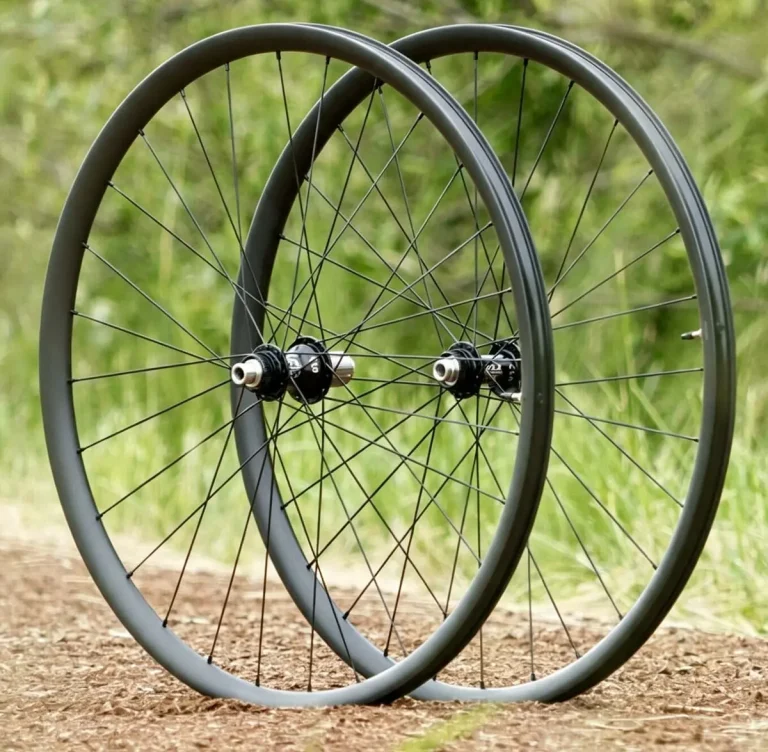
If your riding is mixed — flats, rollers, and climbs in one ride — the answer gets clearer: a lightweight, mid-depth carbon wheelset is often more practical than an extremely shallow aluminum wheel. You don’t ride only the steepest section of the climb. You ride the whole road.
Why Carbon Wheels Often Have the Edge
The mass around the rim doesn’t affect how heavy the bike feels when you lift it — it affects how much effort it takes to get moving from a stop, keep momentum on steep ramps, and change pace without the bike fighting you.
Standing and sprinting, or changing pace on a short steep ramp, a soft wheel makes the pedal stroke feel vague and power seem to disappear somewhere.
Few climbs are pure crawling efforts start to finish. Most real climbs are a mix — and aero still matters on the parts that aren’t dead-steep:
“Climbing wheels should be shallow. The shallower, the better.”
Wheels aren’t judged by rim depth alone — material, stiffness, spoke design, hub structure, and weight distribution all count. Some shallow alloy wheels are light, but still fall short of a well-designed carbon wheel in stiffness and ride quality.
Shallow aluminum wheels are usable.
Carbon wheels are more likely to make climbing feel genuinely better.
What Really Matters in a Climbing Wheelset
Who Should Choose Carbon? Who Can Stay on Alloy?
Once you start taking cycling seriously and paying attention to how climbing actually feels, it gets harder to dismiss carbon as just a fancy upgrade.
Choosing Rim Depth Without Overthinking It
If your only goal is climbing, shallow is the safe answer. But for everyday riding, mid-depth carbon often keeps the whole ride feeling more complete.
A poor wheel-and-tire match can waste some of the benefit you paid for. Too narrow doesn’t automatically mean faster, and too much pressure can make the ride harsh without improving rolling speed. Climbing performance is about the whole system — not just the wheelset.
Is It Worth It On a Budget?
If you’re just getting into cycling, carbon wheels don’t have to be first. Helmet, lights, shoes, jersey, computer — those basics come first.
But if you’ve been riding a while, and the wheels are the part you feel most directly, and climbing still feels like the bike is holding you back — carbon becomes a very attractive upgrade. It doesn’t just change one number. It changes the feel of the entire ride.
Before You Buy — Ask Yourself
The best climbing wheels aren’t the ones with the most impressive spec sheet. They’re the ones that suit your routes, your weight, your power, and the way you actually ride.
But if we lean one way — for most riders who take cycling seriously, a lightweight, stiff, well-proportioned carbon wheelset usually offers a more meaningful improvement than a shallow alloy wheel. Not just lighter. Smoother, more responsive, and more willing to keep climbing.
FAQ
Rotational weight (rim and spoke mass) must be accelerated every pedal stroke. Lower rotational mass reduces the energy needed for starts, accelerations and tempo changes—effects that compound on long climbs.
For many committed riders, yes—carbon more easily combines low weight, stiffness and ride feel. If you ride rarely or have a tight budget, alloy remains a perfectly sensible option.
Pure climbing: shallow rims. Mixed riding: mid-depth (roughly 30–45mm). If your routes include a lot of flats/rolls, a slightly deeper rim can be useful—balance is key.
Lighter is beneficial, but extreme lightness can sacrifice stiffness and durability. The goal is “light plus sufficient stiffness,” matched to your weight and power.
A lot. Insufficient stiffness makes pedal strokes feel vague and wastes power. Proper lateral and torsional stiffness gives more direct feedback—especially noticeable during out-of-the-saddle efforts.
Yes. Correct rim/tire pairing improves tire shape, rolling resistance and control. Modern riders often choose 25–30mm tires for a better trade-off of comfort, traction and speed.
Heavier riders need wheels that balance weight, stiffness and durability. Ultralight options may feel fragile; choose carbon with proven build quality or higher-grade alloy options with good hubs.
There’s no single number—aim for a balance of comfort and rolling efficiency. Wider tires generally run lower pressure; test pressures with your weight and road surface to find the sweet spot.
Look for mid‑depth, stiff, lightweight wheels that accelerate quickly. Carbon mid‑depth sets often offer the best mix of punch and climbing performance.
They can be if the brand lacks international support. Pick brands with global warranty/service networks, pack wheels in a proper hard case, and know local repair options.
- Straight-Pull vs J-Bend Spokes: Complete Bicycle Wheel Guide
- Ratchet vs Pawl Hub Systems: Which Is Better for a Carbon Wheelset?
- Are 29 inch carbon mountain bike wheels worth it?
- 700c Carbon Disc Wheelset: What Really Matters Before You Buy
- Are Carbon Gravel Wheels Worth It? Performance, Ride Feel & Buying Guide
- Wheel Guide · Materials & Ride Feel
- Wide vs. Narrow Rims: The Quiet Revolution in Cycling Performance
- Can Beginners Ride Carbon Wheels?