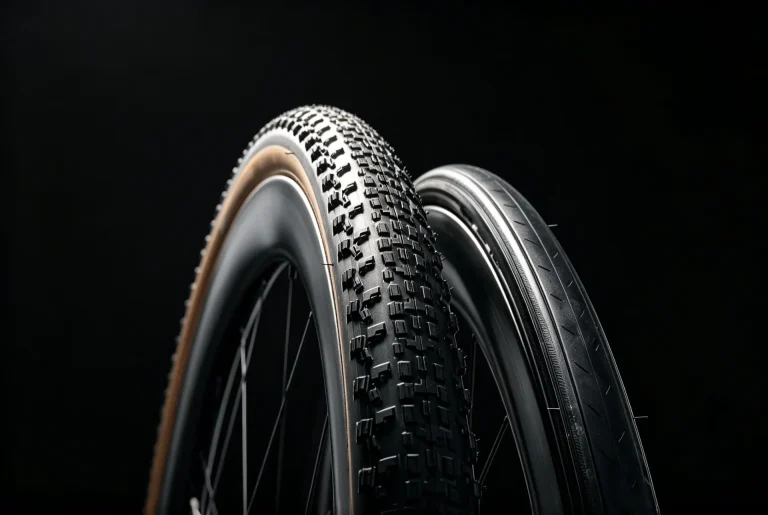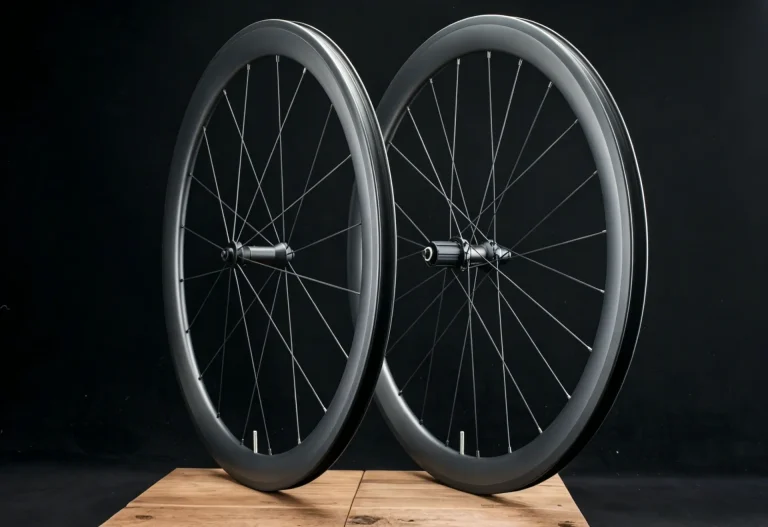
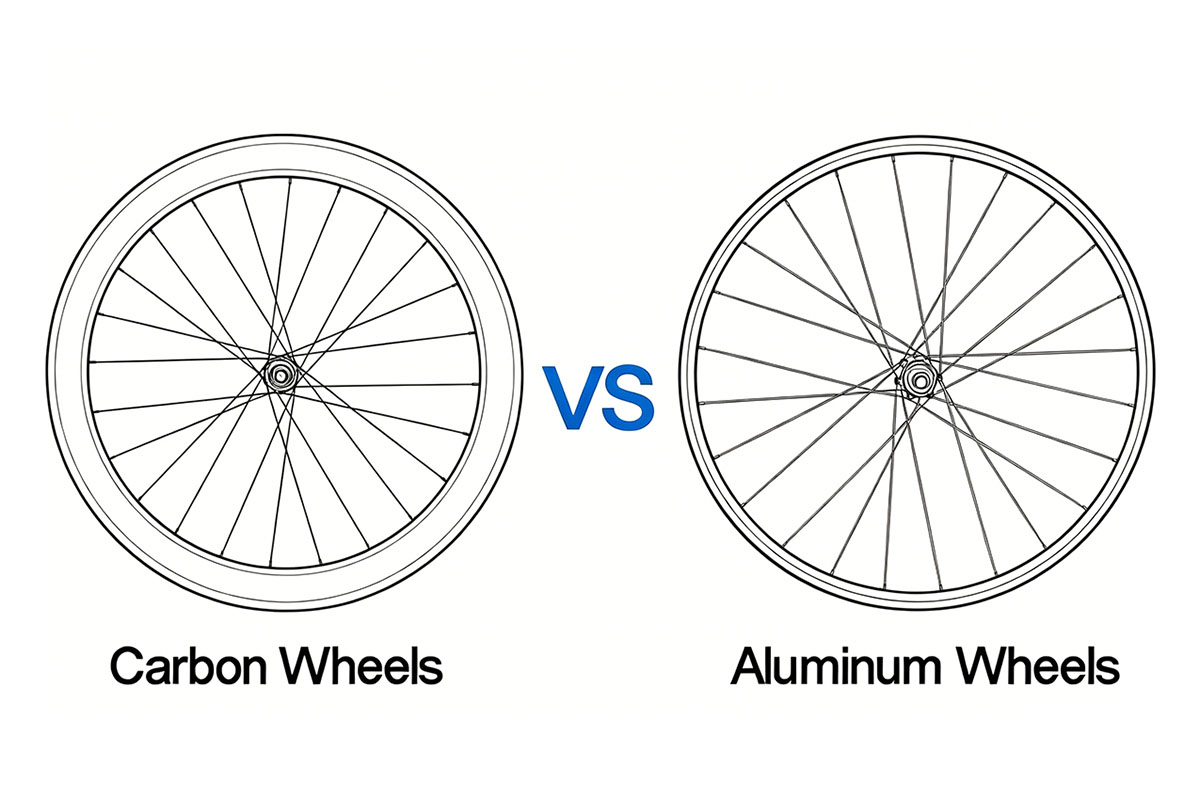

Choosing between carbon vs aluminum wheels is one of the most important equipment decisions road cyclists make. For most performance-focused riders, premium carbon wheels offer clear advantages in weight, aerodynamics, stiffness, and ride quality. Aluminum wheels, however, still make sense for training, budget-conscious riders, and certain demanding conditions.
For riders focused on speed and long-distance events, carbon wheels usually offer the greatest performance benefit. For everyday training and tighter budgets, aluminum remains a sensible option. A racer preparing for Alpine gran fondos will likely prioritize different characteristics than a rider commuting year-round through wet Northern European winters.
Key Takeaways
- Carbon wheels generally deliver better performance through lower weight, improved aerodynamics, and higher lateral stiffness.
- Aluminum wheels remain excellent for everyday training, commuting, and riders on tighter budgets.
- Modern carbon rims have significantly improved durability and braking performance, especially in disc brake applications.
- For most amateur racers and Gran Fondo riders, upgrading to carbon wheels provides a noticeable riding experience improvement.
- Wheel design, spoke configuration, and build quality often matter as much as rim material.
- Disc brakes have reduced many of the historical disadvantages associated with carbon rims.
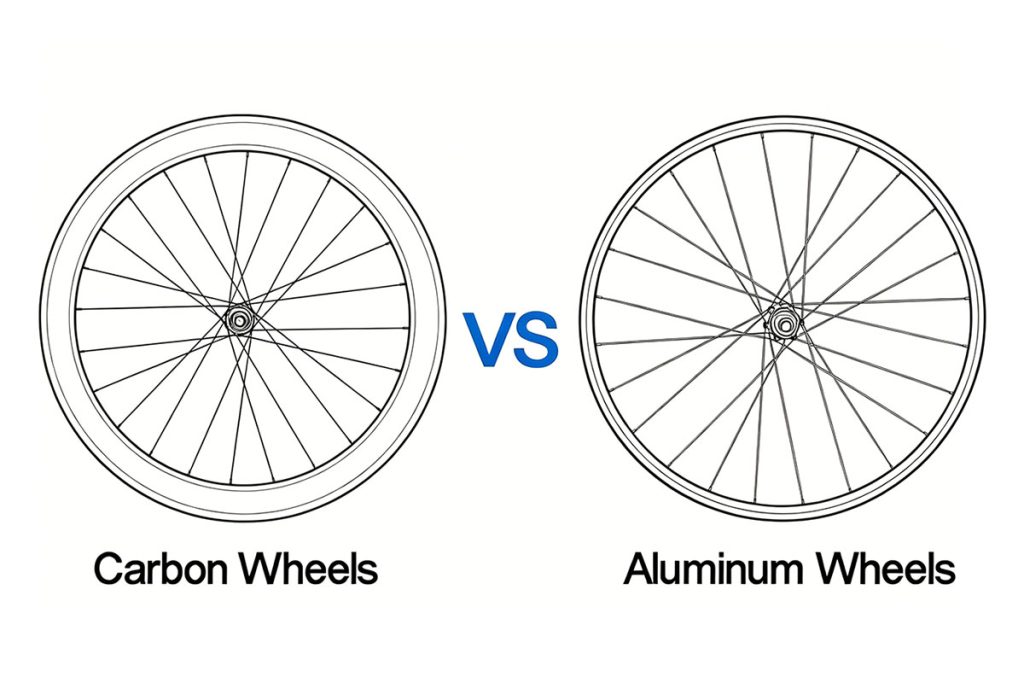
Carbon vs Aluminum Wheels: Quick Comparison
| Feature | Carbon Wheels | Aluminum Wheels |
|---|---|---|
| Weight | Usually lighter | Usually heavier |
| Aerodynamics | Excellent | Limited rim shaping |
| Stiffness | High | Moderate to high |
| Ride Feel | Responsive, refined | More forgiving |
| Cost | Higher | Lower |
| Impact Resistance | Good but can fail suddenly | Generally dents before failure |
| Repairability | Limited | Easier and cheaper |
| Heat Management (rim brakes) | Historically weaker | Excellent |
| Disc Brake Compatibility | Excellent | Excellent |
| Long-Term Value | High for performance riders | High for everyday use |
What Are Carbon and Aluminum Bicycle Wheels?
Carbon Wheels Defined
Carbon wheels use rims manufactured from layers of carbon fiber composite bonded with resin. Engineers can precisely orient carbon fibers to tune stiffness, compliance, impact resistance, and aerodynamics.
This manufacturing flexibility allows designers to create deep aerodynamic rim profiles while keeping weight relatively low.
Aluminum Wheels Defined
Aluminum wheels typically use extruded or forged aluminum alloy rims. The material has been the industry standard for decades due to its reliability, affordability, and ease of manufacturing.
Modern aluminum wheels remain highly capable and continue to serve everyone from commuters to professional racers during training.
Weight Differences: Does Carbon Always Save Weight?
Premium carbon climbing wheels are usually lighter than aluminum models, but some entry-level carbon wheelsets weigh as much as high-end alloy wheels.
High-end carbon wheels are often lighter than comparable aluminum models, but entry-level carbon wheels may weigh the same as premium aluminum options.
During events such as the Maratona dles Dolomites or Marmotte Granfondo Alpes, riders may spend more than an hour climbing continuously.
Saving 300-400 grams at the wheels will not transform climbing speed, but riders frequently notice quicker acceleration when exiting hairpins and a more lively feel during repeated changes in pace.
Typical Road Wheel Weights
| Wheel Type | Typical Weight |
|---|---|
| Premium carbon climbing wheels | 1,100-1,350 g |
| All-round carbon wheelsets | 1,300-1,500 g |
| Aero carbon wheelsets | 1,400-1,650 g |
| Premium aluminum wheelsets | 1,400-1,600 g |
| Entry-level aluminum wheelsets | 1,700-2,000+ g |
For riders tackling long mountain climbs in regions such as the Alps, Dolomites, or Pyrenees, reducing rotating mass can noticeably improve acceleration and climbing feel.
Aerodynamics: Where Carbon Wheels Gain the Biggest Advantage
Aerodynamics is arguably the strongest argument in the carbon vs aluminum wheels debate.
Carbon fiber allows engineers to create wide, deep, and highly optimized rim shapes that would be difficult or impractical in aluminum.
Imagine a typical weekend club ride averaging 34-36 km/h on exposed roads in Belgium or the Netherlands.
At these speeds, aerodynamic drag becomes the dominant resistance force. Riders switching from a traditional alloy wheelset to a modern 45-50 mm carbon wheel often report that it takes less effort to hold the wheel in front and maintain speed on long flat sections.
The difference is rarely dramatic on a single ride, but over four or five hours, the energy savings become noticeable.
Why Aerodynamics Matters
At speeds above approximately 30 km/h, aerodynamic drag becomes the dominant resistance force.
Deep-section carbon rims can:
- Reduce aerodynamic drag.
- Improve speed retention.
- Require less power to maintain cruising speed.
- Increase efficiency during solo riding and breakaways.
Typical Rider Benefits
| Rider Type | Likely Benefit from Aero Carbon Wheels |
|---|---|
| Amateur racer | Significant |
| Fast club rider | Significant |
| Gran Fondo rider | Moderate to significant |
| Recreational rider under 25 km/h average | Limited |
| Commuter | Minimal |
For many European club riders averaging 32-38 km/h in group rides, aerodynamic gains are often more noticeable than small weight reductions.
Ride Quality and Stiffness
Ride feel is subjective, but material properties and rim design strongly influence rider impressions.
Cyclists riding along coastal routes in Spain, Italy, or the North Sea region frequently encounter strong crosswinds.
Deep carbon wheels offer aerodynamic advantages, but riders unfamiliar with deep rims may initially find handling more demanding in gusty conditions. For many amateur cyclists, a 40-50 mm rim depth provides a good balance between aerodynamic performance and stability.
Carbon Wheel Ride Characteristics
Riders typically notice:
- Fast acceleration.
- Direct power transfer.
- High lateral stiffness during sprinting.
- Stable cornering.
- Precise steering response.
Aluminum Wheel Ride Characteristics
Aluminum wheels generally feel:
- Predictable.
- Comfortable.
- Forgiving on rough roads.
- Less reactive under hard accelerations.
However, ride quality depends heavily on factors such as:
- Rim profile.
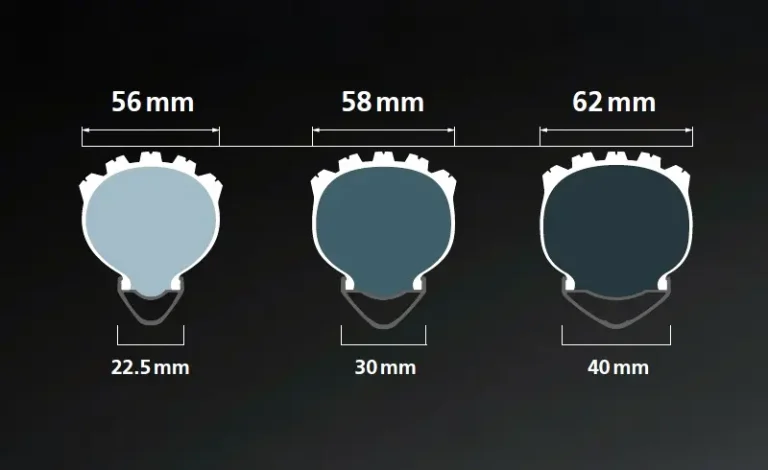
- Internal width.
- Spoke count.
- Spoke tension.
- Tire selection.
- Tire pressure.
Tires frequently influence comfort more than rim material alone.
Durability: Which Wheel Material Lasts Longer?
There is no universal winner.
On rough rural roads in Northern Europe, winter training often means wet surfaces, potholes, and road debris.
Many experienced cyclists prefer aluminum wheels for winter mileage because replacement costs are lower if damage occurs. Carbon wheels, however, are increasingly used year-round thanks to improved impact resistance and disc brake designs.
For riders regularly encountering poor road surfaces, spoke count and wheel build quality are often more important than rim material alone.
Carbon Wheel Durability
Modern carbon rims are considerably stronger than earlier generations.
Advantages:
- Excellent fatigue resistance.
- No corrosion.
- High structural stiffness.
- Resistant to long-term material fatigue.
Potential drawbacks:
- Severe impacts may cause cracks.
- Damage can be difficult to detect visually.
- Repairs are specialized.
Aluminum Wheel Durability
Advantages:
- Tolerates minor impacts well.
- Often dents before catastrophic failure.
- Easier to inspect.
- Lower replacement cost.
Potential drawbacks:
- Susceptible to fatigue over very high mileage.
- Can corrode in harsh environments.
- Brake track wear affects rim brake models.
Carbon vs Aluminum Wheels for Disc Brake Bikes
For modern road bikes equipped with disc brakes, carbon wheels have become particularly attractive.
Disc braking removes heat from the rim, eliminating one of the traditional weaknesses of carbon clincher wheels.
As a result:
- Descending performance improves.
- Rim overheating risk disappears.
- Carbon rim lifespan can increase.
- Deep aerodynamic profiles become more practical.
For riders purchasing a new premium road bike, disc-specific carbon wheels are increasingly considered the benchmark option.
Cost Considerations
Carbon Wheels
Typical price range:
- Mid-range: €800-1,500
- Premium: €1,500-3,500+
Aluminum Wheels
Typical price range:
- Entry level: €200-500
- Premium: €600-1,200
Value depends largely on how often you race, ride in the mountains, or participate in long-distance events.
A better question is:
Will the performance benefits meaningfully improve your riding experience?
For riders participating in races, gran fondos, or demanding mountain events, Riders who regularly race or ride gran fondos often consider carbon wheels one of the most worthwhile upgrades.
Which Riders Should Choose Carbon Wheels?
Carbon Wheels Are Recommended For:
Amateur Racers
Benefits:
- Faster acceleration.
- Better aerodynamics.
- Increased sprint stiffness.
Gran Fondo Riders
Benefits:
- Improved efficiency over long distances.
- Reduced fatigue at sustained speeds.
- Better climbing and descending performance.
Performance-Oriented Enthusiasts
Benefits:
- Enhanced ride feel.
- Noticeable responsiveness.
- Greater overall riding enjoyment.
Which Riders Should Choose Aluminum Wheels?
Aluminum Wheels Are Recommended For:
Year-Round Training Riders
Benefits:
- Lower replacement cost.
- Excellent reliability.
- Less concern during harsh weather.
Budget-Conscious Cyclists
Benefits:
- Strong value.
- Proven durability.
- Lower initial investment.
Commuters and Utility Riders
Benefits:
- Practical.
- Easy maintenance.
- Cost-effective ownership.
Rider Scenario Recommendations
| Rider Scenario | Recommended Wheel Material |
|---|---|
| Racing local criteriums | Carbon |
| Alpine gran fondos | Carbon |
| Fast club rides | Carbon |
| Winter training bike | Aluminum |
| Daily commuting | Aluminum |
| First road bike upgrade | Premium aluminum or entry carbon |
| Custom performance wheel build | Carbon |
| Bikepacking and heavy touring | Aluminum |
Expert Insight
From a wheel-building perspective, rim material alone does not determine performance.
A well-built aluminum wheel with appropriate spoke count, balanced tension, and quality hubs can outperform a poorly designed carbon wheel.
Similarly, premium carbon rims achieve their potential only when combined with:
- Accurate spoke tension.
- Appropriate lacing patterns.
- High-quality hubs.
- Proper tire selection.
- Correct tire pressure.
Experienced wheel builders often focus on the complete wheel system rather than the rim material in isolation.
For riders exceeding 85 kg, spoke count and overall wheel construction frequently matter more than choosing carbon or aluminum.
Generally, yes. Carbon wheels often combine lower weight and superior aerodynamics, making them faster in many riding situations.
For riders who regularly participate in sportives, gran fondos, or races, many find carbon wheels to be one of the most noticeable performance upgrades.
Modern carbon wheels are highly durable. Severe impacts can damage them, but normal road riding rarely presents issues.
Not necessarily. Tire width, tire pressure, and wheel design usually have a greater influence on comfort.
Yes. Lightweight carbon climbing wheels are popular because they improve acceleration and reduce rotating mass.
No. Many carbon wheelsets are designed specifically for heavier riders. Wheel build quality and spoke count are more important.
Yes. Disc brake carbon wheels perform very well in wet weather. Rim-brake carbon wheels require additional caution.
With proper care and no significant crash damage, quality carbon wheels can last many years and tens of thousands of kilometres.
Which Wheel Fits Your Riding?
| Your Typical Ride | Recommended Choice |
|---|---|
| Fast club rides on flat roads | Mid-depth carbon wheels |
| Alpine gran fondos | Lightweight carbon wheels |
| Year-round winter training | Aluminum wheels |
| Racing and sportives | Carbon wheels |
| Daily commuting | Aluminum wheels |
| Rough roads and heavy riders | Strong wheel build, regardless of material |
| First performance upgrade | Carbon if budget allows |
Final Verdict
In the debate of carbon vs aluminum wheels, For most performance-oriented road cyclists using disc brake bikes, carbon wheels are the preferred option. Aluminum remains the better choice for daily training, commuting, and cost-conscious riders.
Choose carbon wheels if you prioritize performance, aerodynamics, climbing efficiency, and responsive handling. They are especially suited to amateur racers, Gran Fondo riders, and cyclists seeking premium ride quality.
Choose aluminum wheels if affordability, everyday reliability, and ease of maintenance are your main priorities.
For many European road cyclists riding modern disc brake bikes, a high-quality carbon wheelset represents the most rewarding long-term upgrade. Yet a properly designed and expertly built aluminum wheel remains an outstanding choice for training and daily riding.
- Top 10 Best Spoke Brands for Bicycle Wheels in 2026
- Straight-Pull vs J-Bend Spokes: Complete Bicycle Wheel Guide
- Ratchet vs Pawl Hub Systems: Which Is Better for a Carbon Wheelset?
- Are 29 inch carbon mountain bike wheels worth it?
- 700c Carbon Disc Wheelset: What Really Matters Before You Buy
- Are Carbon Gravel Wheels Worth It? Performance, Ride Feel & Buying Guide
- Wheel Guide · Materials & Ride Feel
- Wide vs. Narrow Rims: The Quiet Revolution in Cycling Performance
- Can Beginners Ride Carbon Wheels?
- Bicycle Hub Bearing Maintenance Guide: Service, Adjustment & Replacement