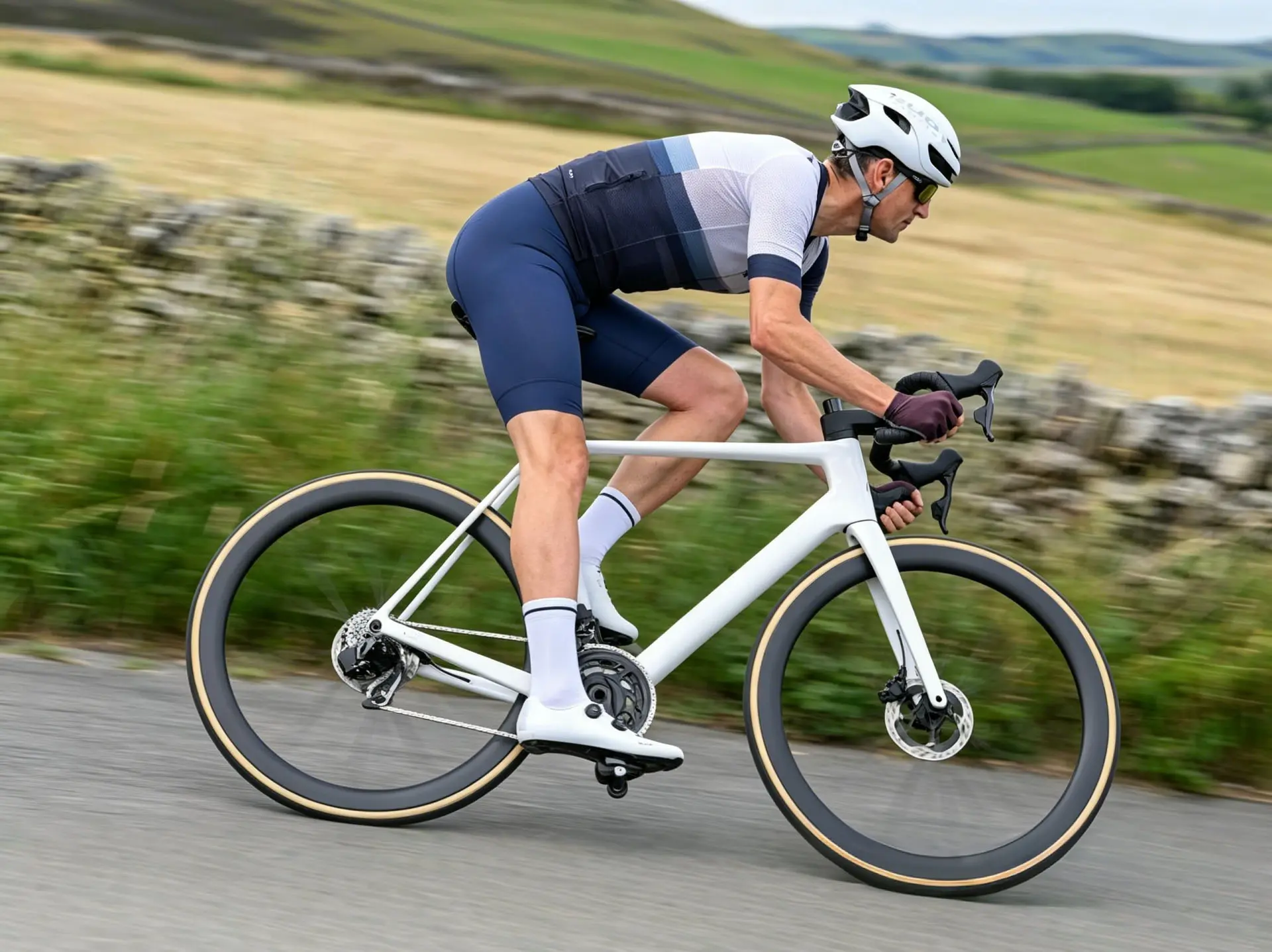

AERODYNAMICS ・ DEEP DIVE
Do Aero Wheels really save watts? A straight-talking look at speed, drag, and what actually matters.
There is a familiar scene in every fast group ride. Someone quietly shows up with a new set of deep carbon wheels. No announcement — just a slightly different silhouette as the sun catches the rim profile. Pace picks up, and the questions start swirling:
Is that why they’re sitting on the front so easily today? Are those rims doing anything, or is it just expensive placebo?
This article answers that honestly — not with slogans, and not with unreadable engineering.
Where Your Watts Really Go
FOUR FORCES
Before blaming or praising any wheel, it helps to know where your power goes. Every pedal stroke fights against air resistance, rolling resistance, gravity when climbing, and drivetrain losses.
Above roughly 25–30 km/h, air resistance becomes the dominant force — a large share of your watts is literally spent pushing air out of the way. Aero wheels live in that domain. They do not change gravity, and they do not fix your fitness. What they can do is reduce the “air tax” you pay to hold a certain speed.
What “Aero” Actually Means
SHAPE, NOT MAGIC
Aero rims are usually deeper than traditional low-profile designs, with a carefully shaped cross-section — often a rounded “U” or toroidal form rather than a sharp V — built to work with a specific tyre width for clean airflow. A deeper, smoother shape helps air flow around the wheel more efficiently. Less turbulence means less drag, and less drag at the same speed means fewer watts needed.
“One component in a system — not a magic object that rewrites physics on its own.”
How Drag Is Measured
WHERE “WATTS SAVED” COMES FROM
Claims like “this wheelset saves 10 watts at 40 km/h” typically come from wind tunnel tests — wheels mounted in a fixed position with a bike or dummy — or field tests, using on-bike sensors to compare power needed at a set speed. In both cases, the goal is to isolate one variable, wheel shape, and measure the difference in drag.
independent wind tunnel tests on modern aero road wheels
Drag depends heavily on yaw angle — the angle between the wind and your direction of travel. Real-world wind is rarely straight on; it’s often slightly from the side. Good aero wheels aren’t just fast head-on — they’re built to perform across a range of yaw angles.
Roughly How Many Watts?
FROM “ALMOST NOTHING” TO “SIGNIFICANT”
No one needs eight decimal places of precision. Depending on the comparison, tests commonly show single-digit to low-double-digit watt differences at typical road speeds:
On paper, 10 watts may not look spectacular. On the road, it can be the difference between sitting in the draft comfortably vs fighting to hang on — and the key is remembering these watts are saved every second, every minute you’re at speed, not just once.
Aero vs Weight
DOES CLIMBING KILL THE BENEFIT?
“They’re heavier, so they’re worse on climbs” — reality is more nuanced. Deeper rims are usually heavier, but the extra mass is often modest, a few hundred grams for the whole wheelset. Most rides are a mix of flats, rolling terrain, and climbs, not endless alpine ascents.
STEEP CLIMBS, LOW SPEED
Weight matters more
FLATS · ROLLING · DESCENTS
Aero matters far more
Aero doesn’t cancel gravity. But gravity doesn’t cancel aero either.
When Aero Doesn’t Help
IT IS NOT MAGIC EVERYWHERE
Aero wheels save little when you’re riding very slowly, constantly stopping and turning in tight technical scenarios, or the road surface is bad enough that you have to back off regardless of equipment. They can also be a mixed blessing in strong, gusty crosswinds if the rim profile isn’t well-designed for stability.
A wheel that looks fast but makes you tense your shoulders every time the wind hits is not making you faster overall. In those cases, the difference is about control and confidence, not watts.
The Human Factor
POSITION BEATS EQUIPMENT — BUT THEY STACK
Tweaking your position — lowering the front end a bit, tidying your posture — can produce bigger aero gains than any single component swap. Clothing, helmet, even how you carry your bottles can matter more than wheels.
It’s not “either/or”. It’s “yes/and”.
Comfort and Handling
MORE THAN JUST DRAG VS WATTS
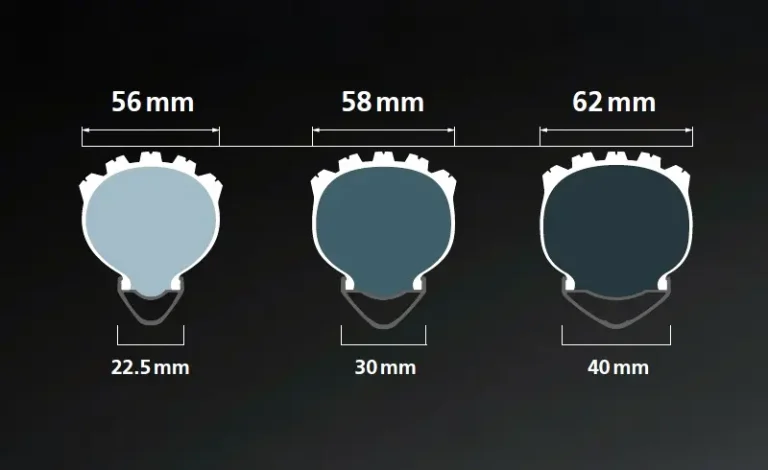
Modern aero wheels bring wider internal widths for 25–30 mm tyres, rim shapes that aim to improve crosswind stability, and tubeless-ready construction for lower pressures and better grip. A well-chosen aero wheelset can actually improve comfort and handling — larger tyre volume smooths rough surfaces, and a more stable contact patch helps in fast corners.
The old story that aero wheels are harsh and only for racers is increasingly out of date.
Is It Worth the Money?
BE HONEST ABOUT YOUR OWN RIDING
If you mostly do relaxed social rides at 20–25 km/h and rarely see long stretches of steady-speed riding, aero wheels are more about aesthetics and personal happiness than measurable gains — and that’s fine.
If you spend a lot of time at 30–40 km/h in groups or solo, race, or push against your own benchmarks, aero wheels often deliver enough cumulative benefit — speed, efficiency, feel — to justify the cost.
What “Good” Looks Like
COMMON TRAITS
Combined with reliable hubs, sensible spoke counts, and tubeless compatibility, that kind of wheel is rarely the absolute lightest on a scale — but on the road, especially at speed, it trades a bit of mass for meaningful drag reduction and a more stable, confident ride.
CONCLUSION
So — Do Aero Wheels Really Save Watts?
In real terms, yes — when used in the situations they’re made for. They cut drag at the speeds where air resistance dominates, make it easier to hold pace with less effort, and turn more of your energy into forward motion rather than turbulence.
They do not rewrite the laws of physics on steep climbs at low speed, replace good training, or guarantee instant transformation if the rest of your setup fights against them.
You notice it in how long you can stay on the front, how much less you suffer at your usual pace, and how much more of the ride feels like working with the air, not against it.
— That’s where the watts go. Aero wheels simply waste fewer of them. —
FAQ
How many watts can aero wheels actually save at typical road speeds?
Aero wheels usually save from a few watts at around 30 km/h to roughly 8–15 watts at 35–40 km/h compared with shallow, non‑aero rims, depending on design, tyres, and conditions.
Are aero wheels still worth it if most rides are solo and non‑competitive?
Yes, if solo rides often include steady efforts around 28–35 km/h on flat or rolling terrain; you’ll feel easier cruising at the same speed. If riding is mostly slow, short, or very casual, the benefit is much smaller.
Should riders prioritize an aero position or aero wheels first for speed gains?
Improving body position (lower front, cleaner posture) generally gives the biggest single aero gain. Once position, clothing, and helmet are reasonable, aero wheels add extra, cumulative savings on top.
Do deeper rims always save more watts than mid‑depth aero wheels?
Not always. Deeper rims can reduce drag more, but only if the shape is well designed. A well‑shaped 45–50 mm rim can outperform a poorly shaped 60 mm rim, especially in real‑world crosswinds.
How do yaw angles and crosswinds change the real‑world benefits of aero wheels?
In real wind, the air rarely hits head‑on. Good aero rims are tuned to work across a range of yaw angles, keeping drag low and steering predictable. Poor profiles can feel twitchy and negate practical benefits.
Do wider tyres reduce the aero advantage of deep rims, or can they enhance it?
Matched correctly, 25–28 mm tyres can work with aero rims to keep airflow clean while improving comfort and rolling resistance. If the tyre is much wider than the rim, it can hurt aerodynamics.
On mixed terrain, does wheel weight matter more than aerodynamics for overall speed?
On long, steep climbs at low speed, weight matters more. On flats, rolling terrain, and descents, aerodynamics usually dominates. For most mixed rides, the total time‑saved from lower drag outweighs a small weight penalty.
Can aero wheels hurt comfort, and how can tyre choice and pressure fix that?
Old narrow, high‑pressure setups could feel harsh, but modern wide aero rims with 25–30 mm tyres at sensible pressures can be very comfortable. Choosing wider tyres and dropping pressure slightly usually solves comfort issues.
How do disc brakes affect aero wheel design, safety, and performance on descents?
Disc brakes move braking heat to the rotor, freeing the rim to be optimized for strength and aerodynamics. This reduces heat‑related rim risk on long descents and allows more consistent aero profiles.
Are mid‑priced aero wheels a realistic alternative to high‑end models in watts saved?
Often yes. Many mid‑tier aero wheelsets deliver most of the drag reduction of top‑end models, plus modern widths and good handling. Premium options refine weight and feel, but the core “watts saved” can be similar for regular riders.
- Top 10 Best Spoke Brands for Bicycle Wheels in 2026
- Straight-Pull vs J-Bend Spokes: Complete Bicycle Wheel Guide
- Ratchet vs Pawl Hub Systems: Which Is Better for a Carbon Wheelset?
- Are 29 inch carbon mountain bike wheels worth it?
- 700c Carbon Disc Wheelset: What Really Matters Before You Buy
- Are Carbon Gravel Wheels Worth It? Performance, Ride Feel & Buying Guide
- Wheel Guide · Materials & Ride Feel
- Wide vs. Narrow Rims: The Quiet Revolution in Cycling Performance
- Can Beginners Ride Carbon Wheels?
- Bicycle Hub Bearing Maintenance Guide: Service, Adjustment & Replacement