
Is a Smaller Hub Engagement Angle
Always Better?
Faster pickup can transform a technical climb. It cannot, by itself, make a carbon wheelset faster, stronger or more efficient. The right engagement angle depends on what happens between your pedal strokes.
No. A smaller rear hub engagement angle reduces the maximum freehub rotation before drive takes up. Its greatest value is usually control: making short pedal inputs more useful when speed is low and space is limited. For continuous road riding, the benefit is less central; for full-suspension mountain bikes, drivetrain–suspension interaction adds another consideration.
Technical basis: DT Swiss engagement-angle and backlash explanation.What does hub engagement angle actually measure?
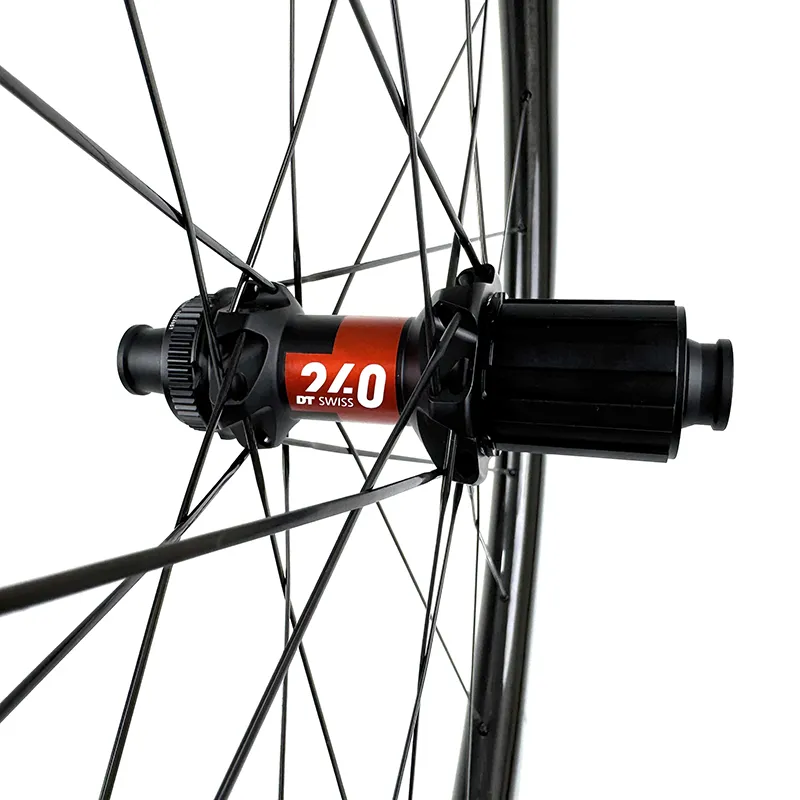
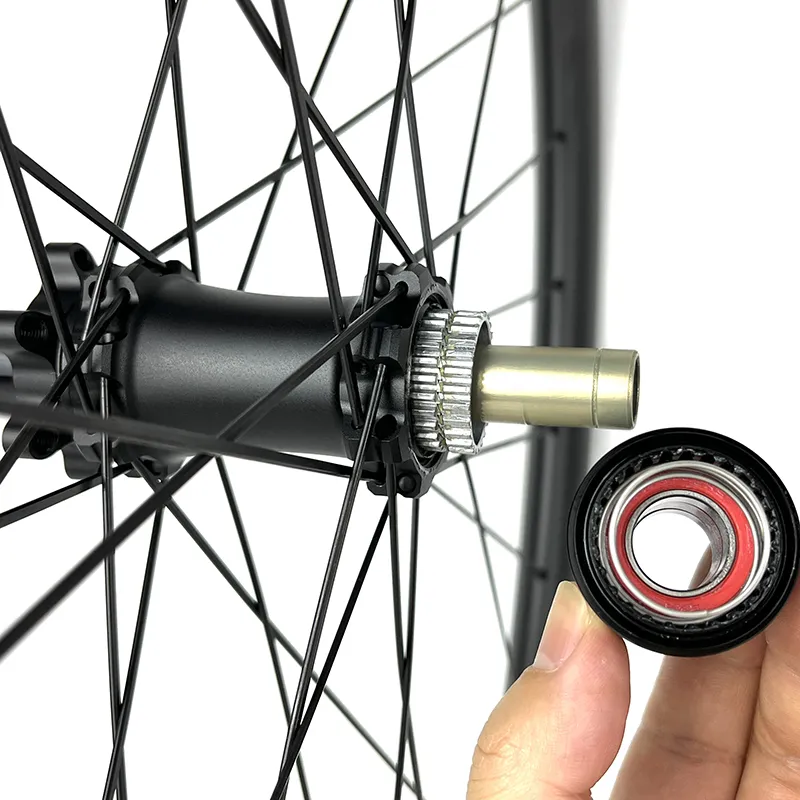
A conventional freehub lets the rear wheel overrun the cassette when you coast. When you resume pedaling, the drive mechanism must reach its next engagement position before it transmits torque.
Engagement angle describes the maximum angular gap between those positions, measured as relative rotation between the freehub body and hub shell. It is not automatically the angle your cranks move, and it is not a measurement of wheel stiffness.
= 360° ÷ POE
| Effective engagement points | Maximum engagement angle | What the number tells you |
|---|---|---|
| 18 POE | 20° | A larger interval before the next drive position. |
| 36 POE | 10° | Half the angular interval of 18 POE. |
| 54 POE | 6.67° | A smaller interval than 36 POE, not 50% more power. |
| 90 POE | 4° | Finer drive-position spacing. |
| 120 POE | 3° | Shorter geometric take-up; other hub properties remain separate. |
Angles calculated from 360° ÷ POE. These are geometry examples, not a ranking of complete hubs or a claim that all listed configurations fit the same hub.
Your gear ratio changes how much pickup you feel.
The same rear hub can feel more hesitant in a low climbing gear than in a high road gear. The reason is mechanical: a given crank rotation turns the cassette less in a low gear, so the cranks must travel farther to take up the same freehub gap.
From freehub angle to pedal movement
Maximum crank take-up angle
≈ hub engagement angle × rear cog teeth ÷ chainring teeth
Simplified stationary-wheel model. This isolates freehub geometry and excludes chain slack, elastic deformation and other drivetrain clearances.
| Example gear | 10° hub / 36 POE | 6.67° hub / 54 POE | 4° hub / 90 POE |
|---|---|---|---|
| 50T chainring / 15T cog | 3.0° crank take-up | 2.0° crank take-up | 1.2° crank take-up |
| 32T chainring / 51T cog | 15.9° crank take-up | 10.6° crank take-up | 6.4° crank take-up |
Calculated examples, rounded to one decimal place. These are maximum geometric take-up angles under the stated model, not real-world response-time tests.
This is why high-engagement mountain bike hubs can be particularly useful on steep, awkward climbs. In a low gear, reducing the hub’s angular gap can reclaim a meaningful portion of a short pedal stroke. Crank length then determines how far your foot travels along that angular arc.
DT Swiss identifies engagement angle, gear ratio and crank length as the three factors governing maximum pedal backlash.Ratchet teeth, pawls and engagement points are not interchangeable.
In a conventional face-ratchet mechanism with one engagement phase, a 36-tooth ratchet provides 36 engagement positions. Pawl systems can use a different approach: staggered pawl groups create additional engagement positions between the teeth of the drive ring.
The original Industry Nine Hydra illustrates the distinction. Its 115-tooth drive ring and six individually phased pawls create 690 engagement points, or approximately 0.52°. That does not mean 690 teeth share the load, or that all six pawls initially engage together.
Original Hydra architecture and phased engagement: BikeRumor.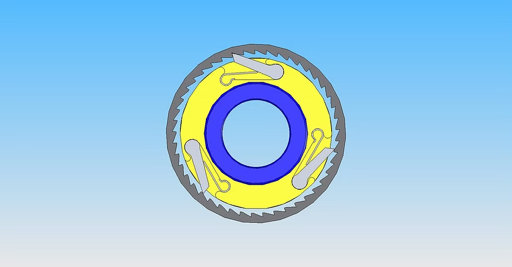
Ask for the complete specification.
“Six pawls” alone does not reveal the engagement angle. Ask for effective POE, the number of engagement phases and the manufacturer’s stated angle. Equally, a “54T upgrade” is not a universal part: hub family, ratchet dimensions and approved components must match.
How much engagement is worth paying for?
The following is a use-case buying framework, not a set of universal performance thresholds. The key question is how often you need to restart drive with a restricted pedal stroke.
Road cycling, endurance riding and time trials
Once the freehub is engaged and you maintain forward drive, the mechanism is already transmitting torque. A smaller engagement angle does not keep adding acceleration on each revolution. Its main opportunity is the transition back from coasting or unloaded pedaling.
For a carbon road wheelset upgrade, assess tire–rim compatibility, rim profile, handling, wheel build, bearings and service support before paying a large premium purely for finer pickup. A 36T conventional ratchet gives 10° engagement; that figure alone does not make a road wheelset slow or unsuitable.
Buying priority: complete wheelset performance before headline POE. Road-use context and 36T versus 54T discussion: Scribe Cycling.Gravel riding and bikepacking
Separate fast gravel from technical gravel. Long stretches of steady pedaling resemble the road-use case. Rocky switchbacks, steep loose ramps and repeated low-speed restarts place more value on short, predictable take-up.
For remote bikepacking, include spare-part availability and service access in the calculation. A finer engagement option may be useful, but it should not displace the compatibility and maintenance checks that keep a loaded bike moving.
Buying priority: match pickup to terrain; keep serviceability in the decision. Ratchet options, maintenance and bikepacking-use context: BIKEPACKING.com.XC mountain biking and technical climbing
This is a compelling use case for a high-engagement rear hub. When a rock limits crank clearance, you may need a short forward stroke rather than a full revolution. Less freehub take-up leaves more of that available movement to drive the wheel.
Low climbing gears magnify the crank movement associated with a given hub gap. Riders who repeatedly stall on awkward steps or ratchet their pedals through rock gardens therefore have a stronger reason to pay for finer engagement than riders who mostly pedal smoothly.
Buying priority: evaluate maximum crank take-up in your actual climbing gear. Backlash, low gearing and obstacle-climbing relevance: DT Swiss.Trail, enduro and full-suspension mountain bikes
Faster pickup helps when you pedal through technical terrain, but suspension introduces another relationship. On frames with chain growth, suspension compression can tension the chain and produce backward crank movement—commonly called pedal kickback.
A smaller engagement interval can leave less available free movement before that chain-driven motion meets an engaged freehub. However, the actual outcome depends on frame kinematics, gearing, wheel speed and compression speed. High POE does not automatically cause noticeable kickback on every bike or every impact.
Buying priority: balance technical pickup with your frame’s suspension behavior. DT Swiss explains both the static engagement relationship and the important limitations of applying it to a moving bicycle.Trials-style moves and repeated pedal ratcheting
When balance and obstacle clearance restrict crank movement, reducing the dead stroke can become a primary functional benefit rather than a subtle refinement. Here, a very small engagement angle may justify substantially more attention in the hub selection.
Buying priority: precise, repeatable pickup from very short pedal inputs. DT Swiss specifically identifies trials riders as a group for whom a small engagement angle can be important.Does higher hub engagement mean more drag or less durability?
Neither conclusion follows from POE alone. Engagement spacing describes where drive can begin. Drag and durability describe different aspects of the mechanism and require different evidence.
| Common claim | A better engineering question |
|---|---|
| “More engagement always means more drag.” | What is the measured coasting drag of this complete design, with its actual springs, seals and lubricant? |
| “A finer ratchet is automatically weaker.” | What are the tooth dimensions, ratchet diameter, material, engagement depth and approved load conditions? |
| “More pawls means greater strength.” | How many pawls share load, and how does the mechanism achieve that under torque? |
| “Louder means better engagement.” | What are the actual POE and engagement angle? Sound is not a substitute for these specifications. |
| “A 54T kit fits any ratchet hub.” | Is this exact kit approved for this exact hub mechanism? |
Different designs can improve engagement and coasting drag together. For example, Industry Nine lists 0.41° engagement and claims 60% less coasting drag for Hydra2 than for the original Hydra. That is a manufacturer comparison—not an independent test of every hub— but it demonstrates why a universal “more POE equals more drag” rule is not defensible.
Manufacturer-stated Hydra2 engagement and coasting-drag comparison: Industry Nine.Geometry matters for durability too. DT Swiss’s larger-diameter Ratchet DEG architecture accommodates 90 teeth and 4° engagement; it should not be treated as merely a higher-tooth-count version of every smaller ratchet. Compare complete designs rather than tooth counts in isolation.
Ratchet architecture and DEG explanation: BIKEPACKING.com.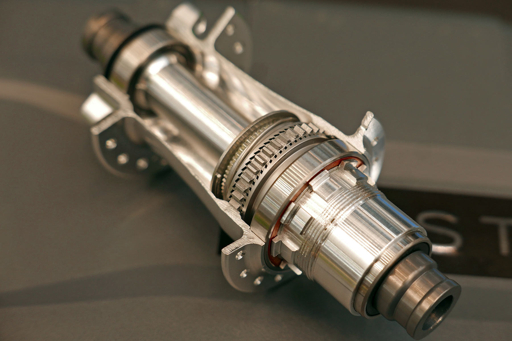
36T vs 54T vs 90T: compare the benefit, not just the percentage.
Moving from 36 to 54 evenly spaced engagement positions reduces the maximum hub gap from 10° to approximately 6.67°: a one-third reduction. Moving from 54 to 90 reduces it further to 4°. Those are reductions in angular take-up—not equivalent gains in speed, power transfer efficiency or climbing performance.
At a standstill, and ignoring other slack, an evenly spaced mechanism starting from a uniformly random position would have an average geometric gap of about half its maximum interval. Real pedal timing, wheel motion and drivetrain loading do not necessarily follow that simplified model. This is why a catalog angle should not be converted directly into a claimed number of milliseconds saved.
A practical test before buying
- Identify the problem: excessive dead stroke, poor shifting, chain slack and a slipping freehub are not the same issue.
- Compare pickup in the low gear and short-stroke situation you actually use, rather than only spinning an unloaded wheel in a workshop.
- Confirm axle spacing, freehub interface, cassette compatibility and the manufacturer-approved upgrade path.
- Price the complete choice: hub or kit, labor, lubricant, replacement parts and service access.
Editorial buying framework. Engagement geometry is grounded in DT Swiss’s explanation; approved parts and service requirements remain hub-specific.
Choose a wheel system—not an engagement number.
XDRU’s listed CHASE 45 AR and DURAX 25 XC specifications both include a 36T ratchet hub. In a conventional single-phase arrangement, that corresponds to a 10° maximum engagement interval. The shared tooth count does not make the wheelsets interchangeable: rim design, intended use, axle fit and drivetrain interface still need separate attention.
Listed product specifications: XDRU CHASE 45 AR and DURAX 25 XC.CHASE 45 AR
A relevant example for road riders weighing a balanced wheelset specification against the appeal of finer hub pickup.
Listed weight: 1540 ± 30 g
36T ratchet · HG / optional XDR
Evaluate the rim, tire setup and complete build alongside engagement. Check the selected drivetrain configuration before ordering.
Published XDRU specifications. Explore CHASE 45 AR carbon road wheels →DURAX 25 XC
An XC-labeled option to evaluate through your climbing gears, technical terrain and frame compatibility—not its hub tooth count alone.
36T ratchet hub
Listed HG / XD / Micro Spline options
Confirm axle dimensions, tire suitability and final configuration directly before purchase. Do not assume Boost compatibility from the XC name.
Published XDRU specification table. Review DURAX 25 XC specifications →Product details reflect the cited listings, not independent laboratory testing. No higher-engagement upgrade compatibility is implied for either wheelset.
Hub engagement FAQ
Is a 10-degree engagement hub good enough for road cycling?
It can be. A 36T conventional ratchet provides 10° engagement, and finer pickup is not inherently a continuous-speed advantage. The more useful question is whether you notice excessive take-up during the riding you actually do.
Road engagement context: Scribe Cycling.Does a high-engagement hub make climbing easier?
It can improve control during technical climbing by reducing dead crank movement before drive begins, especially in low gears. It does not reduce the work required to gain elevation or replace suitable gearing and traction.
Technical-climbing and backlash basis: DT Swiss.Will faster engagement make a bike accelerate faster?
It can shorten the take-up portion of a pedal input. Once the mechanism is engaged, the engagement angle alone does not determine acceleration. Also, while coasting, the cassette must catch up with the hub shell’s rotation before drive can resume.
Engagement and relative rotational speed: DT Swiss.Is a ratchet hub better than a pawl hub?
Not simply because it uses ratchets. Both architectures can provide useful engagement characteristics. Compare the specific design, effective engagement positions, load-sharing arrangement, service requirements and intended application.
Mechanism context: DT Swiss ratchet discussion and original Hydra pawl architecture.The most valuable engagement angle solves a real riding problem.
Pay for finer pickup when restricted pedal strokes and low-speed control are limiting your riding. When they are not, put the same scrutiny into the rest of the wheelset. A well-matched carbon wheelset is the result of compatible, balanced decisions—not the smallest