
Carbon Wheels for Rolling Terrain:
Find your rhythm.
Short climbs. Quick descents. Another rise before your breathing settles. The best all-round carbon wheelset for hilly roads is not chosen at the summit—it is chosen for everything between the summits.
starting point
For many riders, 40–50mm carbon road wheels are a sensible first shortlist for rolling terrain. Pair them with compatible, high-quality 28–30mm tires, pressure matched to the load and surface, and gearing that keeps repeated climbs manageable. Go shallower when exposed handling or prolonged climbing dominates; investigate deeper wheels when the route stays fast and your control remains relaxed.
A hilly route is not automatically a climbing-wheel route.
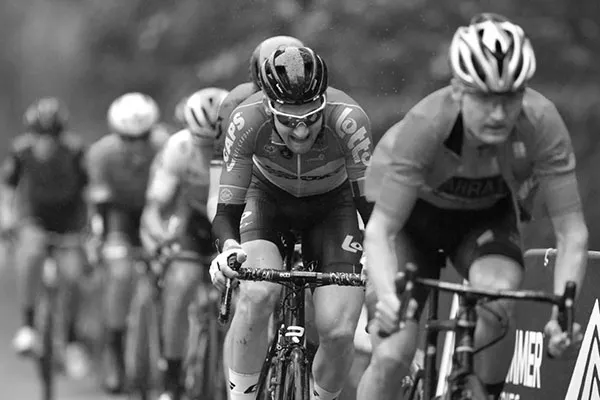
Two rides can record the same distance and elevation gain yet ask very different things of a wheelset. One might contain a single long climb followed by a technical descent. Another might spend hours moving between short rises, exposed ridgelines and fast valley roads.
Elevation gain alone hides those differences. For carbon wheel selection, look at how that elevation is distributed, how fast you ride between climbs, how often corners require braking, and whether the descents let you carry speed safely.
A lightweight climbing wheelset earns its place when low-speed uphill riding occupies a substantial share of the day. An aerodynamic all-round wheelset remains relevant when a route repeatedly returns you to higher speeds.
There is no universal gradient at which aero suddenly loses and weight suddenly wins. Any crossover depends on rider power, total mass, wind, the wheels being compared and the route model. A result from one simulation is not a rule for every hillside.
Ask what happens after the climb.
A straight, open descent and a flowing valley road reward a different balance from a narrow descent full of braking zones. Potential aerodynamic gains are only useful where you can safely exploit them.
The same applies to momentum. A fast approach can carry some kinetic energy into the next rise, but it does not erase the energy needed to gain height. Traffic, visibility and cornering limits always come before preserving speed.
Repeated acceleration matters. “Rotating weight counts twice” needs context.
Rolling roads often mean accelerating out of corners, over crests and onto the next wheel in a group. During those changes in speed, you must increase both the forward kinetic energy of the bicycle and the rotational kinetic energy of its wheels.
Where the mass sits matters. A gram near the rim contributes more to rotational inertia than a gram close to the hub. Consequently, total wheelset weight alone does not tell you which wheel is easiest to spin up.
The familiar “double the weight” statement comes from an idealized thin hoop: during straight-line acceleration, mass at the hoop contributes equally to translational and rotational kinetic energy. Real wheels distribute mass across rims, spokes and hubs. The statement does not mean that rim weight is doubled during steady climbing.
Once speed is steady, inertia is not a continuous power drain. What keeps taking energy is aerodynamic drag, rolling losses and, uphill, gravity. Lighter wheels also store less kinetic energy at the same speed; they do not create free momentum between rollers.
Using gravitational power ≈ mass × gravity × vertical speed, an additional 0.20kg requires about 1.1W at a steady 20km/h on a 10% gradient.
This isolates the gravitational term. It excludes acceleration, aerodynamic and rolling differences. It is not a prediction of a time gap between two wheelsets—but it helps keep a modest weight difference in proportion.
Choose rim depth for the whole loop.
For an all-round carbon wheelset for hills and flats, middle depths deserve a close look. They offer room for aerodynamic shaping without requiring you to prioritize maximum depth. But shape, tire pairing and build quality still matter more than treating millimeters as a performance score.
30–40mm
A useful shortlist when longer climbs, variable winds or confidence on exposed roads dominate the decision.
Do not assume the shallowest wheel is automatically the lightest, the strongest or the calmest in every gust.
40–50mm
A practical center ground for repeated short climbs, fast connecting roads and one-wheelset ownership.
Compare actual weight, mounted tire fit and handling evidence. This is a buying shortlist, not a universal optimum.
50–60mm
Worth investigating for fast rolling courses, racing and riders who spend substantial time at higher speeds.
Give front-wheel handling extra scrutiny. More depth is not automatically more speed over a technical or gusty loop.
These depth bands are editorial selection guidance. They are not wind ratings, rider-weight limits or independently tested rankings.
Could a shallower front and deeper rear work?
Yes, where compatible wheel options are available. Front-wheel aerodynamic loads can influence steering directly, which is why a shallower front with a deeper rear is sometimes worth considering. The rear still experiences wind loads; the combination is not a promise of crosswind immunity.
Evaluate the complete system: rim shape, tire width and tread, bike geometry, rider position and changing wind direction. Depth alone cannot describe steering behavior.
Tires decide how much of that performance reaches the road.
On rolling terrain, the tire must do several jobs in quick succession: roll efficiently, support cornering, brake predictably and absorb imperfect pavement. The lightest wheel paired with an unsuitable tire is not a well-balanced upgrade.
Compatible 28–30mm performance road tires are sensible starting candidates for many paved routes. On rougher roads, 30–32mm may be worth considering if the rim, tire, frame and fork permit the combination.
These are labeled sizes. A tire marked 28mm may measure differently on different rims. Internal width affects its mounted shape; external rim width helps describe the aerodynamic transition from tire to rim. Neither replaces an actual measurement.
Pressure: optimize, do not maximize.
Excess pressure can increase vibration-related losses on rough pavement. Too little can produce vague handling, excessive deformation and rim impacts. Start with system weight, measured tire width and manufacturer guidance, then refine within all limits.
Construction: look beyond width.
Casing, compound, puncture protection and the tube or tubeless system affect performance. A wider tire is not automatically faster, and a tubeless tire is not automatically faster than every tire-and-tube alternative.
Do not infer hookless compatibility from “tubeless ready.”
Confirm whether the rim is hooked or hookless, then check the exact tire model, approved width and pressure requirements. Schwalbe’s road hookless guidance cites a 5 bar ceiling, with lower limits applying to some widths and combinations. Follow the lowest applicable manufacturer limit—not a generic number. An inner tube does not make an unapproved tire compatible.
Control is part of the performance specification.
A wheelset that feels manageable on a steady climb may meet a different airflow when the road crests onto an exposed ridge. Wind gaps, descending speeds and repeated corners make handling especially relevant on hilly routes.
Choose a front wheel that lets you maintain a relaxed grip and make deliberate steering inputs. There is no universal rider weight below which a particular depth becomes unsuitable. Experience, speed, geometry and local conditions all contribute.
Braking compatibility is non-negotiable. Disc-brake wheels do not substitute for rim-brake wheels. For carbon rim-brake systems, use the wheel manufacturer’s approved pads, tires, pressure limits and descending guidance. Do not transfer a disc-wheel recommendation directly to a rim-brake bike.
On any brake system, wheel selection does not compensate for excessive entry speed, poor visibility or conditions beyond the rider’s control margin.
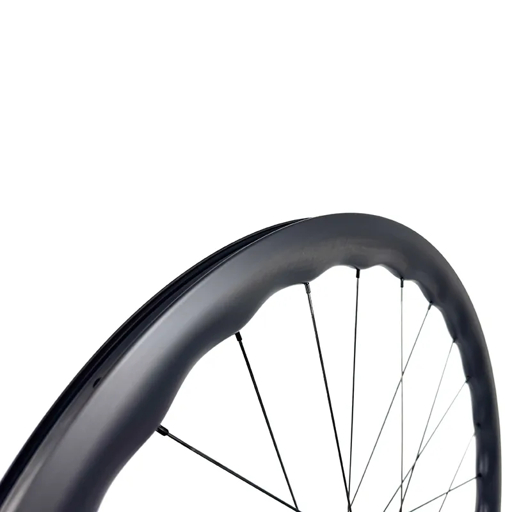
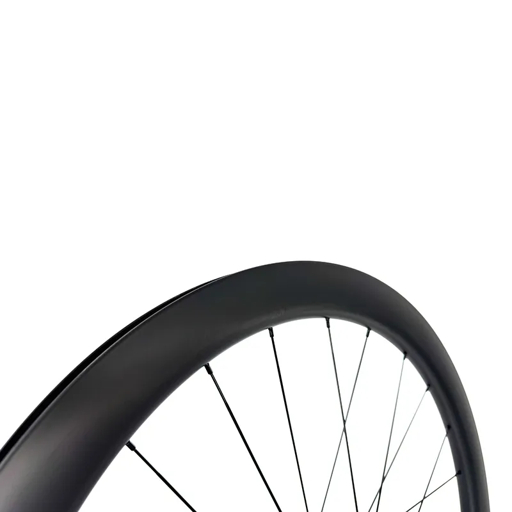
The all-round setup extends beyond the wheels.
On repeated climbs, appropriate gearing can change the ride more noticeably than chasing a small wheel-weight difference. Choose ratios that let you manage effort without repeatedly forcing an unsustainable cadence or power surge.
Then check the less glamorous details. Match axle standards, freehub body, cassette and rotor interface. A broad “11–12 speed” description is not a guarantee that every cassette in that category fits.
Ask about system-weight limits, spare spokes, bearing service, nipple access and replacement parts. Spoke count alone does not establish strength, and maximum stiffness is not automatically the best build for every rider.
Freehub engagement is relevant when pedaling resumes, but a higher tooth count is not evidence of lower resistance during continuous pedaling. Avoid turning a single hub feature into a claim about whole-route efficiency.
| Your typical route | Wheel shortlist | Tire candidates | Priority check |
|---|---|---|---|
| Short climbs, flowing descents, fast connecting roads | Approximately 40–50mm | Compatible 28–30mm | Balanced weight, handling and mounted tire fit |
| Longer climbs with exposed or technical descents | Approximately 30–45mm | Compatible 28–30mm; consider more volume where appropriate | Control margin, braking and manageable gearing |
| Fast racing over gentle, open rollers | Approximately 45–60mm | A tested or manufacturer-supported performance pairing | Front-wheel stability and credible aero evidence |
| Rough lanes and long endurance loops | Moderate depth, selected for handling and durability | Compatible 30–32mm if clearance allows | Pressure range, grip, fatigue and serviceability |
Two ways into
the all-round category.
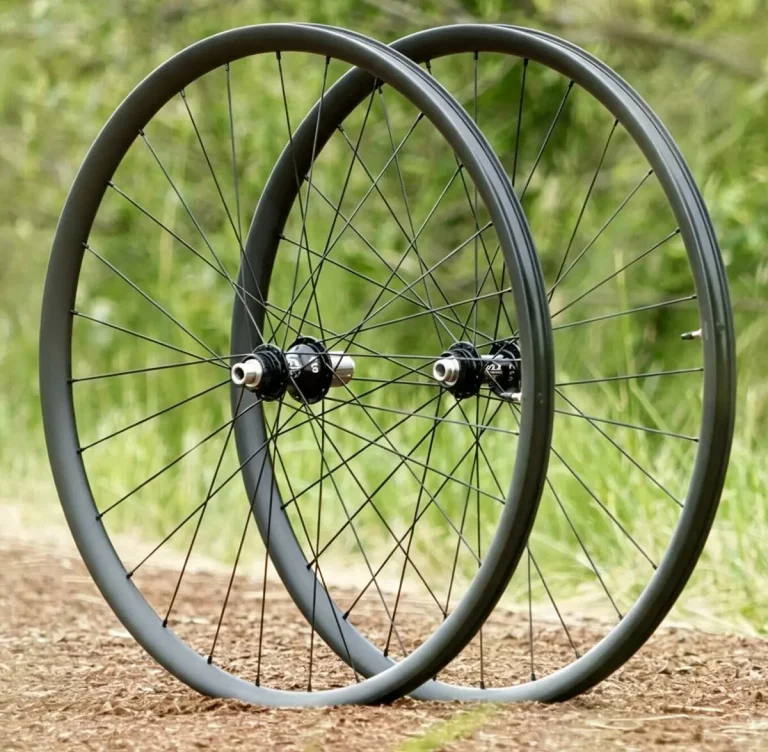
The models below illustrate two middle-depth configurations. Published specifications help assess fit and build; they do not establish which wheel is faster, stronger or more stable.
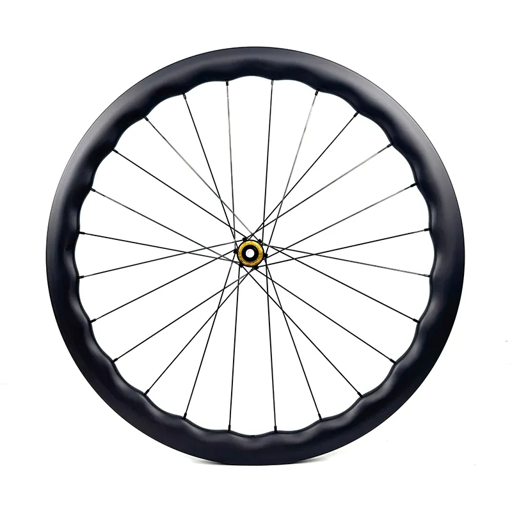
CHASE 45 AERO SL
A relevant candidate when repeated climbing and a lower published wheelset weight are high on the list, while keeping a middle-depth rim for the faster parts of the loop.
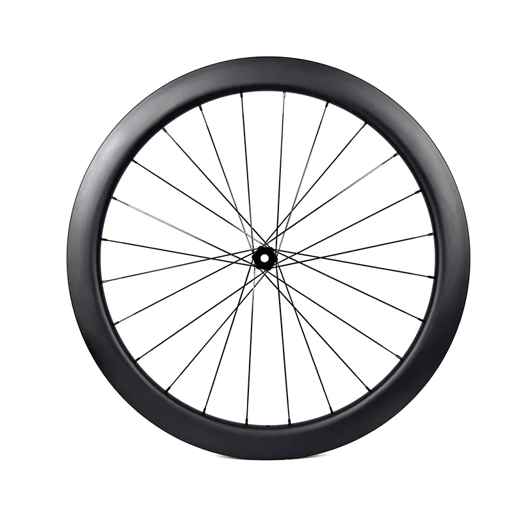
CHASE 50 AERO
A 50mm carbon wheelset to consider when your rolling routes include substantial fast road riding. Compare the complete configuration and price rather than assuming extra depth guarantees a faster ride.
Both listings specify tubeless-ready rims, 12 × 100mm front and 12 × 142mm rear axles, and HG/XDR options. Confirm the exact supplied freehub, rotor interface, bead design, approved tire combinations, pressure limits and load rating before ordering. Listed weights are manufacturer figures; confirm whether tape, valves and other accessories are included.
These are different complete builds, not a controlled test of 45mm against 50mm rim depth. Their published weight difference cannot be attributed to depth alone. Nor do their identical 28mm external widths prove identical tire aerodynamics: the internal widths differ, and the installed tire shape may differ.
Before you commit, test the whole idea.
- Review a representative route: climb duration, descending complexity, surface quality and wind exposure—not elevation gain alone.
- Eliminate incompatible options before comparing weight or depth. Include tire fit, brake type and maximum system load.
- Choose a credible tire and pressure baseline. A wheel comparison with different tires or pressures is not a clean wheel-only comparison.
- Evaluate progressively on familiar roads. Notice steering, cornering support, fatigue and how comfortably you can keep your normal position.
- Treat outdoor speed impressions carefully. Wind, traffic, pacing and tires can overwhelm small equipment differences. A personal best is encouraging, not proof of a wheel’s aerodynamic advantage.
Common questions, without the shortcuts.
Are 50mm carbon wheels good for hilly routes?
They can be, particularly where climbs are short and the route includes fast sections. Compare the actual wheelset weight, tire pairing and handling rather than rejecting or choosing 50mm on depth alone.
Are lightweight wheels better for repeated short climbs?
Lower mass reduces the energy needed to gain height, and lower rotational inertia helps during acceleration. Whether that produces the best whole-route result depends on aerodynamic differences, tires, braking and the riding speeds.
Should I choose 45mm or 60mm carbon wheels for rolling terrain?
A 45mm wheel is a reasonable first candidate for mixed routes. A 60mm option deserves consideration when the riding stays fast and handling is suitable. Neither depth is universally faster; compare complete systems and credible testing.
Are 30mm tires too wide for a fast hilly road bike?
Not inherently. A compatible 30mm tire may offer a useful balance on imperfect pavement. Actual mounted width, casing, pressure, clearance and the wheel’s aerodynamic design decide whether it suits your setup.
Can one carbon wheelset cover climbing and flat roads?
Yes. A well-selected middle-depth build is a practical one-wheelset approach for many riders. It may not lead every specialist comparison, but it can avoid large compromises across an ordinary mixed route.
The road changes.
Your setup should not fight it.
Start with a middle-depth shortlist, then let the real route move you toward lower mass, greater aerodynamic emphasis or more handling margin.
Finish the system with appropriate tires, pressure, gearing and serviceable hardware. The right all-round carbon wheels should make the transitions feel natural: seated on the climb, composed through the corner, comfortable on the descent and ready when the road rises again.