
A thousand dollars.
Make every choice count.
How to choose carbon road wheels under $1,000—and decide whether the money should go toward lower weight, a different rim profile, better tires or a more complete ownership package.
Fit, tire approvals and load capacity
A rim profile that suits the route
Build quality and serviceable parts
Weight savings and premium details
For most buyers, the best carbon road wheels under $1,000 are the ones that fit correctly, work with suitable tires and match the roads actually ridden. Prioritize the rim-and-tire platform, appropriate handling, sound assembly and obtainable service parts. Pay extra for lower weight only when it answers a real riding priority—and does not consume the setup budget.
Define “best”
This is a selection guide—not a manufactured podium.
A search for the best carbon wheels under $1000 can suggest there is one winner waiting at the top of a comparison chart. In practice, a strong choice for mountain rides may be a less convincing choice for exposed flat roads or rough endurance loops.
This guide explains the buying priorities and compares two qualifying XDRU road configurations. It does not claim an independently tested, market-wide ranking.
The product examples are disc-brake wheelsets. If your bicycle uses rim brakes, you need a dedicated compatible product with its own brake-pad and descending requirements.
Set the ceiling
A $1,000 wheel budget is not always a $1,000 upgrade budget.
Establish whether your ceiling covers the wheels alone or everything needed to ride them. Tires, valves, tape, sealant, cassette spacers, rotor hardware and workshop labor can change the final cost.
Existing tires, rotors and a cassette may transfer if they are compatible and serviceable. Do not assume they will, and do not replace sound components automatically just because the wheels are new.
Leaves $201 within a $1,000 ceiling before any additional delivery charges, taxes, parts or installation.
Leaves $1 within the same ceiling. That can work for a wheels-only budget—but not automatically for an all-in upgrade.
These figures use the reviewed XDRU listing prices. Remaining budget is not a quotation for setup costs or delivered pricing.
Reserve the essentials before choosing the wheelset.
Calculate the actual cost of the tires, required fittings and installation first. The amount left is your wheelset budget. There is no universal percentage to reserve: the correct allowance depends on what you already own and can safely reuse.
Spend in order
Where the money should go.
Correct fit and documented limits
Match axles, brake interfaces, freehub, approved tires and system load. A wheelset that requires an unapproved adapter or leaves tire compatibility unresolved is not good value at any discount.
The right rim-and-tire platform
Choose internal width, external width and depth together with the intended tire. This determines what you can fit and how the complete system is configured—not just how the wheel looks.
Complete-wheel assembly
Ask about appropriate spoke tension, same-side consistency, trueness and dish. A premium rim or hub cannot compensate for an unsuitable build. These checks require more than spinning the wheel and admiring the finish.
Service parts and support
Identify the bearings, spokes, nipples, end caps and freehub. Confirm availability and warranty procedures. A slightly less glamorous build can be the better ownership choice when its maintenance path is clear.
Useful performance specialization
Once the essentials are settled, decide whether lower mass, a different depth or another documented feature is worth the extra cost for your riding. Do not pay a premium simply because a number is more extreme.
Choose the profile
Rim depth: buy for the normal ride, not the perfect day.
A middle-depth carbon wheelset is a useful first shortlist for many road riders. It leaves room for aerodynamic shaping without making maximum depth the objective.
Still, depth is not a performance score. Rim shape, tire pairing, spokes and airflow affect the result. A deeper wheel is not automatically faster, and a shallower wheel is not guaranteed to feel calmer in every gust.
| Your riding priority | Useful depth shortlist | Spend more attention on |
|---|---|---|
| Long climbs and mountain-focused riding | Approximately 30–45mm | Complete weight, tire grip, braking and descending control |
| Rolling routes and one-wheelset ownership | Approximately 40–50mm | Balanced weight, handling and tire compatibility |
| Fast flat roads and racing | Approximately 50–65mm | Credible aerodynamic evidence and front-wheel behavior |
| Exposed roads or low confidence in wind | Begin with a more conservative front-wheel shortlist | Specific handling evidence rather than a depth label |
| Rough-road endurance riding | Moderate depth, chosen with the tire platform | Clearance, pressure suitability, support and fatigue management |
Do not buy watts that have not been demonstrated.
A meaningful aerodynamic claim identifies the comparison wheel, test speed, tire model, mounted width and wind-angle conditions. Without that context, do not assign a dollar value to an advertised watt saving.
Protect the tire budget
Tires and pressure are part of the performance purchase.
It is easy to spend the whole budget on the wheelset and keep an unsuitable tire because there is no money left. That reverses the logic of the upgrade.
Tire construction, compound, mounted width and pressure affect rolling performance and handling. SILCA’s field work explains why excessive pressure can increase surface-related losses, even when higher pressure reduces casing losses on a smooth drum.
The answer is not “inflate as little as possible.” Too little pressure can reduce support and increase rim-impact risk. Start with system load, measured tire width, surface and manufacturer guidance, then refine within the approved limits.
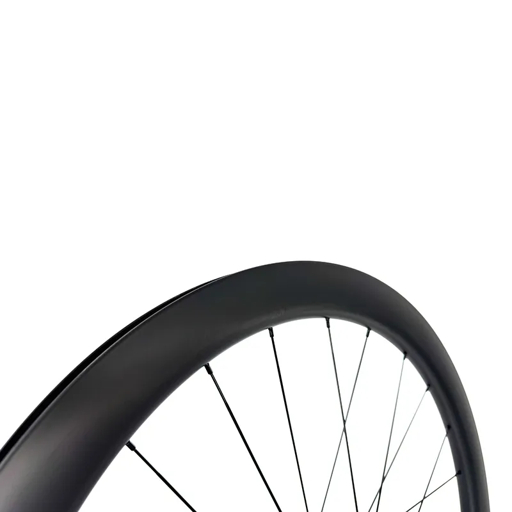
The printed tire size is only the start.
A labeled 28mm tire can measure differently on different rims. Check the installed width at the intended pressure and confirm frame and fork clearance.
Compatible 28–30mm performance tires are sensible candidates for many paved-road setups. Rougher routes may justify more volume, but exact tire/rim approvals take precedence over a general recommendation.
“Tubeless ready” is not a complete tire approval.
Confirm hooked or hookless construction, the exact approved tire models and widths, and the relevant pressure limits. Follow the lowest applicable component limit. A tire’s sidewall maximum does not automatically override a lower wheel limit.
Do not infer a specific tire’s approval from a broad width range in a product listing. Obtain confirmation for the exact combination you plan to use.
Evaluate the hardware
Hubs and spokes: buy a service plan, not just a specification.
Within a $1,000 budget, conventional steel spokes and a serviceable ratchet hub can be entirely appropriate. Carbon spokes, ceramic bearings and very high engagement counts are not entry requirements for a good road wheelset.
Ask for exact part identification. Can the seller provide the correct spoke length, nipple type, bearings, end caps and replacement freehub? Is there a documented service procedure?
Engagement describes pickup when pedaling resumes. It does not, by itself, establish lower losses during continuous pedaling. Nor does freehub sound demonstrate efficiency.
Good wheel assessment also includes tension and centering. Park Tool’s guidance distinguishes measuring overall tension from balancing equivalent spokes, and identifies correct dish as a separate requirement. A wheel that looks straight is not a complete quality-control report.
The qualifying shortlist
Two XDRU road wheelsets below $1,000—with different budget logic.
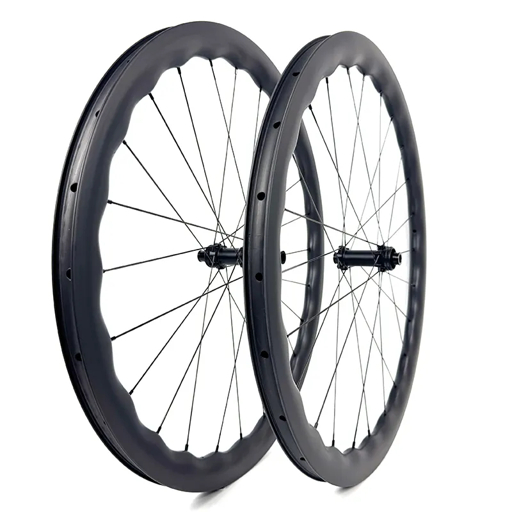
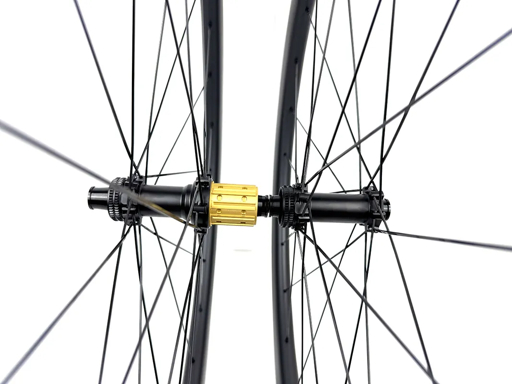
At the reviewed listing prices, both products qualify under a $1,000 wheelset-only ceiling. The CHASE 50 AERO leaves more room for setup; the CHASE 45 AERO SL puts more of the purchase price toward a lower published wheelset weight.
These are manufacturer-published specifications. There is no independent head-to-head aero, handling or durability test presented here.
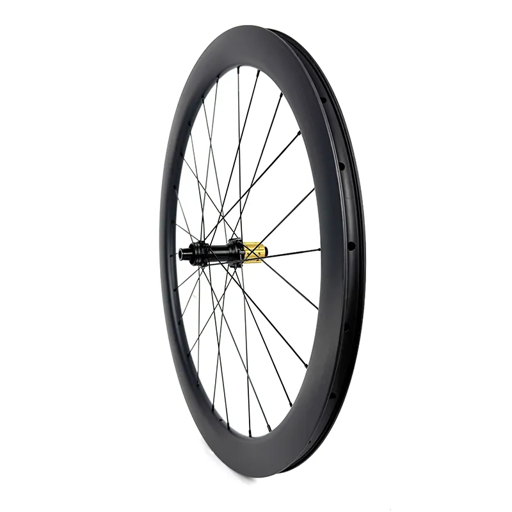
CHASE 50 AERO
$799A candidate for buyers who want a 50mm road wheelset while retaining room within a $1,000 ceiling for any required tires, hardware or installation.
Internal / external width: 21 / 28mm
Published wheelset weight: 1500 ± 30g
Hub: 36T ratchet with steel bearings
Spokes: aero steel, 24 front / 24 rear
Nipples: aluminum
Axles: 12 × 100mm front / 12 × 142mm rear
Freehub options: HG / XDR
Brake format: disc brake
Rim format: tubeless ready
Best shortlisted when the complete upgrade budget matters more than achieving the lowest published weight.
Review CHASE 50 AERO →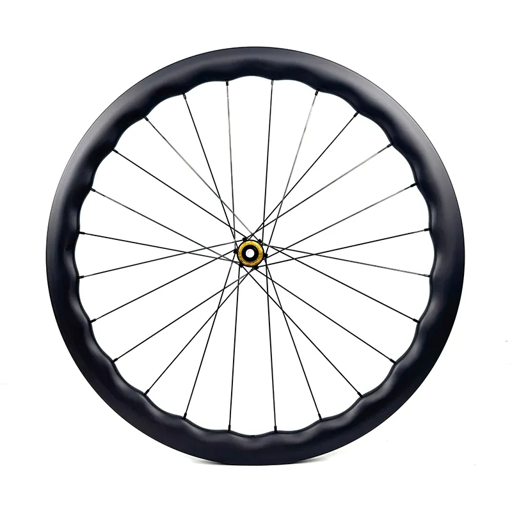
CHASE 45 AERO SL
$999A candidate for riders placing greater emphasis on a lower-mass road build, provided the remaining setup costs are already covered or sit outside the wheelset budget.
Internal / external width: 22 / 28mm
Published wheelset weight: 1244 ± 30g
Hub: 36T ratchet, straight pull
Spokes: aero bladed, 24 front / 24 rear
Nipples: aluminum
Axles: 12 × 100mm front / 12 × 142mm rear
Freehub options: HG / XDR
Brake interface: Centerlock disc
Rim format: tubeless ready
Best shortlisted when lower published mass is a genuine priority—not merely because it reaches the top of the budget.
Review CHASE 45 AERO SL →USD prices and listed configurations reviewed October 27, 2026. Prices, availability and options may change. Confirm the supplied configuration, weight-inclusion basis, rotor interface, bead design, tire approvals, pressure limits and maximum system load. The CHASE 50 listing contains differing material descriptions; no fiber-grade comparison is used here.
Interpret the difference
What does the extra $200 actually buy?
The reviewed listings put the nominal wheelset-weight difference at 256g: 1500g versus 1244g. The prices differ by $200. Both figures are useful for comparing the offers, but they do not describe the entire performance difference.
These are different complete builds. They differ in depth, internal width and component specification. You cannot attribute the weight difference to the 5mm depth difference, or conclude that either wheel is faster from mass alone.
Lower mass reduces the energy needed to gain height and to accelerate. On faster sections, aerodynamic and tire-system differences matter too. Without comparable testing, a claimed whole-route time saving would be speculation.
Choose the $799 configuration when…
You need an all-in budget margin, have tires or installation to fund, and the documented 50mm configuration suits the bike and route.
Consider the $999 configuration when…
Lower published weight is important to your riding, the 45mm configuration suits the route, and paying the extra $200 does not displace necessary setup or maintenance.
Choose neither yet when…
Tire approval, load capacity, supplied freehub or another essential detail remains unresolved. Being below the price ceiling is not the same as being suitable.
It is the purchase with the fewest expensive mismatches.
Own the decision
Read warranty, delivery and return terms before mounting tires.
Both reviewed product tables list a two-year warranty. That is not the same thing as unlimited coverage or free replacement after every incident. Confirm exclusions, claim procedure, shipping responsibility and the remedy.
The reviewed XDRU pages describe a seven-day return window from receipt for new, unused, intact goods in original packaging, with return shipping paid by the buyer. A normal return and a defect claim are different processes.
Resolve specification questions before mounting tires or fitting components if you may need a change-of-mind return. Do not assume an installed wheel remains eligible.
Obtain a delivered quotation for your location. Destination arrangements, options and required setup parts matter more than an isolated headline price.
Before checkout
The final $1,000 road-wheel checklist.
- The price covers the complete front-and-rear wheelset in the exact selected configuration.
- Axles, freehub and brake interfaces match the bicycle and exact cassette and rotor models.
- The intended tire is approved, fits the rim and clears the frame and fork at its actual mounted dimensions.
- Tire pressure requirements and system load are within the wheel manufacturer’s limits.
- Rim depth and handling priorities match normal riding conditions, not only a calm test day.
- Published weights are compared on the same inclusion basis; performance claims have a traceable test context.
- Setup costs, service parts, warranty terms and return conditions are understood.
- The complete installed upgrade—not only the advertised wheelset—fits the actual spending limit.
Best carbon wheels under $1000: practical answers.
Is $1,000 enough for a carbon road wheelset?
Whether a specific purchase fits an all-in $1,000 budget depends on delivery, taxes, configuration and required setup costs.
Should I buy 45mm or 50mm carbon wheels?
Compare the complete builds. Both depths can suit mixed road riding. Actual weight, tire fit, handling and evidence matter more than treating a 5mm difference as a decisive performance category.
Are the lightest carbon wheels the best value?
Not automatically. Lower mass may be worth paying for on your routes, but only after compatibility, tires, load limits and support are settled. A low weight is not proof of superior speed or durability.
Should I prioritize a premium hub or better tires?
First ensure the hub is compatible, serviceable and suitable. Beyond that baseline, do not sacrifice an appropriate tire setup simply to obtain a more prestigious hub name. Compare the documented benefit of each expense.
Do steel spokes mean a budget-quality wheel?
No. Material alone does not rank the build. Correct spoke selection, tension, geometry and replacement availability matter. Carbon spokes are not necessary for a sound carbon-rim wheelset.
Will carbon wheels definitely make my bike faster?
No guarantee follows from the material. The result depends on the old and new wheel systems, tires, pressure, aerodynamics, mass and riding conditions. This guide does not claim a measured speed gain for the featured products.
Buy the right foundation.
Spend the remainder on a complete ride.
Start with compatibility, tire fit and an appropriate build. Choose the rim profile for the route. Keep service support and the installed cost in view.
Then decide whether lower mass or another documented feature deserves the premium. A $1,000 ceiling should help you prioritize, not pressure you into spending every dollar.