

$500 vs $1,500 CARBON WHEELS
The price difference is obvious.
The riding difference is not.
Cheap vs expensive carbon wheels: what ordinary riders can actually feel, what requires measurement, and which upgrades deserve the extra money.
A bigger budget should buy a specific improvement. Not simply a more expensive version of the same promise.
Tires. Handling. Assembly. Spare parts. The complete system decides the experience.
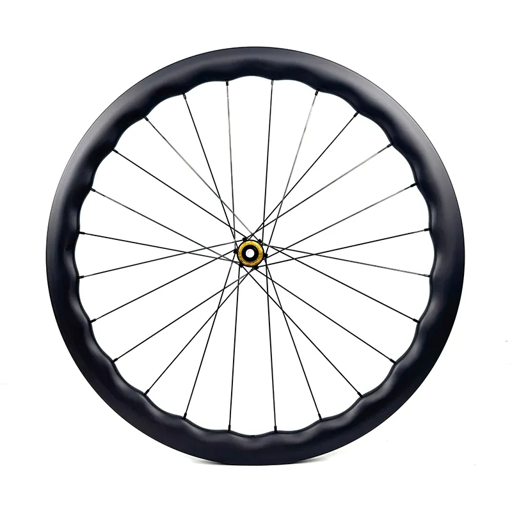
Illustrated: XDRU CHASE 45 AERO SL. Product photography is illustrative; this article does not claim a controlled comparison between two specific $500 and $1,500 wheelsets.
Three times the price does not mean three times the speed. It does not even guarantee a difference you can identify on every ride.
New, complete carbon road wheelsets.
Prices in US dollars.
Primarily disc-brake applications.
Shopping brackets—not quality certifications.
Yes, ordinary cyclists can feel differences between carbon wheelsets. But what they feel is not necessarily what the price tag suggests.
Steering response, tire behavior, freehub sound, and the way a bike reacts when accelerating may be noticeable immediately. A small aerodynamic advantage can be much harder to identify without repeatable testing.
When dimensions, tires, pressures, and build quality are similar, a well-chosen budget carbon wheelset may ride closer to a more expensive option than the price gap implies. The deciding factor is suitability: the right system for your roads, your bike, and your expectations.
What changes.
What you actually notice.
Crosswind handling
More handlebar corrections, a calmer front end, or greater confidence on exposed roads. Rim shape, depth, tire pairing, rider mass, and the wind itself matter more than price alone.
Acceleration
A different response when closing gaps or leaving corners. Total mass, mass distribution, stiffness, and tires all influence the sensation. A small weight saving is not automatically a dramatic performance improvement.
Comfort
Less chatter or a harsher ride may come mainly from changes in tires and pressure. A new rim can change the tire’s mounted dimensions, so the whole setup needs consideration.
Aerodynamic speed
Potentially less power for the same speed on exposed roads. Wind, position, drafting, and traffic can hide a small advantage. One faster ride is not proof that a wheelset is faster.
Long-term ownership
Available spokes, serviceable hubs, clear documentation, and responsive support can make a bigger practical difference than a prestigious carbon label.
Less hype.
Less downtime.
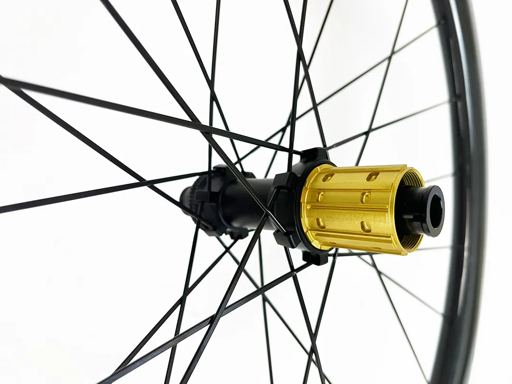
The smartest reason to spend more may not appear in a sprint. It may appear when a bearing needs replacing and the correct part is easy to identify and obtain.
Conversely, a premium price is a weak argument if the seller cannot explain replacement spokes, freehub availability, or the warranty process.
Lighter wheels.
Real benefit.
Smaller than the hype.
Will $1,500 carbon wheels make climbing easier?
They can if they are meaningfully lighter. But first compare actual wheelset weights on the same basis. A bare-wheel figure should not be compared directly with a measurement that includes tape, valves, or accessories.
Next, put the saving in context. You are lifting the rider, bicycle, bottles, clothing, and equipment—not just the wheels.
Removing 200 g from an 85 kg rider-and-bike system reduces total mass by approximately 0.24%. At a fixed climbing speed, the gravitational portion of power falls by the same proportion. This is not a prediction of an identical reduction in total power or finishing time.
Rotating weight needs context
During acceleration, mass near the rim contributes more to rotational inertia than mass near the hub. Two equally light wheelsets can therefore distribute their weight differently.
Once speed is steady, however, you are not continuously paying an acceleration penalty just because the wheel keeps rotating. “Rotating weight counts double” is not a universal rule for climbing performance.
Aero gains.
No universal
watt number.
Are expensive carbon wheels faster on flat roads?
Potentially. A wheel-and-tire combination that creates less drag can reduce the power needed to maintain a given speed. But a retail price does not provide that drag measurement.
There is no defensible blanket statement that “$1,500 carbon wheels save a fixed number of watts over $500 carbon wheels.” That comparison requires specific products, specified tires, test speeds, wind angles, and a consistent method.
Compare the combination, not just the rim depth
Depth is one part of aerodynamic design. Rim profile, width, spokes, and the tire’s actual mounted dimensions also matter. An expensive rim paired with an unsuitable tire may not deliver the advantage the rider expects.
Sustained solo riding and long, exposed roads give small aero differences more opportunity to accumulate. Drafting, frequent stops, and changing rider position make those differences harder to isolate.
Confidence
is part of
performance.
Crosswind stability can outweigh a small aero advantage
Wind acting on the front wheel can create steering torque. Rim geometry and depth affect the response, while rider mass, speed, tire pairing, and gust conditions influence how it feels.
A carefully developed deeper wheel may handle more predictably than another wheel of similar depth. That does not mean every premium deep wheel feels calmer than every budget shallow wheel. Choose a front wheel you can control comfortably on your routes.
Comfort starts with the tire system
Wheel upgrades often arrive with new tires, different pressures, or a switch between tubes and tubeless. Those simultaneous changes make it difficult to attribute a smoother ride to carbon construction alone.
Internal width can affect mounted tire dimensions. Reassess the setup rather than blindly carrying over an old pressure. Follow current instructions and compatibility limits for the exact wheel and tire combination.
A carbon grade is not a wheel.
A loud hub is not efficiency.
A price tag is not a test.
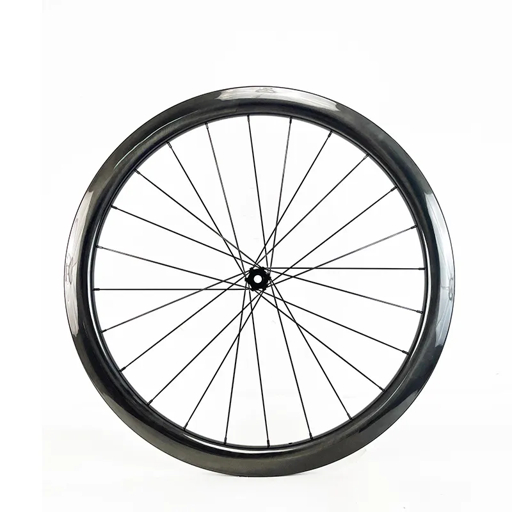
Carbon labels, ceramic bearings, and engagement counts describe individual attributes. They do not replace evidence about the finished wheelset, its assembly, its compatibility, or the support behind it.
The upgrade
you notice
months later.
Build quality matters at both prices
A straight wheel is not necessarily a well-balanced wheel. Appropriate spoke tension, consistency among comparable spokes on the same side, correct dish, and sound assembly all matter.
Left and right tensions do not need to match: wheel geometry is often asymmetric. An assertion that every spoke must have identical tension is not a useful universal quality standard.
Serviceability is a feature worth paying for
Ask whether the seller can supply replacement spokes, nipples, bearings, end caps, and freehub bodies. Establish whether a proprietary part requires a special procedure or a long wait.
Faster hub engagement can reduce the delay when drive resumes. Its relevance is different in repeated coasting and re-engagement than in uninterrupted seated pedaling. Freehub volume, meanwhile, is not evidence of greater efficiency.
Read support terms as closely as the weight figure
Compare warranty exclusions, crash-replacement arrangements, claim procedures, and responsibility for shipping. A premium wheelset may provide valuable support, but it is something to verify—not something to assume.
Where should your money go?
Weekend endurance
Mixed roads / social rides / everyday usePrioritize suitable tires, manageable handling, dependable assembly, and accessible service. A documented budget carbon wheelset may already meet your needs. Spend more when you can identify what the additional money improves.
Fast solo riding
Open roads / sustained power / aero prioritiesGive more weight to credible aerodynamic evidence and the intended tire pairing. Compare methods and configurations, not disconnected headline watt savings. Keep handling in the decision rather than treating it as an afterthought.
Hills and exposure
Climbs / gusts / long descentsBalance actual weight savings against front-wheel control, load suitability, and braking requirements. On rim-brake bikes, carbon braking surfaces, approved pads, and descending instructions require separate attention.
High-mileage training
Regular use / maintenance / minimum downtimeFavor identifiable parts, clear service information, and a dependable support channel. Lower purchase cost becomes less attractive when a minor repair leaves the bike unusable for weeks.
Six checks.
No shortcuts.
- Compare equivalent rim dimensions and intended tire setups, not different wheel categories disguised as different quality levels.
- Confirm axle dimensions, brake interface, freehub standard, cassette requirements, and frame clearance.
- Check whether a load limit means rider weight or total system weight, and account for equipment where required.
- Compare wheel weights with the same included parts and note any stated manufacturing tolerance.
- Verify tire approval, width restrictions, and pressure limits. An inner tube does not remove hookless compatibility requirements.
- Calculate the ready-to-ride total: wheels, necessary tires and fittings, labor, shipping, and applicable taxes.
CHASE
45 AR.
The useful next comparison is not “cheap or expensive?” It is whether a specific wheelset has the dimensions, compatibility, weight, hub configuration, and support you need.
Use the CHASE 45 AR product information as a concrete reference point. Check the current configuration and requirements against your bike before deciding where your budget belongs.
Explore the CHASE 45 ARWorth it—for whom?
Are $500 carbon wheels worth it?
They can be when the exact product has credible documentation, suitable compatibility and load limits, sound assembly, and available support. If those basics are missing, a well-supported aluminum wheelset remains a sensible alternative.
Are $1,500 carbon wheels worth it for an average cyclist?
The case is strongest when the extra spend buys something useful: a meaningful weight saving, relevant aerodynamic evidence, more suitable handling, better repairability, or support you value. The higher price alone cannot guarantee a noticeable speed gain.
Do expensive carbon wheels last longer?
Not necessarily. Design, manufacturing, assembly, loading, impacts, use, and maintenance influence durability. A longer warranty is a contractual benefit, not direct proof of greater strength or lower failure rates.
How can I compare two wheelsets fairly?
Use the same tire model where approved, record mounted widths, and set suitable pressures for each combination. Compare similar power, position, clothing, and routes across repeated rides. Keep handling impressions separate from claims of measured speed.
Spend on the ride.
Not the assumption.
Choose the lower-priced wheelset when its compatibility, documentation, assembly, and support meet your requirements. Spend closer to $1,500 when the specific improvements solve a real problem or deliver a benefit you genuinely value.
The right upgrade is the one you can explain without mentioning the price first.
