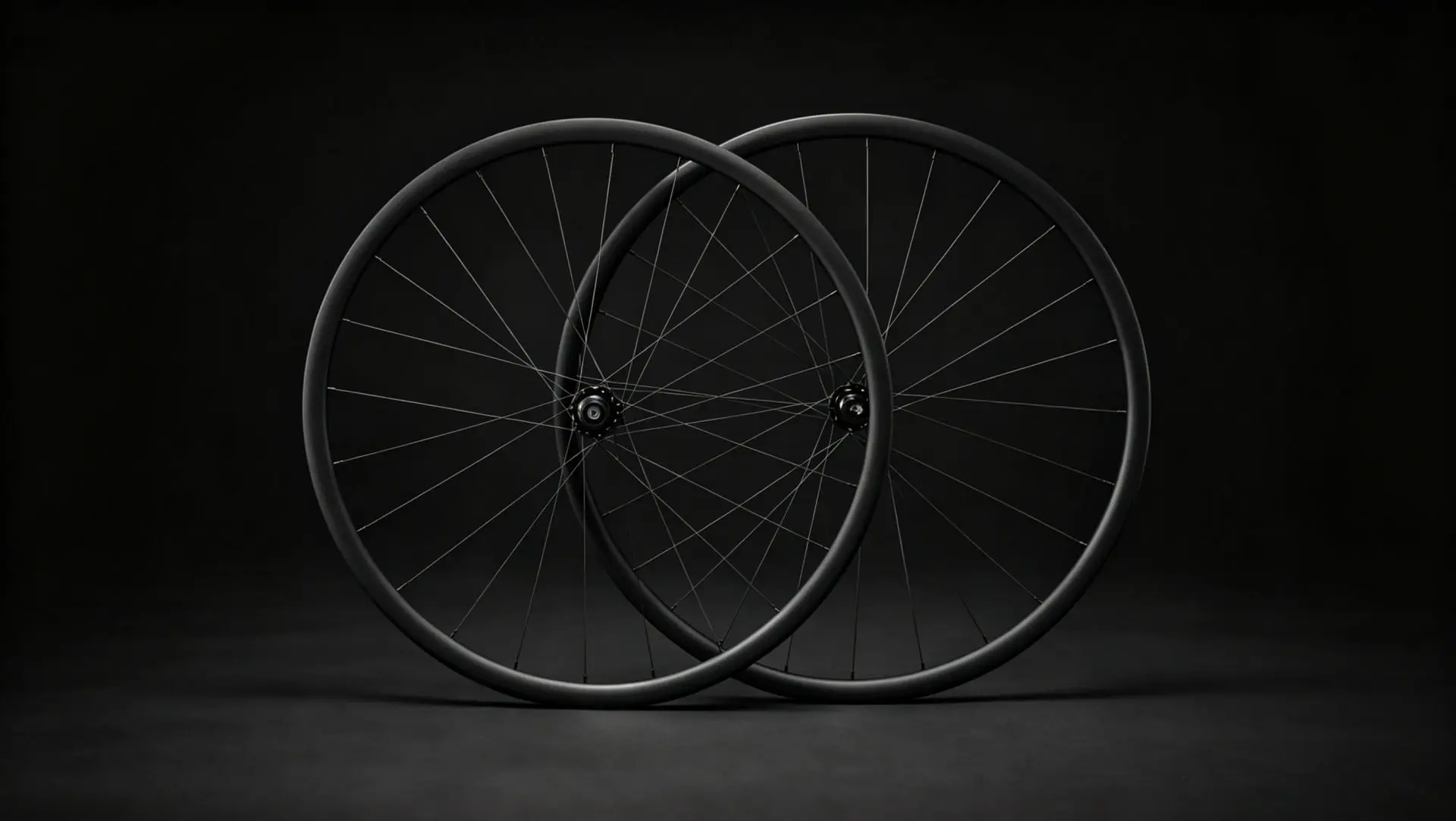

Buyer’s Guide on how to choose carbon wheels · Road Cycling
A practical guide that actually makes sense
Choosing carbon wheels is one of those upgrades that sounds simple until you start looking at all the numbers. Depth. Weight. Internal width. Rim profile. Hooked or hookless. Disc or rim brake. Road, endurance, climbing, aero — it can get messy fast.
And that’s usually where people make the wrong call. They either chase the lightest wheelset they can find, or they buy whatever looks fast in a product photo. Both approaches miss the point.
“The right carbon wheels are the ones that match how you ride, where you ride, and what you want the bike to feel like. That’s the real decision.”
Why Carbon Wheels Matter
If you’re upgrading wheels, you’re not just changing a part. You’re changing how the bike behaves. Wheels sit at a sweet spot: more noticeable than many small component swaps, but far less expensive than changing the whole bike.
What Carbon Wheels Actually Change
⚡ Acceleration Faster response under power ⛰️ Climbing feel Lighter rotating mass, easier effort 💨 Aero efficiency Less drag at sustained speed 🎯 Handling Sharper, more direct responseStart With Your Riding Style
Before you compare specs, ask one simple question: what kind of rider are you? That answer should lead the decision, not marketing claims.
🌾 Mostly Flat Roads
Aero matters more — you spend more time holding speed, so wheel depth and rim shape become important.
⛰️ Heavy Climbing
Lower weight becomes more valuable — easier acceleration and a more responsive feel uphill.
🔀 Mixed Riding
You probably want balance — a wheelset that’s too deep may feel great on smooth roads but impractical in wind or hills.
🏁 Racing / Hard Training
Efficiency, stiffness, and stability matter — you’ll benefit from a wheelset that responds quickly under load.
This is where many buyers go wrong: they choose wheels based on what sounds fastest in theory, not what fits their actual riding.
Wheel Depth
Carbon Wheel depth is one of the first things people notice, and for good reason — it affects both aerodynamics and handling.
| Depth | Best For | Tradeoff |
|---|---|---|
| Shallow | Climbers, wind, everyday riding | Less aero gain |
| Mid-depth | Mixed terrain, first carbon set | A generalist compromise |
| Deep | Racing, flat sustained-speed routes | Crosswind sensitivity |
Deeper is not always better — a deeper wheel may be faster in a straight line, but more sensitive to wind and less forgiving in technical conditions.
Weight Isn’t the Whole Story
A lighter wheelset can make the bike feel quicker to accelerate, easier to lift uphill, and more responsive when changing pace. But weight alone is a bad way to choose wheels — the bike doesn’t care only about total weight, it also cares about where that weight sits.
⚠️ Wheel mass is rotating mass — it affects ride feel more than the same weight saved elsewhere. But chasing ultra-low weight often trades away durability, stiffness, or braking performance.
A better question: what weight makes sense for the way I ride?
Internal Width — the Overlooked Spec
Internal rim width affects how the tire sits on the wheel, which influences tire shape, grip, comfort, rolling behavior, and even aerodynamic efficiency. If you run 25 mm or 28 mm tires, the wheel’s internal width should support that setup properly.
Wheel choice should never be separated from tire choice. They work together.
Hooked vs Hookless
Hooked Rims
Traditional bead hook, broad compatibility, familiar feel. The safer first-time choice — less compatibility guesswork.
Lighter, manufacturing benefits, but stricter tire and pressure requirements set by standards bodies such as the ETRTO.
For a first-time buyer, hooked rims are usually the easier decision. Less stress, less risk.
Disc Brake or Rim Brake
Disc brake wheels are the modern standard for road and endurance bikes — strong performance in wet or variable conditions, less dependent on the rim for braking.
Rim brake wheels still exist and can perform well, but braking depends heavily on rim design and heat management.
Don’t buy by looks first. Buy by brake system first. ✅
Stiffness and Ride Feel
A stiffer wheel tends to feel more direct when you sprint, more stable when cornering hard, and more efficient under power. But stiff does not automatically mean better — too much can feel harsh over long rides.
🎯 The goal isn’t maximum stiffness — it’s the right amount for your weight, power, and use case.
Aerodynamics — Real Speed, Not Marketing
At higher speeds, air resistance becomes the main thing slowing you down. The aero benefit depends on more than depth alone — rim shape, tire-rim integration, spoke profile, and whether the system is designed as a whole all matter.
Aero is not about appearance. It’s about how the wheel interacts with airflow in the real world.
Build Quality & Budget
A carbon wheelset is only as good as the quality behind it — consistent spoke tension, precise rim molding, clean finishing, quality hubs, and solid warranty support all matter more than headline specs.
Spend wisely by asking: am I paying for real performance, for branding, or for features I’ll never use? A well-built mid-range wheelset can deliver most of the experience at far better value for everyday riders.
✅ The Buying Formula
1. Choose depth based on terrain and wind.
2. Choose weight based on climbing needs.
3. Match internal width to your tires.
4. Pick hooked or hookless based on compatibility and riding preference.
5. Match the wheel to your brake system.
6. Prioritize build quality, after-sales support, and warranty.
The Biggest Mistake Buyers Make
Some people buy carbon wheels to look fast. Some buy them because a number looks impressive. Some buy them because they saw someone else using them. That’s not the right way.
“A good wheelset doesn’t just change your bike. It changes how often you want to ride it.”
Final Thoughts
Choosing carbon wheels comes down to real-world tradeoffs: speed versus handling, weight versus durability, stiffness versus comfort, compatibility versus convenience.
Not just buying carbon. Buying the right carbon. 🚴
FAQ
What rim depth should I choose for all‑round road riding?
For most riders, a mid‑depth rim around 40–50 mm is the safest all‑round choice. It offers meaningful aero gains on flats and rolling terrain without making the bike overly sensitive in crosswinds or adding unnecessary weight for everyday use.
How important is internal rim width when choosing carbon wheels?
Internal width controls how your tyre sits and behaves. Modern road setups typically use 21–23 mm internal width paired with 25–30 mm tyres. This combination improves grip, comfort and real‑world rolling efficiency compared to narrow rims and high‑pressure tyres.
Should I choose hooked or hookless carbon rims for my first wheelset?
Hooked rims offer broader tyre compatibility and more forgiving pressure limits, making them simpler for many riders. Hookless rims can be lighter and cleaner to manufacture, but they require specific tubeless tyres and strict adherence to pressure guidelines. For a first wheelset, hooked is often the more relaxed option.
How many spokes do I need for a strong, reliable carbon wheelset?
For everyday road use, around 20–24 spokes on the front and 24–28 on the rear is a sensible range. This provides enough structure to share loads, resist flex under power, and stay true longer, especially for heavier or more powerful riders.
What role do hubs play when choosing carbon wheels?
Hubs are the heart of the wheelset. Good hubs offer smooth bearings, solid axle design and reliable freehub engagement. They affect durability, rolling feel and serviceability far more than most riders realize, and are often worth prioritizing over chasing the very lowest rim weight.
Are ultralight “climbing” carbon wheels a good idea for general riding?
Pure climbing wheels prioritise low weight over aero and sometimes over robustness. They shine on long, steep ascents at lower speeds, but may be less stable and less durable on mixed terrain and rough surfaces. For most riders, a balanced all‑round aero wheelset is more versatile than extreme lightweight options.
How should I match tyre size to my carbon rims?
Choose tyre widths that suit both your frame clearance and rim width. On modern wide carbon rims, 25–28 mm tyres are ideal for fast road riding, and 28–30 mm works well for comfort and endurance. Matching rim and tyre width helps maintain good aerodynamics and predictable handling.
What’s the difference between tubeless‑ready and traditional clincher setups?
Tubeless‑ready rims allow you to run tyres without inner tubes, using sealant to prevent small punctures and lower pressures for better comfort and grip. Traditional clinchers with tubes are simpler to install and maintain. Tubeless offers performance and puncture benefits; clinchers offer ease and familiarity.
Do I need disc‑specific carbon wheels, or can I use rim‑brake wheels everywhere?
Brake type must match your bike. Disc‑brake frames need disc‑compatible wheels with rotor mounts, while rim‑brake bikes require wheels with suitable brake tracks. Disc‑specific carbon rims avoid heat build‑up from braking and give designers more freedom with aero shapes, which is why most modern road carbon wheels are disc‑focused.
What key specs should I prioritise when choosing carbon wheels on a budget?
On a limited budget, prioritise solid build and good geometry over exotic features: mid‑depth rims (around 40–50 mm), sensible internal width for modern tyres, adequate spoke count, reliable hubs and honest testing or real‑world reviews. This combination usually beats ultra‑cheap, ultra‑light options that compromise durability or handling.
- Straight-Pull vs J-Bend Spokes: Complete Bicycle Wheel Guide
- Ratchet vs Pawl Hub Systems: Which Is Better for a Carbon Wheelset?
- Are 29 inch carbon mountain bike wheels worth it?
- 700c Carbon Disc Wheelset: What Really Matters Before You Buy
- Are Carbon Gravel Wheels Worth It? Performance, Ride Feel & Buying Guide
- Wheel Guide · Materials & Ride Feel
- Wide vs. Narrow Rims: The Quiet Revolution in Cycling Performance
- Can Beginners Ride Carbon Wheels?
- Bicycle Hub Bearing Maintenance Guide: Service, Adjustment & Replacement
- Best Wheel Depth for Windy Conditions: A Practical Guide for Cyclists