
Best Wheels for Heavy Riders
Some wheels look irresistible at first glance — light, deep, sharp lines, a clean silhouette. But if you’re a heavier rider, buying wheels is rarely about looking fast. It’s about something quite different: feeling safe and relaxed on them. Those are not the same thing.
You probably know this feeling already. Some wheels look solid in photos, but once you ride them, something feels a bit off — the bike isn’t fully planted in corners, the rear has a hint of wag in a sprint, and the first thing that tightens on a rough patch isn’t your legs, it’s your mind.
When a heavier rider chooses wheels, the real fear usually isn’t “are they fast enough?” — it’s “are they stable enough?”
Ask “How Stable?” Before “How Light?”
Order matters. What actually matters at your weight is whether the wheel can answer these:
You won’t always notice a wheel failing on ride one — it shows up a few rides later, as a subtle, growing doubt. And once you start doubting a wheel, it’s already failed its real job.
Rim Depth: Looks Fast vs. Feels Right
Deeper rims photograph well and scream “speed.” But wheels aren’t bought for photos — they’re bought for how they behave under you.
safe & predictable
the sweet spot
specialised
If your riding mixes city streets, broken tarmac, light climbs and windy days, the mid-depth range — low-40s to low-50s — usually feels best. It gives real aero benefit without the front wheel reminding you it’s deep every time a crosswind hits.
Sometimes the best-riding wheelset isn’t the one that looks most dramatic. It’s the one that feels smooth, calm, and almost “characterless” in a good way.
Rim Width: The Quiet Factor That Changes Everything
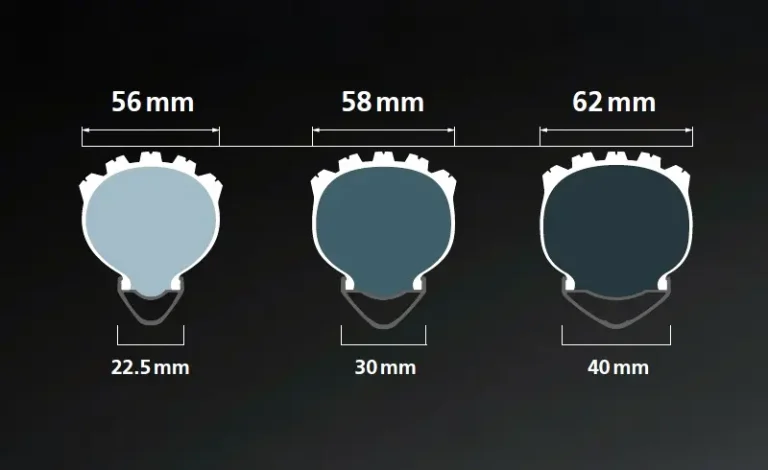
Depth gets the attention. Width does the real work. The old recipe — narrow rims, high pressures — doesn’t fit heavier riders well anymore: harsh ride feel, poor cornering support, more fatigue over distance.
In corners, a supported tyre doesn’t roll around as much, and the bike feels more sure-footed — without needing sky-high pressure. That’s something your body notices in the first few kilometres, not a spec-sheet detail.
Don’t Go Too Minimal on Spoke Count
Low spoke counts look clean in photos, but your requirement isn’t “looks refined” — it’s “holds together when I really use it.” Think of spokes as load-sharing partners: bring more load, and the Best Wheels for Heavy Riders needs enough partners to share it.
Hubs Aren’t Background Actors
Most riders only ask “is the freehub loud?” But hubs control the long-term experience — and the true quality only shows up over time.
A good hub doesn’t have to be the loudest one in the bunch. You push, it responds. You ignore it for a season, and it still just works. For a heavier rider, that quiet reliability matters more than shaving a handful of grams.
Tyre Width and Pressure: The Biggest Lever You Control
Being heavier doesn’t mean “pump it harder and call it a day.” Over-inflating often makes life harder, not easier.
Too much pressure brings harsh, chattery ride feel, reduced grip, more fatigue, and more vibration into the frame. Real roads aren’t test rollers — “harder” isn’t automatically “faster.”
Carbon vs. Alloy: No Need for Religion
Forgiving and robust
Easy to service
Worry-free daily use
Strong, responsive feel
Higher aero potential
Width, stiffness & comfort combined
The real question isn’t “is carbon okay for me?” It’s “is this wheelset designed and tested for riders like me?” That mirrors what many experienced builders and testers point out in an in‑depth discussion of which bicycle wheels are best for heavier riders , where the focus is on rim strength, spoke count and realistic weight limits rather than chasing the lightest possible build.
What a Good Match Usually Looks Like
It may not be the lightest and Best Wheels for Heavy Riders in the catalogue, or the one that dominates social media. But it’s likely the one that feels trustworthy at 60 km/h, doesn’t complain when the road gets ugly, and doesn’t flinch when you really stomp on the pedals.
Peace of mind. The ability to lean hard into a corner without wondering if the wheel will squirm. To sprint without listening for unwelcome noises.
The Best Wheels for Heavy Riders are the ones that, over time, quietly disappear into the background — not because they’re unimportant, but because they’ve become a natural fit. You simply ride. The wheels just get on with it.
FAQ
How heavy is “heavy” when talking about Best Wheels for Heavy Riders?
In this context, “heavy” usually means riders from around 85–90 kg upward once you include bike, kit and bottles. The key is not a strict number, but that your weight noticeably stresses wheels more than the average 65–70 kg test rider.
Do I really need different wheels just because I’m heavier?
Not automatically, but heavier riders expose weaknesses faster. Wheels that feel fine for lighter riders can flex, drift out of true or feel vague under you. Choosing wheels with suitable rim strength, spoke count and width simply means fewer problems and more confidence.
Can deep aero wheels still be a good choice for heavy riders?
Yes, as long as they’re not ultra‑minimalist. Mid‑depth rims (around 40–55 mm) with sensible spoke counts and modern profiles often work very well for heavier riders, combining stability with useful aero benefits without turning crosswinds into a fight.
Why does internal rim width matter more for heavier riders?
Wider rims support the tyre better, especially in 28–32 mm sizes. That extra support helps the tyre stay stable in corners, reduces the need for very high pressures, and spreads your weight more evenly — all of which makes the bike feel calmer under load.
Is a low spoke count always a bad idea for heavy riders?
Not always, but it’s a risk. Very low spoke counts leave less margin for error when you add real power and extra weight. For most heavier riders, 20–24 spokes up front and 24–28 at the rear provide a stronger, more forgiving structure without making the wheel feel crude or sluggish.
How can I tell if a wheelset is actually stable enough for me?
Look beyond weight: check the published weight limit, spoke count, internal width and intended use. On the road, signs of insufficient stability include brake rub under load, a rear end that feels vague in sprints, and a front wheel that wanders in fast corners or winds.
Should heavier riders avoid ultra‑light carbon wheels altogether?
Ultra‑light builds are usually aimed at lighter climbers and smooth roads. Heavier riders don’t have to avoid carbon, but they should be cautious of wheels that prioritise headline weight over structure. A slightly heavier but stronger rim with more spokes is often a better match.
What tyre sizes work best on the Best Wheels for Heavy Riders?
For road use, 28 mm is a smart baseline, with 30–32 mm ideal where frames allow. On a 21–25 mm internal rim, those widths provide enough volume to support your weight at moderate pressures, improving grip, comfort and rim protection without feeling slow.
How should heavier riders think about tyre pressure on these wheels?
Use enough pressure to prevent rim strikes, but not so much that the bike chatters over every imperfection. Over‑inflation is a common mistake; it increases fatigue and reduces grip. Start with a pressure chart for your weight and tyre size, then fine‑tune based on how the bike feels.
What’s the biggest mistake heavier riders make when buying wheels?
Focusing on weight and looks first, and only later realising the wheels feel nervous, flexy or needy. The smarter approach is to prioritise stability, spoke count, rim width and hub quality, then let weight be the final tie‑breaker rather than the first filter.
- Curated List of Bicycle Parts Brands
- I’ve swapped 7 handlebars so you don’t have to – a real-world guide (2025)
- The Whole Production Process of Carbon Fiber Wheelset
- Loud Hubs vs. Quiet Hubs: Which Is Better?
- Why These Countries Import So Many Bicycle Wheelsets and Rims
- China Bicycle Rim Exports Analysis & Forecast 2025–2030
- Top 10 Bicycle Hub Brands
- Don’t Just Focus on Carbon Rims and Weight, Hubs are the Core
- Winter Cycling Safety: The Ultimate Guide to Riding in Snow and Ice
- Carbon vs Aluminum Wheels: Which Is Better for Road Cycling?