
XDRU / off-road wheel intelligence
XC · Trail · Enduro
Choose the
terrain.
Then the grams.
How to choose carbon mountain bike wheels for cross-country racing, everyday trail riding and enduro—without mistaking the lightest wheelset for the best one.
Start with the riding, not the label
XC vs Trail vs Enduro carbon wheels: what changes?
A wheel does not know the name of your bike. It responds to loads: cornering forces, braking torque, repeated spoke-tension changes and impacts transmitted through the tire. Those loads depend on terrain, speed, rider mass, technique and setup—not just suspension travel or the category printed on a product page.
The discipline names still help, provided you use them as a starting point. Modern cross-country courses can be technical. A quiet trail ride can turn into a rocky descent. An enduro rider may spend hours climbing before a timed stage. The question is not whether a wheel can survive one memorable feature, but whether its documented use matches the riding you will repeatedly ask it to do.
Pedal / accelerate / repeat
Cross-country
For XC racing and marathon riding, unnecessary mass is worth avoiding. Efficient acceleration, climbing and a predictable tire platform matter. But a lightweight carbon XC wheelset still needs approval for the actual course and rider load.
Buy for: efficient speed within an appropriate impact envelope.
Climb / corner / explore
Trail
Trail wheels need to handle varied riding without making every climb feel like a penalty. Tire support, useful steering precision, impact margin and straightforward servicing can matter more than winning a weight comparison.
Buy for: a balanced wheel-and-tire system for your local terrain.
Brake / commit / descend
Enduro
Repeated rocky impacts, hard cornering and demanding descents move durability and control higher up the list. Lower mass remains welcome, but not when it comes from choosing a wheel outside its approved use.
Buy for: documented descending capability and recoverable service.
Why weight tables mislead
A lighter wheel is a specification. A better wheel is a system.
Weight matters. Saving mass reduces the energy needed to climb, and mass near the rim also affects rotational inertia during acceleration. What does not follow is that any reduction in wheel weight creates a fixed, universal speed gain.
A wheelset’s total weight also hides where that mass sits. Removing 100 g near the hub has a different rotational effect from removing 100 g near the tire. Both reduce climbing mass; they do not reduce rotational inertia by the same amount.
More importantly, the wheel is not ridden without tires. A low quoted wheel weight paired with heavier casings, inserts and sealant may produce a heavier ready-to-ride assembly than another build. That may still be the better choice if it gives the grip and protection the terrain requires.
“Fitted hardware” includes items such as tape, valves, rotors and cassette where applicable. Count each item once; published wheel weights do not all use the same inclusion rules.
The right question is not “How light can I go?”
It is “What can I remove without losing what this ride needs?”
The first filter
Intended use and system weight come before grams
Two carbon wheelsets can have similar dimensions and very different intended uses. Rim laminate, wall distribution, bead-area design, spoke count, spoke type, hub geometry and build quality all contribute to the finished structure. Fiber-grade names alone do not establish impact resistance or fatigue life.
Ask for the documented riding category and the applicable weight limit. Where a manufacturer specifies maximum system weight, follow its definition: this commonly includes the bicycle, equipped rider and carried equipment. A rider-only limit and a total-system limit are not equivalent figures.
A lighter rider can still need a stronger wheel
Riding speed, sharp obstacles and repeated hard landings can create demanding loads even when the rider is relatively light. Being comfortably below a weight limit does not authorize riding outside the product’s intended use.
A heavier rider does not automatically need Enduro wheels
A suitably rated XC or Trail build may be appropriate for controlled riding within its stated use. The correct decision combines load, terrain and riding style rather than substituting one category label for a load calculation.
The tire decides more than the catalogue suggests
Internal rim width: choose the tire platform, not the widest option
Internal rim width affects a tire’s mounted shape and width. It can influence how the casing supports cornering loads and how the tread presents its shoulder knobs. But “wider” is not a synonym for “better.” The useful combination depends on the exact tire, rim, pressure and intended riding.
For carbon mountain bike wheels, a 30 mm internal rim is not automatically Trail-only or Enduro-only, and a narrower rim does not automatically identify an XC race build. Modern designs overlap. Start with the tire you need, then check the tire and rim manufacturers’ approved combination.
| Decision | XC carbon wheels | Trail carbon wheels | Enduro carbon wheels |
|---|---|---|---|
| Start with the tire | Choose tread and casing for the course, rolling demands and puncture risk. | Balance climbing efficiency, cornering support and local trail hazards. | Prioritize predictable grip and casing support for demanding descending. |
| Choose rim width | Use the exact tire’s approved rim-width range and the wheel maker’s restrictions. Category names and tire sidewall width alone are insufficient. | ||
| Judge weight | A major comparison point after intended use and tire fit are established. | One part of a balance that includes handling, impact margin and service. | Useful to reduce, but not at the expense of the required use rating. |
| Check clearance | Verify actual mounted tire width, frame and fork clearance, and the bicycle manufacturer’s requirements. Leave the required room for wheel movement and trail debris. | ||
| Avoid this shortcut | “The lightest wheel must be the fastest.” | “Any wheel described as MTB will work.” | “A wide rim proves it is strong enough.” |
Protection is a setup decision too
Tire pressure, casing and inserts cannot be separated from the rim
When a tire compresses enough for an obstacle to load the rim directly, the rim has to absorb an event that the tire no longer fully cushions. That is why comparing carbon rim durability without considering tires and pressure leaves out a large part of the system.
Too little support can produce casing movement, tire bottom-outs or rim strikes. Too much pressure can make the bike feel harsh and reduce its ability to follow rough ground. There is no responsible universal “XC pressure” or “Enduro pressure” that ignores tire volume, casing, load, terrain and manufacturer limits.
Change one variable at a time
Start from the tire or bicycle manufacturer’s guidance, use a reliable gauge and make small, recorded changes on a familiar section of trail. Evaluate grip, casing stability and evidence of bottoming rather than chasing the lowest number.
An insert is not a category upgrade
A compatible insert may change support and impact protection, but adds mass and installation requirements. It does not turn an XC-rated rim into an Enduro-rated rim, remove pressure restrictions or guarantee protection from damage.
Handling is not a single stiffness number
Carbon MTB wheel stiffness: precise does not have to mean harsh
Riders often describe a wheel as “stiff,” but lateral, radial and torsional behavior are different things. A complete wheel’s response depends on the rim section, laminate, spoke system, hub geometry and build—not simply on carbon versus aluminum.
Useful lateral support can help the bike hold a line. That does not establish that the stiffest possible wheel will provide the best feel on every surface. Tires and suspension contribute heavily to comfort and traction, while the wheel remains one part of that response. Treat unsupported “more compliance equals more grip” claims as incomplete unless their conditions are explained.
Ask a better comparison question
“How does this build behave for my riding?”
Look for comparable ride testing, documented use and a clear build specification. A bare-rim stiffness figure, a spoke material name or a dramatic hand-flex demonstration cannot describe the complete riding experience.
Front and rear wheels also have different jobs. Steering feedback and braking matter at the front; drive loads and repeated rear-wheel impacts matter at the rear. Some manufacturers tune the two wheels differently. That can be a meaningful design choice, but it is not a reason to assume every mixed rim or spoke combination is approved.
The less glamorous details
Spokes, hubs and replacement parts decide long-term value
Spoke count is not a strength certificate
More spokes can change load distribution and stiffness, but the result also depends on rim strength, spoke dimensions, lacing, tension and hub geometry. Do not declare a 28-spoke wheel inadequate or a 32-spoke wheel indestructible without considering the whole build.
Ask whether replacement spokes and nipples are readily available. A proprietary carbon-spoke system may require specific parts and repair procedures. That is a service consideration, not an automatic argument for or against it.
Fast engagement is only one hub feature
Shorter engagement can help when ratcheting the pedals through technical climbs, but sealing, bearing support, axle fit and service access also matter. A high engagement count does not prove lower drag, better durability or suitability for every suspension system.
Confirm the correct cassette driver, rotor interface and axle specification. “Boost compatible” should be backed by the exact dimensions and configuration, not treated as a universal fit label.
Warranty support deserves the same attention as hub branding. Check whether coverage includes manufacturing defects, riding damage or a separate crash-replacement program; ask about labor, shipping and turnaround. A long warranty is not permission to exceed intended use, and a replacement promise does not tell you whether you can finish this weekend’s trip.
Three realistic buying decisions
Choose for the ride you actually repeat
Scenario A
XC race days
Your routes reward repeated acceleration and sustained climbing, with technical features inside a documented XC use envelope. Shortlist appropriate lightweight carbon XC wheels, then choose a rim platform for the actual race tire and casing.
Do not save rim weight only to recover it with an unsuitable tire workaround.
Scenario B
One trail bike
You pedal to the descent, ride changing surfaces and want one dependable setup. A well-supported Trail or all-mountain wheelset with the right tire pairing and accessible spares may deliver more value than a lighter race-focused option.
Buy versatility that matches your hardest regular trail—not an imagined average trail.
Scenario C
Rocky enduro
You regularly ride fast, rough descents and load the tires hard in corners. Start with an explicitly approved Enduro build, adequate load margin and an appropriate casing-and-pressure setup.
If your riding includes downhill or bike-park use, confirm that approval separately.
A wheel that is slightly heavier but correctly matched can be the faster choice when it lets you ride the intended line with fewer interruptions.
These are selection scenarios, not promises of speed. The result depends on the rider, course, tires and setup. The point is to compare wheels within a suitable use category before asking which one wins on the scale.
Before you order
A practical carbon mountain bike wheelset buying checklist
Describe your demanding regular ride
Record terrain, speed, sharp-rock exposure, landings and whether the riding includes racing, park laps or an e-MTB. E-bike suitability requires explicit approval; it is not established by rider weight alone.
Confirm intended use and load limits
Obtain the manufacturer’s exact definitions. Include the equipped rider, bicycle and carried load wherever the limit is expressed as total system weight.
Match wheel diameter and installation standards
Check front and rear wheel size, including any mixed-wheel configuration, axle spacing, end caps, freehub and rotor mount. Do not assume 29-inch wheels fit a bicycle designed for 27.5-inch wheels or that a frame supports an unapproved size conversion.
Choose the tire and rim together
Verify bead-seat diameter, internal width, tire type, actual mounted clearance and pressure limits. Add the intended casing, sealant and any approved insert to the comparison.
Compare complete builds, not isolated claims
Look at wheel mass, rim construction, spokes, hubs, documented testing and service provisions together. Fiber grade and spoke count are not substitutes for finished-wheel evidence.
Make the repair plan before the first ride
Check spoke availability, hub service parts, inspection instructions and damage support. After a significant impact, stop and inspect; unexplained cracking, pressure loss, loose spokes or a change in wheel shape requires assessment.
From riding brief to product shortlist
Bring the specification to the wheel search
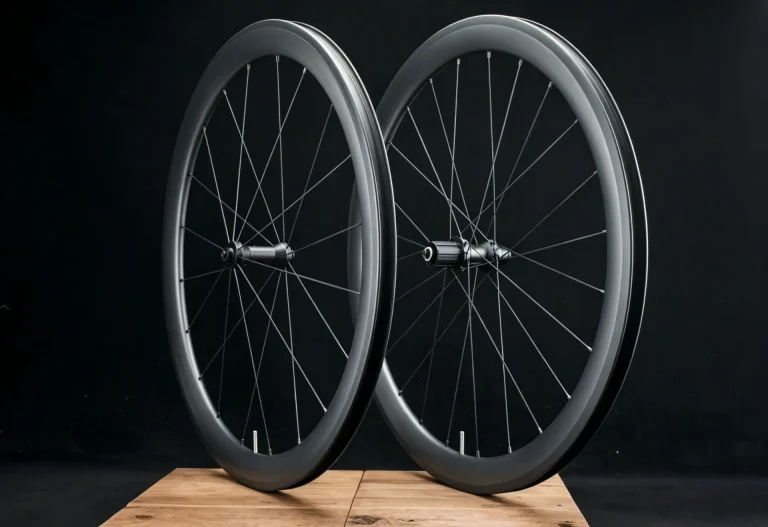
When reviewing XDRU carbon mountain bike wheelsets , compare the exact offered configuration against your riding brief. Confirm the model’s intended use, load limit, axle options and tire compatibility before ordering. An MTB category listing alone does not establish approval for Trail, Enduro or downhill riding.
Questions worth asking
XC, Trail and Enduro carbon wheel FAQs
Can I use lightweight XC carbon wheels for trail riding?
Only when the particular wheelset’s approved use and load limit cover that riding. “Trail riding” can describe anything from smooth singletrack to repeated rocky impacts. Describe the terrain and riding style to the manufacturer instead of relying on the word alone.
Are Enduro carbon wheels too heavy for everyday riding?
Not necessarily. An appropriately rated Enduro wheelset can be sensible for demanding everyday trails. It may add mass compared with an XC-focused build, but the relevant question is whether that trade-off serves the riding. For smoother, climbing-focused routes, a suitable lighter build may be more appropriate.
Is 30 mm internal rim width best for every mountain bike?
No. The right internal width depends on the exact tire, desired profile and manufacturer approvals. Width does not identify the wheel’s impact rating, and a nominal tire size alone cannot establish the best rim pairing.
Do carbon MTB wheels always feel harsher than aluminum wheels?
No universal material-only rule describes the complete ride. Rim geometry, laminate, spokes, build, tires, pressure and suspension all influence the result. Compare complete systems under similar conditions rather than attributing every sensation to rim material.
Can tire inserts make an XC wheelset suitable for Enduro?
No. A compatible insert can change the tire system’s behavior, but does not change the wheel manufacturer’s intended-use approval or load limit. It also cannot guarantee that the rim will survive every impact.
Should I choose carbon MTB wheels by rider weight?
Rider weight is an important input, but not the whole decision. Use the correct load definition, then account for terrain, speed, impacts, tires and intended use. Being below a maximum weight does not authorize riding outside the product’s approved category.