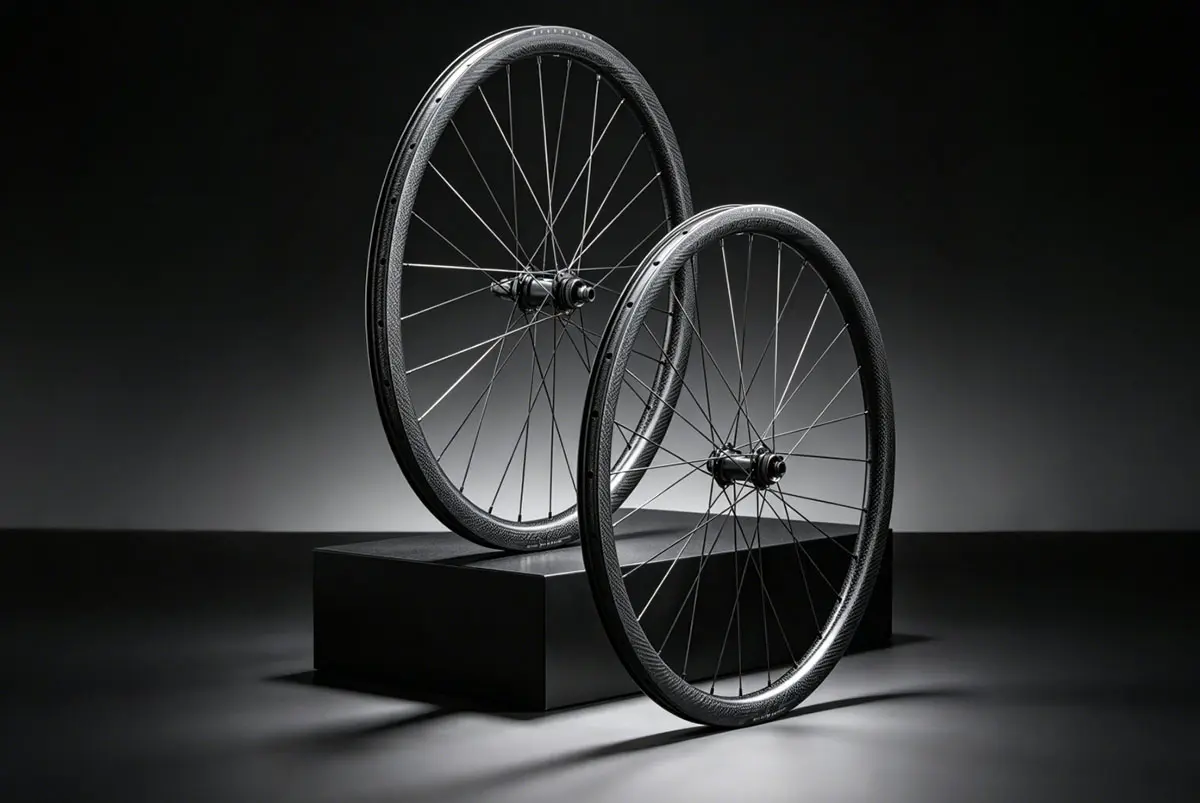

Technical Buyer’s Guide about Carbon WHeel compatibility
There’s a moment every cyclist reaches sooner or later: the upgrade itch. It usually points straight to Carbon wheels — but compatibility is where most people either get it right, or end up frustrated and out of pocket.
Carbon wheels promise speed, stiffness, and that unmistakable hum at pace. But here’s the catch: they are not plug-and-play in the way many riders assume. This guide walks through the real considerations — no fluff — so you can make a confident, informed choice.
Golden rule: matching “on paper” isn’t enough. Frame, axle, freehub, tire, and clearance all have to agree at once — miss one, and the rest doesn’t matter.
| 1 | Frame & Brake System Compatibility |
This is non-negotiable. Rim brake wheels and disc brake wheels are fundamentally different systems.
Rim Brake Braking track machined into the rim itself. | Disc Brake No braking track — braking happens at the rotor. |
Trying to mix the two isn’t just impractical — it’s impossible.
If you’re running disc brakes, also match the rotor interface:
- Center Lock — cleaner, lighter, uses a lockring system
- 6-Bolt — traditional, widely compatible, easy to service
Most modern carbon wheelsets are available in both. Adapters exist, but add complexity — best avoided unless necessary.
| 2 | Axle Standards & Hub Spacing |
This is one of the most common sources of confusion — and returns.
| Era | Spacing | Fixing |
|---|---|---|
| Older road bikes | 100mm / 130mm | Quick release skewers |
| Modern road bikes | 100mm / 142mm | Thru-axle (12mm typical) |
Gravel and MTB variants differ further. If your frame uses thru-axles, wheels must match not just spacing but axle diameter too — for background on wheel construction and terminology, the overview of bicycle wheel design is a useful reference point.
Field tip: always confirm both spacing and axle diameter before buying. “It looks standard” is how wheels end up back in a box.
| 3 | Freehub Body Compatibility |
Your cassette determines your freehub body — mismatch here means the cassette simply won’t fit.
- Shimano HG (Hyperglide) — most widespread, 8–11 speed and some 12-speed setups
- Shimano Micro Spline — required for Shimano 12-speed MTB
- SRAM XD / XDR — used for SRAM 11/12-speed (XD for MTB, XDR for road)
Many premium carbon wheels offer interchangeable freehub bodies — useful if you plan to switch drivetrains later.
| 4 | Tire Compatibility |
This is where performance meets practicality.
Clincher Easy, widely supported, slightly heavier | Tubeless (TLR) Lower rolling resistance, better puncture protection | Tubular Lightweight, race-focused, glued to the rim |
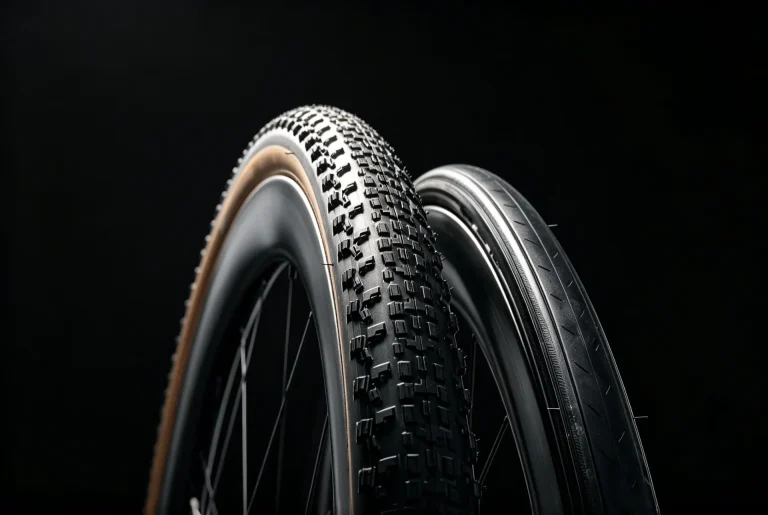
Modern carbon wheels are overwhelmingly tubeless-ready — usually the sweet spot for road endurance and gravel.
A rim designed for 28–32mm tires won’t perform optimally with 23mm rubber, and vice versa.
| 5 | Internal Rim Width & Tire Pairing |
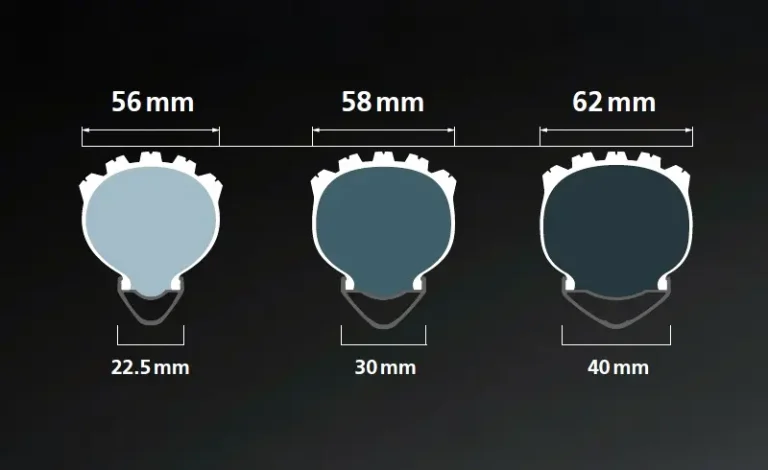
Internal rim width affects tire shape, rolling resistance, grip, and comfort.
| 19–21mm internal | Best for 25–28mm tires (traditional road) |
| 21–25mm internal | Ideal for 28–32mm tires (modern road / all-road) |
| 25mm+ internal | Gravel and wider applications |
A poorly matched tire and rim can negate the aerodynamic advantage of carbon wheels entirely.
Simple rule: wider rims favor wider tires — that’s where modern performance is heading.
| 6 | Brake Clearance & Frame Limits |
Even if your wheels fit, your frame might not accommodate your preferred tire width. Check:
- Maximum tire clearance stated by the frame manufacturer
- Actual clearance with your chosen wheel — some rims run wide externally
A 28mm-labeled tire on a wide carbon rim may measure closer to 30–31mm in reality. Clearance isn’t just about fit — it’s about safety, especially in wet or muddy conditions.
| 7 | Rotor Size & Caliper Clearance |
On disc brakes, wheel choice also interacts with rotor size — common sizes are 140mm and 160mm, and some frames set a minimum requirement.
Not strictly a wheel compatibility issue, but hub design and frame geometry can affect rotor alignment. Always confirm your new wheels align cleanly with your calipers — no rubbing, no forced adjustments.
| 8 | Weight Limits & Rider Use Case |
Not all carbon wheels are built for the same rider. Consider rider weight limits specified by the manufacturer, and your intended use — racing, endurance, gravel, or climbing.
A lightweight climbing wheelset may feel incredible — but not if it flexes under load. Durability is part of compatibility: the right wheel should match how you actually ride, not just how you wish you did.
| 9 | Aerodynamics vs Stability |
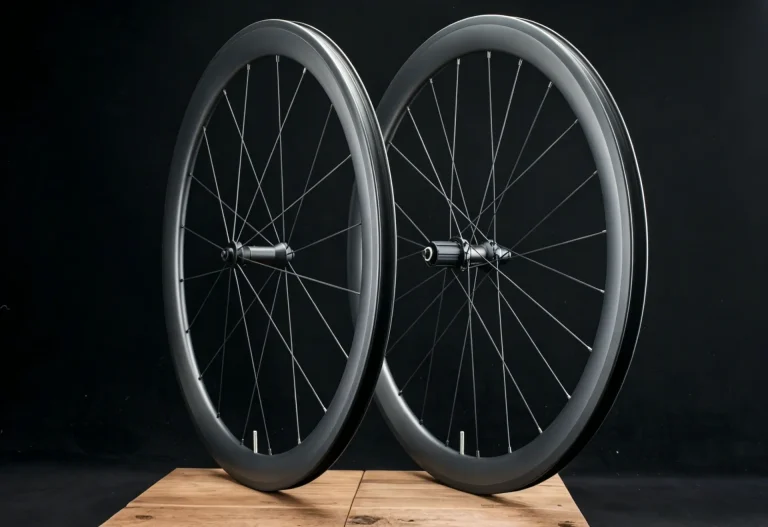
Deep-section carbon wheels look fast — and they are. But they come with trade-offs.
| 30–40mm | Lightweight, stable, versatile |
| 50–60mm | Balanced aero performance |
| 60mm+ | Maximum speed, more sensitive in crosswinds |
Compatibility isn’t just mechanical — it’s environmental. On coastal roads or open terrain, going too deep can make handling unpredictable.
| 10 | Real-World Fit: The Overlooked Details |
Even when everything “matches” on paper, small details matter:
| • | End caps properly installed |
| • | Brake rotor torqued correctly |
| • | Cassette spacing aligned |
| • | Tubeless setup airtight |
A well-installed carbon wheelset feels seamless. A poorly set one feels like a constant compromise. Take the time to get it right — or have a professional do the final setup.
Worked Example
A Practical Spec Match
Modern endurance road bike, running:
| Axle | 12mm thru-axle, 100/142 |
| Drivetrain | Shimano 11-speed |
| Brakes | Disc, Center Lock |
| Clearance | 32mm tires |
The matching wheelset needs:
- Thru-axle hubs (12×100 / 12×142)
- Shimano HG freehub
- Center Lock rotor interface
- Internal width around 21–23mm
- Tubeless-ready rim
Miss any one of these, and things start to break down — sometimes literally.
Final Thoughts
Upgrading to carbon wheels is one of the most transformative changes you can make to a bike. But compatibility isn’t a checklist you skim — it’s a system you understand.
Get it right, and your bike feels sharper, faster, more alive. Get it wrong, and even the most expensive wheels won’t deliver what you’re expecting.
The good news: once you understand these principles, the confusion disappears. You stop guessing. You start choosing — and that’s when upgrades actually become upgrades.
If you’re unsure about your setup, it’s always worth double-checking specs — or asking before buying. A few minutes upfront can save weeks of frustration later.
FAQ
What is carbon wheel compatibility?
Carbon wheel compatibility refers to whether a carbon wheelset matches your bike’s frame, axle standard, brake system, freehub body, tire size, and drivetrain. Checking these specifications before buying ensures the wheels fit correctly and perform safely.
How do I check carbon wheel compatibility with my bike?
To check carbon wheel compatibility, verify your bike’s brake type (disc or rim), axle standard, hub spacing, freehub body, rotor interface, and tire clearance. Compare these specifications with the wheel manufacturer’s recommendations before purchasing.
Are carbon wheels compatible with all bikes?
No. Carbon wheels are not universally compatible. Your bike must match the wheel’s brake system, axle size, hub spacing, and freehub standard. Even if the wheel fits the frame, drivetrain or brake incompatibility can prevent proper installation.
How do I know if my cassette is compatible with a carbon wheel?
Cassette compatibility depends on the wheel’s freehub body. Shimano HG, Shimano Micro Spline, SRAM XD, and SRAM XDR all require different freehub designs. Always match your cassette to the correct freehub body.
Can I use rim brake carbon wheels on a disc brake bike?
No. Rim brake and disc brake carbon wheels are designed for completely different braking systems. They are not interchangeable, so you must choose wheels that match your bike’s brake type.
Do carbon wheels need to match my axle standard?
Yes. Carbon wheel compatibility requires matching both the axle diameter and hub spacing. Modern road bikes commonly use 12×100mm front and 12×142mm rear thru-axles, while older bikes may use quick-release skewers.
What tire size works best with modern carbon wheels?
Most modern road carbon wheels perform best with 28–32mm tires. Choosing a tire width that matches the wheel’s internal rim width improves aerodynamics, comfort, grip, and rolling efficiency.
Are tubeless tires compatible with all carbon wheels?
No. Only tubeless-ready (TLR) carbon wheels are designed for tubeless tires. Always confirm the wheel manufacturer specifies tubeless compatibility before installing tubeless tires and sealant.
Does internal rim width affect carbon wheel compatibility?
Yes. Internal rim width influences tire shape, handling, rolling resistance, and aerodynamics. Matching the recommended tire width to the rim width is an important part of overall carbon wheel compatibility.
Why is carbon wheel compatibility important before buying?
Checking carbon wheel compatibility helps ensure your new wheels fit correctly, work safely with your drivetrain and brakes, and deliver the performance you expect. Verifying compatibility before purchase can also prevent expensive returns and installation problems.
- 50mm vs 60mm Carbon Wheels: Which One Actually Fits the Way You Ride?
- 700c Carbon Disc Wheelset: What Really Matters Before You Buy
- Are 29 inch carbon mountain bike wheels worth it?
- Are Carbon Gravel Wheels Worth It? Performance, Ride Feel & Buying Guide
- Are Carbon Wheels Really Worth It?
- Are Carbon Wheels Worth It? A Clear Guide to Real Benefits, Rider Types, and Buying Tips
- Best Wheel Depth for Windy Conditions: A Practical Guide for Cyclists
- Best Wheels for Climbing: The Climbing Wheelset Guide
- Best Wheels for Heavy Riders: Don’t Chase Lightness First
- Bicycle Hub Bearing Maintenance Guide: Service, Adjustment & Replacement