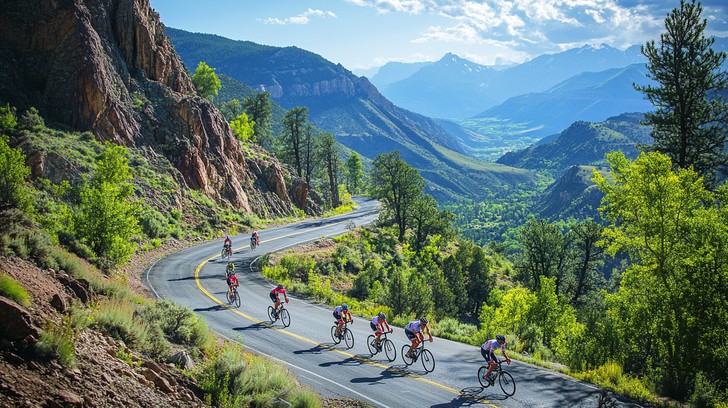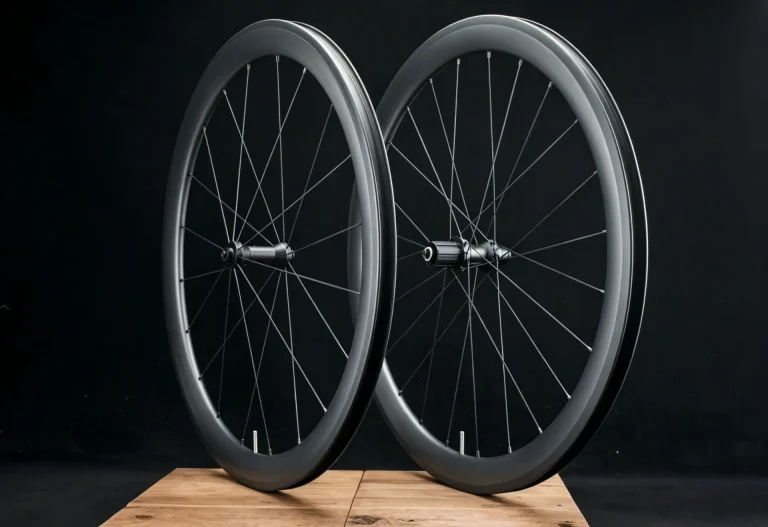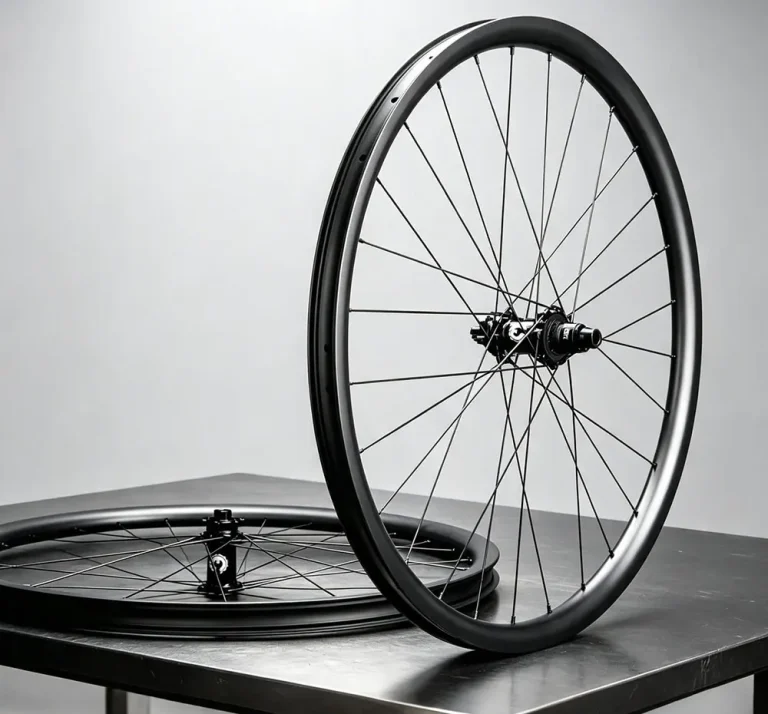


Choose the Route.
Choose the Tire.
Then Choose the Wheel.
The best carbon gravel wheelset is not defined by the lowest weight or the deepest rim. Start with your pavement-to-gravel ratio, the roughest meaningful section, the tire you need and the load you actually carry.
“Gravel” can mean a fast farm-road loop, loose mountain descents, washboard tracks or a loaded journey far from a workshop. Those rides share a name—not necessarily the same equipment requirements.
The buying sequence
Describe the route and its demanding sections. Choose an appropriate tire width, tread and casing. Verify tire–rim approval and bicycle clearance. Calculate loaded system mass. Only then compare carbon gravel wheels for internal width, construction, depth, hubs, serviceability and weight.
Pavement-to-gravel ratio is useful.
It is not the whole specification.
A route that is 80% paved can still need a capable gravel setup if its remaining 20% includes sharp rocks and fast, loose descents. Conversely, an almost entirely unpaved route can be relatively smooth and predictable.
Ask whether your percentages describe distance or time. A short technical climb may occupy more riding time than a long paved descent. Neither measure captures everything: surface severity, speed, weather and the consequences of a failure matter too.
For a carbon gravel wheelset for mixed road and gravel riding, identify both the surface you spend most time on and the most demanding section you intend to ride rather than walk.
Mostly pavement + smooth gravel
Prioritize a suitable fast-rolling tire, predictable road handling and enough casing protection for the unpaved sections. Wheel aerodynamics may be relevant, but only with the actual tire you plan to use.
Mixed surfaces + changing conditions
Seek a versatile tire-and-wheel system that supports the needed tire volume without exceeding clearance or pressure limits. Reliability and consistent handling often matter more than the final few grams.
Rough gravel + loaded travel
Start with load approval, tire protection, impact demands and repairability. Confirm the intended-use category: the word “gravel” does not authorize every technical trail or jump.
Choose gravel tire width before chasing rim specifications.
The tire is the wheel system’s contact with the terrain. Width, casing, tread and operating pressure work together. A wider tire is not automatically slower, and a narrow tire is not automatically the efficient option on rough ground.
More air volume can allow an appropriate lower-pressure setup, helping the tire conform to irregular surfaces. But usable pressure also depends on load, casing support, riding speed, impacts and the approved limits of the tire–rim combination.
| Nominal tire-width range | Where it may enter the shortlist | What can change the decision |
|---|---|---|
| About 35–40 mm | Pavement-heavy routes and relatively smooth, light gravel | Rider load, sharp edges, descent speed and available tire volume |
| About 40–45 mm | Mixed-surface riding and many general gravel applications | Casing strength, tread, conditions and actual mounted clearance |
| About 45–50 mm | Rougher surfaces, loose terrain and higher-volume setups | Bicycle clearance, rim approval, load and steering behavior |
| Over about 50 mm | Compatible wide-clearance bikes and more demanding terrain | Frame/fork approval and whether the route requires a different bicycle category |
These are practical starting categories, not a tire-fit standard, universal performance ranking or manufacturer approval. Riders with different loads and terrain may reasonably choose outside them.
40 mm vs 45 mm gravel tires
Compare actual tire models, not just labels. A supple 45 mm tire and a heavily protected 40 mm tire differ in more than width. Consider the casing, tread, measured size, required pressure and failure risks on your route.
Tread and casing are separate choices
Low-profile tread can suit firm, dry surfaces. Loose or wet conditions may call for more suitable grip. Casing reinforcement addresses cuts and damage; it is not interchangeable with tread depth or air volume.
Do not buy a wheel around a tire size you hope will fit. Buy around an approved tire you can actually run.
What internal rim width is best for gravel tires?
There is no single best internal rim width for every gravel tire. Internal width affects the mounted casing shape and helps define the approved tire range. It must be selected with the exact tire, rim geometry and manufacturer’s compatibility instructions.
A wider approved rim often makes a given tire measure wider, but there is no universal conversion from rim-width increase to tire-width increase. Check the mounted result rather than calculating clearance from the sidewall label.
Hooked vs hookless gravel wheels
Hooked and hookless describe the rim’s bead-retention geometry. Tubeless describes the inflation system. A hooked rim can be tubeless-ready, while a hookless rim still requires the correct tire type, size and pressure approval.
For hookless gravel wheels, check the minimum approved tire width as carefully as the maximum. A tire that physically mounts is not necessarily a safe combination. Adding an inner tube does not eliminate the compatibility requirement.
Follow the lowest applicable maximum from the rim, tire and combination-specific instructions. Do not apply a universal “5 bar hookless limit” to every gravel setup: some approved combinations have substantially lower ceilings.
Do wider rims always improve gravel handling?
Not automatically. A suitable rim can provide useful casing support, but excessive width for the tire can produce an undesirable shape or violate approval limits. “Wider is better” is no more reliable than “lighter is better.”
Carbon gravel wheels for bikepacking:
calculate the load before the grams.
A maximum rider-weight limit and a maximum system-weight limit are not the same thing. System mass generally includes the rider, bicycle and equipment or luggage, but the exact manufacturer’s definition controls.
For carbon gravel wheels for heavier riders or loaded bikepacking, the first question is whether the complete wheelset is approved for the intended load and terrain—not whether its bare weight is impressive.
Equipped rider + complete bicycle + additional bags, supplies and water = total loaded system mass.
Count each item once. If clothing is already included in rider mass, or accessories in bicycle mass, do not add them again. This example is not a rating for an XDRU wheelset.
What to verify beyond the headline weight limit
- The exact definition of the limit and the selected wheel configuration.
- The intended-use category and any restrictions on rough terrain or impacts.
- The bicycle’s own load limit and any luggage-mount restrictions.
- The tire’s load and pressure guidance for the approved rim combination.
- Availability of replacement spokes, bearings and freehub parts.
A higher spoke count can be part of a load-focused design, but it is not a load certificate on its own. Rim construction, spoke specification, hub geometry, tension and build quality all matter. Do not assume that carbon or alloy construction alone determines the appropriate load.
700C vs 650B gravel wheels:
choose the approved system, not the stereotype.
700C carbon gravel wheels
A 700C rim uses a 622 mm bead-seat diameter. It can support many fast mixed-surface and high-volume gravel configurations, provided the bicycle and wheel approve the tire combination. It is not inherently restricted to narrow tires.
650B carbon gravel wheels
A 650B rim uses a 584 mm bead-seat diameter. On some compatible bikes, this creates room for a different high-volume tire setup. It does not automatically provide more clearance or better off-road performance on every frame.
Rim size and tire size determine the assembled outside diameter. Changing wheel size can alter ride height, pedal clearance and handling if the tire does not preserve the intended dimensions. Chainstay shape, fork clearance and toe overlap also need checking.
Use only the wheel-size and tire combinations approved for the bicycle. A tire with a 584 mm bead diameter cannot fit a 622 mm rim, even if both are marketed for gravel.
Tubeless gravel wheels need a complete setup—not just no inner tube.
A tubeless-ready gravel wheelset still needs the specified tape, valve, compatible tire and suitable sealant. Confirm whether those items are installed or supplied, and follow the wheel and tire makers’ installation instructions.
Tubeless removes conventional tube pinch flats, but it does not eliminate casing cuts, air loss, bead problems or damage from bottoming the tire onto the rim.
How to choose gravel tire pressure
Start with a reputable manufacturer calculator or setup guide using actual loaded mass, measured tire size and the intended surface. Consider front and rear separately: load distribution and bag placement can change their requirements.
Fine-tune on a familiar route while respecting all applicable limits. Excessively high pressure can create a harsh, skittish setup on rough ground. Too little can allow tire movement, air loss or rim strikes. Neither extreme is a reliable speed strategy.
A compatible tire insert may provide useful protection or support in some setups. It does not increase the wheel’s rated load, approve an incompatible tire or authorize pressure outside the component instructions.
For remote bikepacking, plan for failures sealant cannot fix. Appropriate plugs, a compatible spare tube, tire boot, pump and the knowledge to use them can matter more than a small wheel-weight saving. Follow product-specific repair guidance.
Depth, weight and hubs come after the fit.
| Specification | Useful question | Avoid this shortcut |
|---|---|---|
| Rim depth | Is the wheel manageable in wind with the intended tire and riding position? | Assuming greater depth guarantees lower drag with every wide gravel tire |
| Wheelset weight | Does the quoted mass include the same freehub, tape and valves as the comparison? | Choosing the lightest option before confirming load and use approval |
| Hub system | Do the axle, rotor interface and freehub match the bicycle and exact cassette? | Choosing a freehub from drivetrain speed count alone |
| Spokes and nipples | Can you obtain the exact replacement specification and required tools? | Assuming proprietary or conventional automatically means better |
| Bearings and seals | Are service intervals, replacement parts and maintenance instructions available? | Treating a free-spinning unloaded hub as a complete durability test |
| Warranty and support | What is covered, what is excluded and what happens after impact damage? | Assuming every crack, crash or wear item is covered |
Can you use road carbon wheels for gravel?
Only when the manufacturer approves that exact wheel for the intended surface, tire and load. A wide enough rim does not establish gravel suitability, and fitting a larger tire does not change the wheel’s intended-use category.
Are carbon gravel wheels worth it?
They can be, when the complete design provides useful weight, aerodynamic, structural or handling benefits for your riding. Carbon material alone does not prove better comfort or durability. A supported alloy wheelset may still be the more practical choice for a particular budget or travel plan.
Write down the ride before comparing the wheels.
A useful gravel wheelset enquiry includes:
- Bicycle model and generation, approved wheel sizes, axle dimensions and tire-clearance documentation.
- Pavement-to-gravel ratio, whether it is measured by time or distance, and a description of the roughest relevant section.
- Intended tire model, nominal width, casing, tubeless plan and expected mounted size.
- Equipped rider mass, bicycle mass and the heaviest realistic luggage-and-water load.
- Exact cassette/freehub requirement and disc-rotor interface.
- Priorities: racing speed, rough-road confidence, loaded touring, spare-parts access or a balanced everyday setup.
Ask the supplier to confirm tire approval, pressure limits, intended use, load definition and spare-part availability for the exact configuration—not just the model family.
Shortlist for the route you ride.
Leave room for the load you carry.
Use the XDRU gravel carbon wheelset category as your starting point for checking current availability. For any candidate configuration, request the tire compatibility, intended-use and load documentation before ordering.
The decisive quality is suitability: a wheel that supports the right tire, the real riding load and the conditions ahead—not simply the most attractive specification on a comparison sheet.
Frequently asked questions
What are the best carbon gravel wheels for mixed road and gravel riding?
The best match supports an approved tire suited to both the dominant surface and the demanding sections, fits the bicycle, and carries the actual loaded system mass. Compare handling, tire compatibility and support before using weight or depth to narrow the final options.
What internal rim width should I choose for 40 mm or 45 mm gravel tires?
Use the compatibility guidance for the exact tire model and rim. Nominal width alone cannot establish approval, particularly on hookless rims. Check actual mounted size and required bicycle clearance after confirming the permitted combination.
Are 45 mm gravel tires better than 40 mm tires?
Not universally. A suitable 45 mm setup may provide useful volume on rough surfaces or under load. A suitable 40 mm setup may meet the needs of a smoother route. Casing, tread, pressure and actual width can matter as much as the nominal 5 mm difference.
Can carbon gravel wheels handle bikepacking luggage?
Yes, when the exact wheelset is approved for the loaded system mass and intended terrain. Check the manufacturer’s load definition and the bicycle, tires and luggage-system limits too. Carbon construction by itself neither approves nor rules out loaded riding.
Should I buy 700C or 650B carbon gravel wheels?
Begin with the bicycle’s approved combinations. Compare assembled wheel-and-tire dimensions, actual clearance, tire availability and the intended handling. A smaller rim does not automatically make a better rough-terrain setup, and a larger rim does not require a narrow tire.
How low can I run tubeless gravel tire pressure?
There is no universal safe minimum. Required pressure depends on the approved tire–rim combination, load, casing, surface and riding style. Use manufacturer setup guidance, respect applicable limits and do not accept repeated rim strikes or unstable tire behavior as normal.