
Over the past few years, if you’ve been paying attention to newly released carbon wheelsets, you’ve probably noticed one obvious trend.
Not long ago, the first specifications manufacturers highlighted were usually:
- Weight
- Rim Depth
- Hub System
Today, however, you’ll almost always find specifications like these prominently displayed:
21mm Internal Rim Width • 23mm Internal Rim Width • 30mm External Rim Width
As a result, many cyclists have started asking the same questions:
Is a wider rim always better?
Or perhaps:
What is the actual difference between a 21mm and a 23mm internal rim width?
Questions like these continue to come up, and for good reason.
Rather than approaching the topic from a marketing perspective or simply comparing specifications on a product page, this article explores rim width from the standpoint of wheel design, tire performance, and real-world riding dynamics.
📌 A Simple Conclusion First
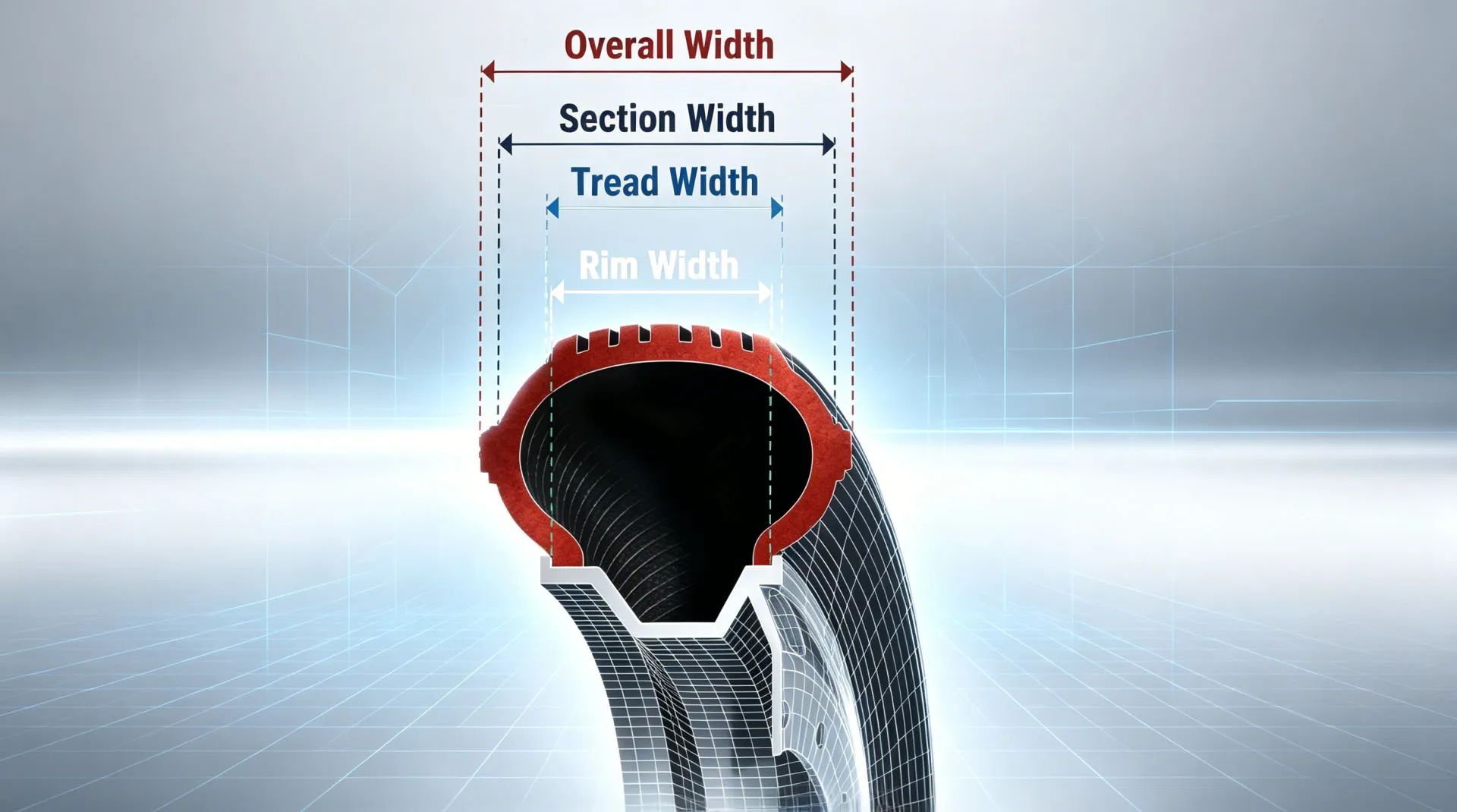
If there is one wheel specification that has changed more than any other over the past decade, it is rim width [ETRTO].
Years ago, discussions about wheelsets focused primarily on questions like:
How deep is the rim?
Today, the conversation has shifted toward:
How wide is the rim internally?
This isn’t simply a marketing trend.
It reflects the evolution of modern tire technology, bicycle frame design, and a better understanding of how wheels actually perform on the road.
💡 The key realization is surprisingly simple:
The tire—not the rim—is the component that actually interacts with the road.
The rim’s job is to support the tire and allow it to perform as intended.
If the rim and tire are poorly matched, even the lightest carbon rim or the most expensive hub cannot deliver its full performance potential.
⚠️ This is one of the most overlooked aspects of modern wheel design.
📏 Internal vs. External Rim Width: Which Matters More?
Many wheelsets list specifications such as:
Internal Rim Width: 21mm • External Rim Width: 29mm
Naturally, one question follows:
Which measurement is more important?
From a riding-performance perspective, the answer is straightforward.
✅ Internal Rim Width has a far greater influence on how a wheel rides than External Rim Width.
The internal width determines how the tire is supported inside the rim.
It directly affects:
- Tire profile
- Sidewall support
- Cornering stability
- Recommended tire pressure
- Overall ride quality
External rim width, on the other hand, primarily influences:
- Aerodynamic performance
- Rim structural design
- Airflow transition between the tire and rim
Both dimensions matter, but if only one specification deserves close attention, Internal Rim Width is the more critical one.
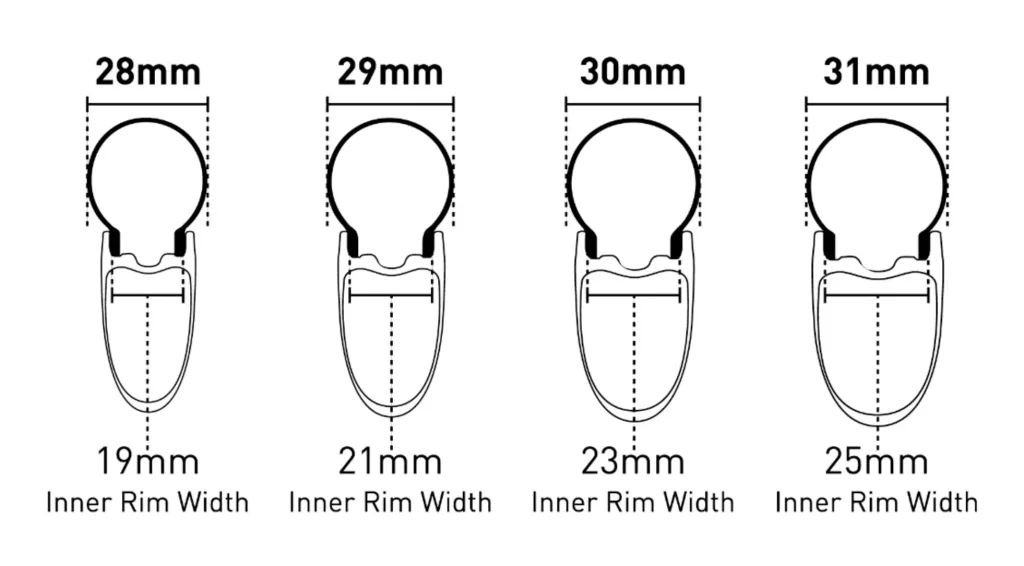
🚴 Why Are Wider Rims Becoming the Industry Standard?
The answer is actually much simpler than many people expect.
Modern tires have become wider.
15 years ago: 23mm
Then: 25mm
Today: 28mm
Increasingly: 30mm
Fifteen years ago, 23mm road tires dominated professional racing.
Then 25mm tires became the standard.
Today, many WorldTour teams race on 28mm tires, while 30mm tires are increasingly common for rough road stages and endurance events.
As tire widths have increased, rim widths have had to evolve alongside them.
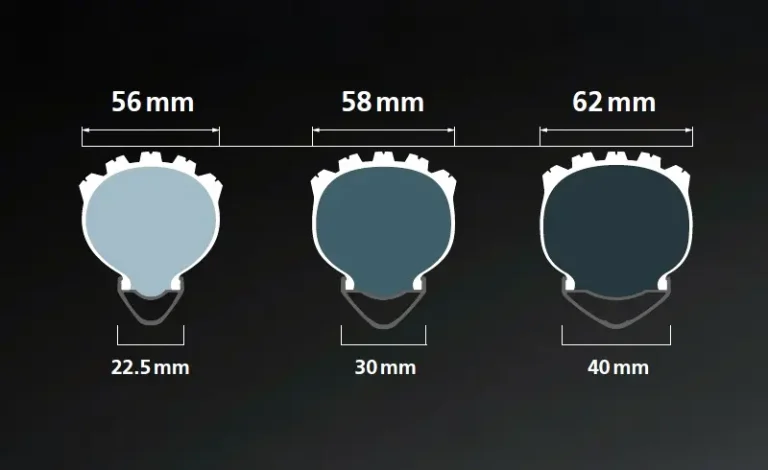
⚠️ If a modern 28mm tire is mounted on an older rim with a 15mm or 17mm internal width, the tire takes on what’s commonly referred to as a “light bulb profile”.
This rounded shape introduces two major compromises:
- Reduced sidewall support
- Increased tire deformation under cornering loads
These effects become especially noticeable during:
- Fast descents
- High-speed cornering
- Aggressive direction changes
In these situations, tire support matters just as much as tire grip.
⚙️ The Real Benefit of Wider Rims Isn’t Speed—It’s Tire Support
Many riders assume that:
Wider rims are simply faster.
That isn’t entirely accurate.
A better way to describe their advantage is this:
✅ Wider rims provide better tire support.
Although the difference may sound subtle, it fundamentally changes how a tire behaves.
Consider the same 28mm road tire mounted on two different rims.
15mm internal rim
Tire bulges outward, sidewalls less supported.
21mm internal rim
Tire profile stable, sidewalls closer to vertical.
The result is not necessarily a dramatic increase in speed.
Instead, the rider experiences:
- Improved cornering stability
- More predictable steering
- Better support under lateral loads
- Greater confidence during fast descents
Many riders upgrading from narrow rims to 21mm or 23mm internal widths describe the bike as feeling noticeably more stable.
In reality, the tire hasn’t suddenly become grippier. It is simply operating within a much more efficient and better-supported shape.
🎯 Choosing a Rim Starts with Choosing the Tire
One of the most common questions is:
Should I choose a 21mm or a 23mm internal rim?
The better question is actually:
Which tire are you planning to use?
The correct order is:
1. Define your riding style.
2. Select the appropriate tire size.
3. Choose a rim that properly supports that tire.
⚠️ Not the other way around.
Modern rim design is centered around tire optimization.
The tire determines how the wheel performs.
The rim exists to support that performance.
📊 Rim Width Also Changes the Actual Tire Width
Many riders are surprised to learn that the same tire can measure differently depending on the rim it’s mounted on.
Take a 28mm tire as an example.
Mounted on different internal rim widths, its actual inflated width may look something like this:
| Internal Rim Width | Approximate Inflated Tire Width* |
|---|---|
| 15mm | 28mm |
| 21mm | Around 30mm |
| 23mm | Often over 30mm |
*Actual measurements vary depending on tire construction, manufacturer, inflation pressure, and measurement method.
This explains why many cyclists say:
“My 28mm tire measures almost 30mm.”
The tire hasn’t changed. The wider rim simply allows it to expand closer to its designed profile.
⚠️ For this reason, it’s essential to verify your bicycle’s maximum tire clearance before selecting a wider rim.
This is particularly important for older rim-brake road bikes, where frame and fork clearance may be limited. Ignoring tire clearance can easily lead to tire rub.
🔄 Is Wider Always Better?
The short answer is:
No.
If wider were always better:
- Road racing wheels would all use 30mm internal widths.
- Gravel wheels would continue increasing indefinitely.
- XC mountain bike wheels would keep getting wider every year.
Clearly, that isn’t happening.
Every successful wheel design is a balance.
A wider rim offers several advantages, but it can also introduce trade-offs, including:
- Increased frontal area if not aerodynamically optimized
- Larger structural span requiring careful engineering
- Reduced compatibility with narrow tires
- Excessively flattened tire profiles
Designing a wheel is never about maximizing a single specification.
Instead, engineers balance multiple competing factors, including:
AerodynamicsTire supportStructural strengthWeightTire compatibilityManufacturing constraints
The best wheelsets are those that achieve the right balance—not the largest numbers.
📖 Recommended Internal Rim Width for Modern Road Bikes
As a general guideline:
25mm Road Tires
Recommended Internal Rim Width: 19–21mm
A solid choice for riders prioritizing low weight and race-oriented performance.
28mm Road Tires
Recommended Internal Rim Width: 21–23mm
Currently considered the sweet spot for balancing aerodynamics, comfort, handling, and rolling efficiency.
⭐ This combination has become the most common configuration on modern performance road bikes.
30mm Tires and Wider
Recommended Internal Rim Width: 22–25mm
Ideal for endurance road riding, rough pavement, and light gravel riding.
For dedicated gravel bikes, rim width should continue increasing according to tire size rather than following road-bike standards.
🏁 Final Thoughts
The best wheelsets are rarely the ones with the biggest numbers.
- ✖️ Not the deepest.
- ✖️ Not the widest.
- ✖️ Not even the lightest.
✅ The best-performing wheels are those in which every specification serves a clear purpose.
Rim width is no exception.
The move toward wider rims is the result of advances in tire technology, aerodynamics, and modern bicycle design—not simply a trend driven by marketing.
At the same time, rim width should never be considered in isolation.
It must always be evaluated alongside:
- Tire width
- Tire construction
- Tire pressure
- Riding conditions
- Frame and fork clearance
- Rider weight
Ultimately, the most important question isn’t:
“How wide is this rim?”
The more meaningful question is:
💡 “Does this rim allow the tire to perform in its optimal shape?”
Because what ultimately determines how a wheelset rides is not a single specification on a product sheet, but how well every component works together as a complete system.
When that balance is achieved, the bike simply feels faster, more stable, and more natural to ride.
And that is the real objective of modern wheel design. 🚴
- Curated List of Bicycle Parts Brands
- I’ve swapped 7 handlebars so you don’t have to – a real-world guide (2025)
- The Whole Production Process of Carbon Fiber Wheelset
- Loud Hubs vs. Quiet Hubs: Which Is Better?
- Why These Countries Import So Many Bicycle Wheelsets and Rims
- China Bicycle Rim Exports Analysis & Forecast 2025–2030
- Top 10 Bicycle Hub Brands
- Don’t Just Focus on Carbon Rims and Weight, Hubs are the Core
- Winter Cycling Safety: The Ultimate Guide to Riding in Snow and Ice
- Carbon vs Aluminum Wheels: Which Is Better for Road Cycling?