
💨 Riding in the Wind
How to choose without losing speed — or your nerve. Read the article about Best Wheel Depth for Windy Conditions.
We’ve all been there: you’re cruising along at pace, the road opens up, and then a gust hits. Not a gentle nudge, but a shove that makes you rethink your line, your grip, maybe even your life choices.
If you’re on deep carbon wheels, that moment can feel even more dramatic. Wheel depth is one of the most talked-about specs in cycling — go deeper for speed, go shallower for control. But when wind is a daily reality, the question isn’t just “what’s fastest?” It’s “what’s fastest and rideable?”
Let’s get into what actually happens in the wind, which depths make sense, and how to choose without second-guessing every ride.
Why Wheel Depth Matters in Wind |
Wheel depth is how tall the rim profile is — from the bead seat to the outer edge. Common depths range from 30mm up to 60mm or more. Deeper rims are more aerodynamic, slicing through the air with less drag. That’s why you see them on time trial bikes, sprint wheels, and race-day setups.
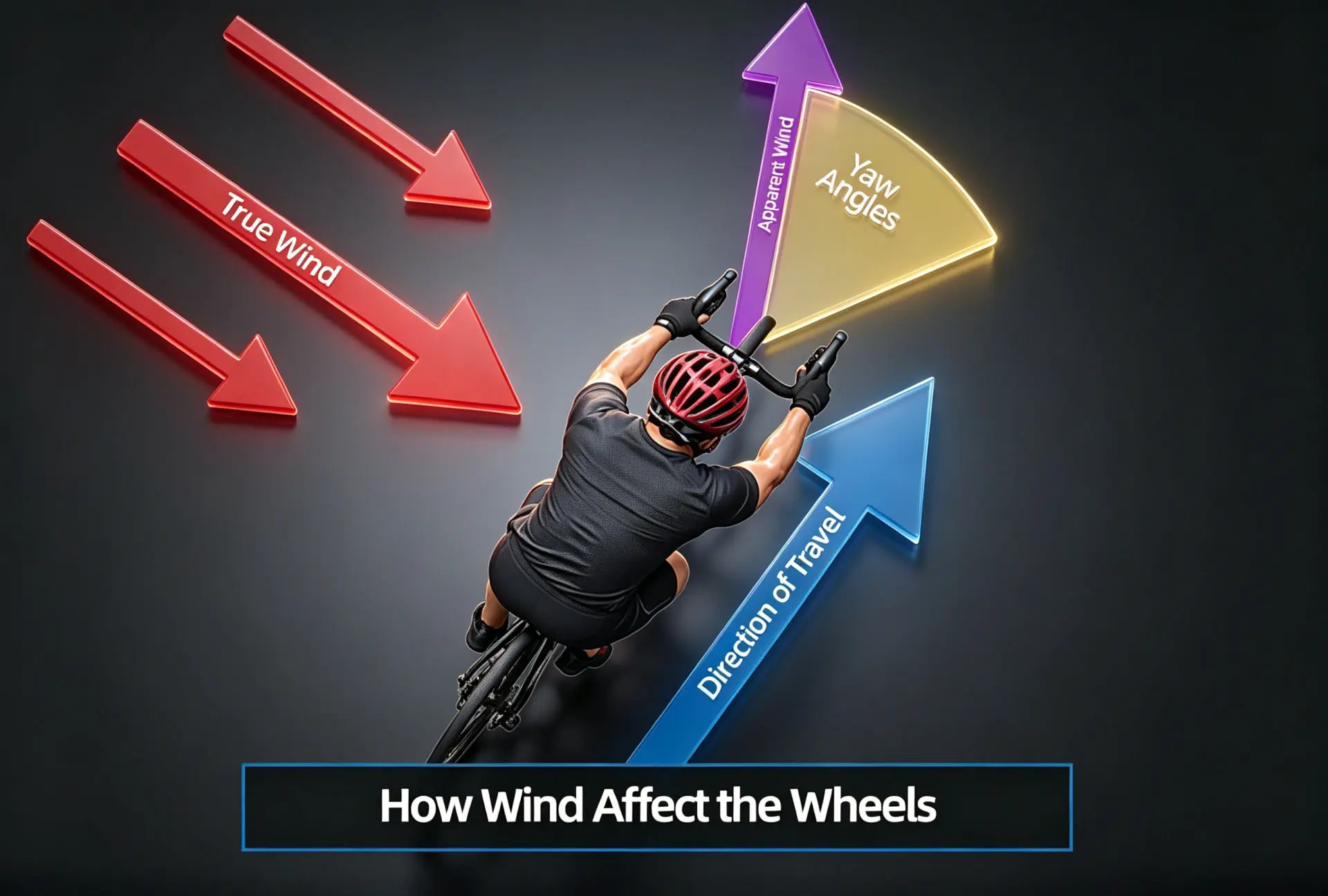
But deeper rims also present a larger surface area to the wind — especially from the side. That side-on force is what we call crosswind.
What happens when crosswind hits a deep rim:
| → | It creates lateral force on the wheel |
| → | That force translates into steering torque at the bars |
| → | The rider feels it as a “tug” that needs constant correction |
It’s not about “bad” wheels. It’s about physics.
It’s Not the Gusts — It’s the Unpredictability |
A constant 20 km/h crosswind? You adapt. You lean, you steer, you settle into it. What throws people off is sudden gusts from buildings, trucks, or terrain — wind shifting mid-corner, turbulence on exposed descents.
Deep wheels amplify those rapid changes. The front wheel can feel like it’s constantly negotiating with the wind — and you’re the one paying attention tax. It’s not that the wheel is unsafe. It’s that the handling feels less predictable.
What Depth Actually Works? |
There’s no single magic number, but there are clear ranges that make sense.
| 30–40mm | 40–50mm | 50mm+ |
30–40mm · The Sweet Spot for Most
For riders who regularly face windy conditions, this range is often the best balance:
| ✓ | Low enough profile to reduce crosswind impact |
| ✓ | Still offers meaningful aero gains over shallow aluminum |
| ✓ | Light enough for climbing and acceleration |
| ✓ | Feels stable and predictable in gusts |
If you want one wheelset that works almost everywhere, this is a very safe bet.
40–50mm · Aero With Some Compromise
Better aero performance than 30–40mm, slightly more noticeable in strong gusts, but still manageable for confident riders. Makes sense if you care about speed but don’t want to wrestle the front wheel every time a truck passes.
50mm+ · Big Speed, Bigger Trade-Off
Excellent aero efficiency in calm or steady conditions, but much more sensitive to crosswinds. These shine in controlled environments — time trials, flat criteriums — where you’re fully committed to speed. For everyday windy-area riding, often more trouble than they’re worth.
Front vs Rear: The Asymmetry That Matters |
Most riders don’t think about this enough: the front and rear wheels experience wind differently.
Front Wheel Steers the bike, and directly transmits wind forces to the handlebars. | Rear Wheel Partially shielded by your body and the frame. |
This is why many experienced riders in windy areas run mixed depths — a shallower front, deeper rear:
| Front | 35–40mm |
| Rear | 50–55mm |
You get most of the aero benefit without the scary front-end behavior.
Rim Shape Matters as Much as Depth |
Two 50mm rims can feel completely different in the wind, because rim shape changes how air flows around the wheel. Modern aero rims use U-shaped or toroidal profiles, wider external widths matched to modern tires, and optimized internal shapes to reduce turbulence.
A well-designed 50mm U-shaped rim can feel calmer in crosswinds than an older, narrow V-shaped 40mm rim. If wind is a serious factor where you ride, it’s worth checking the forecast pattern for your typical routes — resources like the National Weather Service publish sustained wind and gust data that can tell you whether you’re routinely dealing with steady wind or the gustier, more unpredictable kind that deep wheels struggle with.
So when choosing wheels for windy conditions, don’t just look at depth. Look at rim profile shape, external width, and whether the manufacturer specifically addresses crosswind stability. Good design can make a deeper wheel feel shallower than it is.
Tire Width and Pressure: The Hidden Variables |
Your tires also play a role in how a wheel behaves in wind. Wider tires change the effective shape of the rim–tire system, can improve stability by smoothing airflow, and often allow lower pressures — which improves grip and confidence.
A 28–30mm tire on a modern wide rim can feel more planted and less “sail-like” than a narrow 23–25mm setup on an older rim. For the full picture on how rim width and tire size interact, see our guide to internal rim width. It’s not a huge effect on its own, but it’s real — and it works in your favor when wind is a factor.
Rider Weight, Handling & Confidence |
Wheel depth isn’t just a mechanical question. It’s also about:
| • | Rider weight — heavier riders often feel less buffeted by wind |
| • | Handling skill — confident riders manage deeper wheels more easily |
| • | Personal tolerance — some simply don’t enjoy the tug of gusts |
Two riders on the same 50mm wheelset in the same conditions can have completely different experiences. There’s no shame in choosing depth based on your comfort level — speed only matters if you’re confident enough to use it.
Geography & Typical Conditions |
Where you ride changes everything — coastal roads with consistent crosswinds, open plains with long exposed sections, gusty urban canyons between buildings, or valleys where wind funnels and accelerates unexpectedly.
In consistently windy regions, many riders intentionally choose shallower front wheels even if they could physically handle deeper ones. It’s not about weakness — it’s about making the ride enjoyable, not exhausting.
Quick Reference
How to Choose by Conditions
| Very windy, exposed roads most of the time | 30–35mm F / 40–50mm R |
| Moderate wind, mixed terrain | 35–45mm all around |
| Occasional wind, mostly calm routes | 45–55mm |
| Flat, fast, predictable / race-day | 50–60mm+ |
If you’re unsure, err on the side of shallower. You’ll still gain aero benefits over aluminum, and you’ll ride with more confidence.
Real-World Example |
Imagine two riders, both in a windy coastal region. Rider A chooses a 60mm wheelset because “deeper is faster.” Rider B chooses a 38mm front / 50mm rear setup.
On a calm day, Rider A might feel like a hero. On a gusty day, Rider A is tense, constantly correcting, maybe even avoiding certain routes. Rider B? Still fast, still aero — but relaxed, in control, able to focus on the ride instead of the wind.
Over a season, who do you think ends up riding more — and enjoying it more?
The Bottom Line
| ✓ | Deeper isn’t always better if it makes you anxious or slows you down with constant corrections |
| ✓ | 30–40mm fronts are an excellent compromise for most riders in windy areas |
| ✓ | Mixed depths — shallower front, deeper rear — can give you the best of both worlds |
| ✓ | Rim shape and tire choice can make deeper wheels feel more stable than they look |
The fastest wheel is the one you can actually use without holding your breath.
💨 Find your ideal depth
Browse carbon wheelsets built for real-world wind, not just calm-day speed.
Shop Carbon Wheels →FAQ about Best Wheel Depth for Windy Conditions
What is the best wheel depth for windy conditions?
For most riders, a 30–40mm wheel depth offers the best balance between aerodynamic performance and crosswind stability. It provides noticeable speed gains while remaining predictable in gusty conditions.
Are deeper carbon wheels harder to control in crosswinds?
Yes. Deeper rims generally catch more side wind, which can increase steering input in crosswinds. Modern rim profiles reduce this effect, but deeper wheels still require more rider confidence in strong gusts.
Is a 50mm wheel too deep for everyday riding?
Not necessarily. A 50mm wheelset works well for many riders in moderate conditions. If you frequently ride in strong or unpredictable crosswinds, a shallower front wheel may provide better handling.
Should the front and rear wheels have different depths?
Many experienced cyclists choose a shallower front wheel and a deeper rear wheel, such as 40mm front with 50–55mm rear. This setup improves stability while retaining most of the aerodynamic benefits.
Does rim shape affect crosswind stability?
Yes. Modern U-shaped or toroidal rim profiles are designed to reduce steering torque caused by crosswinds, making deeper wheels feel more stable than older V-shaped rim designs.
Which wheel depth is best for coastal or windy regions?
If you regularly ride in exposed coastal areas or open plains, 30–40mm rims are generally the safest and most versatile choice for maintaining control without sacrificing too much speed.
Do heavier riders handle deep wheels better?
In many cases, yes. Heavier riders are typically less affected by crosswinds because their greater body weight helps resist sudden lateral wind forces. However, riding skill and wind conditions also play important roles.
Does tire width influence stability in windy conditions?
Yes. Wider tires paired with modern wide rims can create a smoother airflow transition and improve overall bike stability, helping riders feel more confident in crosswinds.
Are deeper wheels always faster?
Only under the right conditions. Deep-section wheels reduce aerodynamic drag at higher speeds, but if strong crosswinds force you to slow down or constantly correct your steering, the real-world speed advantage may be reduced.
How do I choose the right wheel depth for my riding?
Consider your typical wind conditions, terrain, riding speed, body weight, and confidence level. If you’re unsure, a 35–45mm carbon wheelset is an excellent all-around option that balances speed, climbing performance, and handling in a wide range of conditions.
- Straight-Pull vs J-Bend Spokes: Complete Bicycle Wheel Guide
- Ratchet vs Pawl Hub Systems: Which Is Better for a Carbon Wheelset?
- Are 29 inch carbon mountain bike wheels worth it?
- 700c Carbon Disc Wheelset: What Really Matters Before You Buy
- Are Carbon Gravel Wheels Worth It? Performance, Ride Feel & Buying Guide
- Wheel Guide · Materials & Ride Feel
- Wide vs. Narrow Rims: The Quiet Revolution in Cycling Performance
- Can Beginners Ride Carbon Wheels?
- Bicycle Hub Bearing Maintenance Guide: Service, Adjustment & Replacement
- Best Wheel Depth for Windy Conditions: A Practical Guide for Cyclists